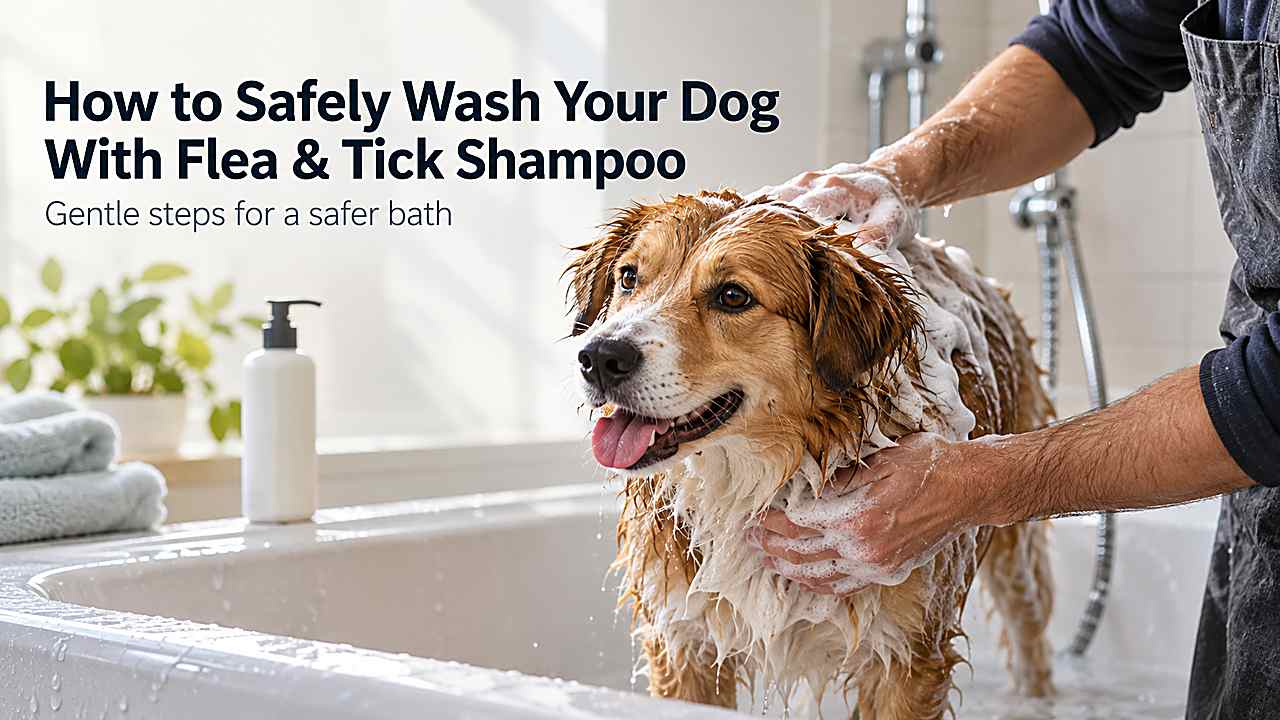
Flea and tick shampoo can be useful when a dog needs a medicated bath, but it is not the same as ordinary grooming shampoo. The active ingredients, age limits, contact time, and reapplication rules vary from one product to another, so the label matters more than any universal bathing routine.
A self-serve pet wash can make the job easier because it gives you a raised tub, steady water supply, and room to rinse thoroughly. The safest approach is to combine those conveniences with careful product use, calm handling, and enough time to remove every trace of shampoo from the coat.
Flea and tick shampoo is safest when the exact product is approved for your dog, applied only as directed, kept away from the face, timed correctly, and rinsed completely before the dog leaves the tub.
Start with the product label, not the wash station
The most important safety information is printed on the bottle or package. Flea and tick shampoos can contain different active ingredients, and two products that look similar on a shelf may have different minimum ages, contact times, warnings, and application limits.
A dog that is very young, elderly, pregnant, nursing, ill, underweight, medicated, or known to react to parasite treatments deserves extra caution. In those situations, a veterinarian can help determine whether a medicated shampoo is appropriate at all, especially when another flea or tick preventive is already being used.
The wash station itself should be treated as equipment rather than a source of dosing advice. A dispenser labeled “flea shampoo” may be convenient, but you still need to know what product it contains and whether the facility can provide the ingredient and label information before you use it on your dog.
- Confirm that the shampoo is labeled for dogs of your pet’s age and size.
- Check whether the dog is already using an oral, topical, or collar-based flea and tick product.
- Note the labeled contact time and the minimum interval before the product can be used again.
- Keep the container or take a photo of the label in case a reaction occurs later.
Set up the bath so you are not improvising halfway through
A medicated bath goes much more smoothly when everything is ready before the dog gets wet. The tub should have secure footing, the leash or grooming restraint should be adjusted without choking pressure, and clean rinse water should be immediately available.
Warm, comfortable water usually helps a dog settle better than very hot or cold water. A timer is also worth having nearby because contact time is easy to misjudge when you are simultaneously handling a dog, working lather through the coat, and trying to keep the face dry.
Gloves may be recommended on the product label, and they can also reduce unnecessary skin exposure for the person doing the bath. Towels, a clean face cloth, treats, and any ordinary dog shampoo needed for a separate pre-wash should be within reach so the dog never has to be left unattended in the tub.
A controlled bathing sequence reduces mistakes
The safest sequence is deliberate rather than rushed. Each stage has a clear purpose: wet the coat evenly, apply only the intended amount, respect the labeled contact period, and rinse long enough that residue is not left against the skin.
The dog’s comfort still matters during a medicated bath. If the animal becomes panicked, weak, painful, or unable to stand securely, finishing a perfect-looking routine is less important than getting the product rinsed off and ending the session safely.
1. Wet the coat thoroughly before applying medicated shampoo
A completely wet coat allows shampoo to spread more evenly, especially on dogs with dense fur around the neck, chest, tail base, and thighs. Water should reach the skin without being blasted directly into the eyes, nose, mouth, or ear canals.
Slow saturation is often more effective than using maximum spray pressure. When the coat is evenly wet, the shampoo is less likely to collect in concentrated patches, and the handler can work with a smaller, more controlled amount of product.
A dog that dislikes the sprayer may tolerate water better when the stream begins at the shoulders or lower body rather than near the head. Brief pauses can also help if the dog needs a moment to regain steady footing before the next stage.
2. Apply only the amount and areas the label specifies
More medicated shampoo does not automatically kill more parasites. When the label gives an application amount or dilution, exceeding it can increase skin exposure without improving the result.
The lather should be worked through the coat carefully enough to reach the skin, but aggressive scrubbing is unnecessary. Areas where fleas commonly gather, such as the neck, back, rump, and base of the tail, can receive careful coverage while sensitive tissue around the eyes, mouth, genitals, and irritated skin is protected.
The face deserves separate handling because accidental eye or mouth exposure can happen quickly. A damp cloth is easier to control than a spray wand, and medicated product should only be used near the face when the exact label specifically allows it.
3. Treat contact time as a limit, not a target to exceed
Some products need to remain on the coat for a stated number of minutes before rinsing. A simple timer is more reliable than estimating because a nervous bath can make a few minutes feel much longer or shorter than they really are.
Leaving the shampoo on beyond the labeled period is not a sensible way to make it “stronger.” The active ingredients were tested for a particular use pattern, and extra contact can raise the chance of irritation or unwanted exposure.
During the waiting period, the dog should remain supervised and comfortable. Licking should be prevented, lather should stay out of the face, and any sudden change in behavior deserves attention rather than being dismissed as impatience.
4. Rinse until the coat no longer feels slippery
Thorough rinsing is one of the most important parts of the bath because leftover medicated shampoo can remain against the skin or be licked after the dog leaves the station. Thick fur, skin folds, the armpits, groin, belly, paws, and tail base often hold more residue than the obvious areas along the back.
Clear-looking runoff is useful, but the coat should also stop feeling soapy or slick when you part it with your fingers. A final pass with clean water from neck to tail helps catch sections that may have been missed during the first rinse.
Rushing this stage to save a few minutes at a paid wash is a poor trade. An extra rinse cycle is usually preferable to leaving pesticide-containing residue on the dog simply because the timer is close to ending.
Know what an adverse reaction can look like
Most dogs will not have a serious reaction when an appropriate product is used correctly, but medicated flea and tick products deserve observation during and after the bath. Unusual drooling, vomiting, diarrhea, marked weakness, wobbliness, tremors, agitation, pronounced redness, or breathing difficulty should not be treated as normal post-bath behavior.
The product label should be kept available because first-aid directions can differ by ingredient. If a reaction develops, contacting a veterinarian or animal poison-control service promptly gives you a chance to describe the exact product, the dog’s weight, the amount used, and the symptoms.
Another mistake is adding a second flea treatment immediately because a few live fleas are still visible. Parasite products work on different timelines, and combining shampoos, spot-ons, collars, or oral preventives without guidance can create more risk than the remaining fleas themselves.
A flea bath is only one part of controlling an infestation
Shampoo mainly addresses parasites that are on the dog during the bath, plus any residual effect the specific label supports. Flea eggs, larvae, and pupae may still be present in bedding, carpet, furniture, cracks, or outdoor resting areas, which is why repeated baths alone often fail to solve a household infestation.
A veterinarian can help build a longer-term prevention plan when fleas keep returning. That plan may involve a different preventive product, environmental cleaning, treatment of other pets in the home, or investigation of itchy skin that continues even after visible fleas are gone.
This broader view also prevents over-bathing. A dog with already irritated skin can become more uncomfortable when medicated shampoo is used repeatedly in an attempt to solve a problem that is actually coming from the environment.
Drying and aftercare matter after a medicated bath
Once the dog is fully rinsed, drying should be calm and comfortable rather than another stressful event. Towels can remove most surface water, while a low or moderate airflow dryer can help with dense coats if the dog is accustomed to the sound and sensation.
The skin is worth checking while the coat is still damp because redness, hives, or irritated areas are easier to notice before the fur settles back into place. The dog should also be prevented from licking heavily until the coat is clean and dry, particularly when the product label gives specific post-treatment precautions.
The next several hours are a good time to observe normal behavior, appetite, balance, and breathing. A safe bath ends with a comfortable dog, not simply an empty bottle and a clean coat.
Frequently Asked Questions
These questions cover the practical details that often come up after the main routine is clear. The answers are designed to help readers make a safer decision without turning a simple wash into a complicated project.
How often can a dog be washed with flea and tick shampoo?
The correct interval comes from the label on the exact shampoo because formulas differ. Some products permit repeat use after a stated number of days, while others are intended for less frequent application.
More frequent bathing is not automatically better flea control and may irritate the skin. When fleas reappear quickly, the home environment or the dog’s overall prevention plan may be the real reason rather than a need for another immediate shampoo treatment.
Can flea and tick shampoo be used with an oral or topical preventive?
Sometimes products can be combined, but compatibility should not be assumed. A dog may already be receiving an insecticide or acaricide through a chew, topical liquid, collar, or other treatment, and adding another active product can increase exposure.
The safest answer comes from the product labels and, when the combination is unclear, a veterinarian. Knowing the names and active ingredients of everything the dog is using makes that conversation much more useful.
Should I use flea shampoo on a puppy?
Only when the product specifically lists the puppy’s age and weight as appropriate. Minimum-age rules differ substantially among flea and tick products, so a shampoo that is acceptable for an adult dog may not be suitable for a young puppy.
Very young puppies also lose body heat quickly and may have sensitive skin. If fleas are present on a puppy that is below the labeled age, veterinary guidance is safer than improvising with an adult product.
What if flea shampoo gets in my dog’s eyes?
The product label should be checked immediately for first-aid directions. In many cases, the eyes need prompt gentle flushing with clean water, but the exact advice depends on the product.
Persistent squinting, redness, pawing at the face, or apparent eye pain deserves veterinary attention. Avoiding direct spray at the head and using a controlled damp cloth near the face makes accidental exposure much less likely.
Why are fleas still visible after the bath?
Seeing a flea shortly after rinsing does not necessarily mean the bath failed. Different active ingredients kill parasites at different rates, and fleas can also move onto the dog again from an untreated environment.
Adding more shampoo or another pesticide immediately is not the right response unless the label specifically directs it. A complete control plan addresses both the dog and the places where immature flea stages are developing.
Conclusion
Learning how to wash a dog with flea and tick shampoo safely is mostly about restraint: the right product, the labeled amount, the correct contact time, and a complete rinse. A self-serve wash can make the physical process easier, but the shampoo label and the dog’s condition should guide every decision.
When there is any doubt about age, health, other parasite treatments, or a possible reaction, veterinary advice is the safer next step. The goal is not simply to finish a medicated bath, but to control parasites without creating a new skin or toxicity problem in the process.