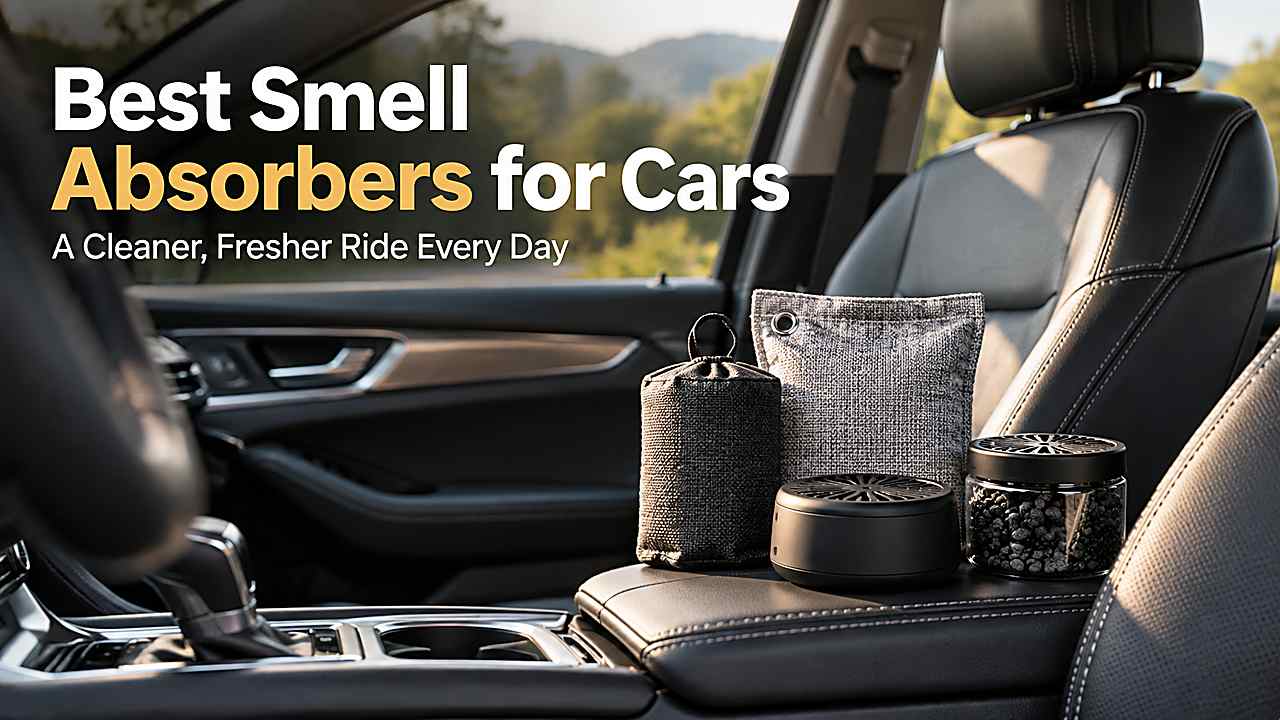
A car odor absorber is useful only after you understand whether the cabin has a lingering smell or an active contamination source. Charcoal bags, gels, and plant-based packs can reduce airborne odor, but none of them can clean spoiled milk from padding, dry a wet carpet, or remove smoke residue from a headliner.
This guide compares current options by fragrance level, maintenance, placement, service life, and the types of odor they are best suited to manage. The goal is to choose an absorber that supports a clean, dry cabin rather than masking a problem that still needs physical cleanup.
Moso Natural’s Car Air Purifying Bag is the best passive, fragrance-free choice for ongoing odor control because it uses 300 grams of bamboo charcoal, is sized for vehicle cabins, and can be refreshed monthly. PURGGO is a longer-lasting premium charcoal alternative, while Fresh Wave Packs work better for drivers who do not mind a mild plant-based scent.
What matters most before you buy
The product category becomes much easier to compare once the decision is reduced to the few features that actually change results. These are the factors worth checking before price or review count.
An odor absorber cannot replace removing the odor source
A charcoal bag cannot fix milk soaked into carpet padding, a wet cabin filter, mold from a water leak, or cigarette residue embedded in headliner fabric. Passive absorbers work best after the source has been cleaned and the cabin has been dried.
If the smell returns strongly after the car heats up, hidden contamination is usually more important than the absorber brand. Buying a deodorizer before addressing the source often creates disappointment.
Fragrance-free products and scented neutralizers solve different problems
Bamboo charcoal bags are useful for drivers who want the car to smell like nothing rather than like perfume. Plant-oil packs and gels may actively change the perceived air faster, but they can add a noticeable scent.
Neither approach is inherently better. The right choice depends on whether the cabin already contains sensitive passengers, pets, asthma concerns, or a preference for fragrance.
Placement and airflow decide how well passive absorbers work
An absorber trapped under a pile of cargo cannot interact with cabin air effectively. Under-seat placement, an open door pocket, or another secure area with air movement works better.
Products should also be secured so they cannot slide under the pedals. The cabin volume is small, but the absorber still needs exposure to the air it is supposed to treat.
Heat changes both odor intensity and product durability
Cars can become extremely hot in sun, which intensifies food, pet, smoke, and plastic odors. Passive charcoal tolerates heat well, while gels and plant-based packs may release faster and require replacement sooner in summer.
Packaging should be checked for temperature and placement restrictions. Anything liquid or gel-based should sit where a leak cannot damage upholstery or electronics.
Quick comparison of the best options
Each recommendation below solves a slightly different version of the same problem. The table is a fast shortlist, while the detailed sections explain why one option may fit your routine better than another.
| Product | Best for | Why it stands out |
| Moso Natural Car Air Purifying Bag | Best overall fragrance-free absorber | Moso Natural fills the car-specific bag with 300 grams of bamboo charcoal, rates it for vehicle-sized spaces up to about 90 square feet, and recommends monthly sunlight exposure to refresh it for up to two years. |
| PURGGO Car Air Freshener / Eco-Purifier | Best premium long-term charcoal option | PURGGO uses bamboo charcoal in a hanging car format and markets the product for continuous passive odor absorption without fragrance or allergens. |
| Fresh Wave Odor Removing Packs | Best plant-based active pack | Fresh Wave uses small packs of plant-oil ingredients intended to neutralize odors in compact spaces including cars, trucks, boats, and RVs. |
| OZIUM Odor Eliminating Gel | Best adjustable gel for stubborn cabin odor | OZIUM’s gel is designed for continuous odor control in cars and other small spaces, with an adjustable top that changes airflow over the gel. |
| CLEVAST Bamboo Charcoal Air Purifying Bags | Best budget multipack | CLEVAST sells fragrance-free bamboo-charcoal bags in multipacks that can be distributed around a vehicle, cargo area, shoe compartment, or pet zone. |
The best choices in detail
1. Moso Natural Car Air Purifying Bag: Best overall fragrance-free absorber
Moso Natural fills the car-specific bag with 300 grams of bamboo charcoal, rates it for vehicle-sized spaces up to about 90 square feet, and recommends monthly sunlight exposure to refresh it for up to two years. The biggest advantage is that it adds no fragrance, so the cabin can return toward a neutral smell instead of replacing one odor with another. Charcoal works gradually and will not solve a fresh severe spill or smoke-contaminated headliner by itself.
Choose it for ongoing pet, food, musty, or general stale-car odor after the underlying source has been cleaned. Before buying, confirm the current package, size, compatibility, and care instructions because manufacturers can revise listings and bundles over time.
2. PURGGO Car Air Freshener / Eco-Purifier: Best premium long-term charcoal option
PURGGO uses bamboo charcoal in a hanging car format and markets the product for continuous passive odor absorption without fragrance or allergens. Its 365-plus-day service concept makes it convenient for drivers who want to hang one product and largely forget about it. The purchase price is higher than simple charcoal bags and the effect remains gradual rather than immediate.
It fits fragrance-sensitive households that value a tidy dedicated car design and long passive service. Before buying, confirm the current package, size, compatibility, and care instructions because manufacturers can revise listings and bundles over time.
3. Fresh Wave Odor Removing Packs: Best plant-based active pack
Fresh Wave uses small packs of plant-oil ingredients intended to neutralize odors in compact spaces including cars, trucks, boats, and RVs. The packs are easy to place under a seat or in a holder, and the company states a typical service interval of roughly 30 to 60 days depending on placement and airflow. They are not fragrance-free in the same sense as charcoal because plant oils create a noticeable scent profile.
They suit drivers who want more immediate continuous odor control and do not mind a mild botanical smell. Before buying, confirm the current package, size, compatibility, and care instructions because manufacturers can revise listings and bundles over time.
4. OZIUM Odor Eliminating Gel: Best adjustable gel for stubborn cabin odor
OZIUM’s gel is designed for continuous odor control in cars and other small spaces, with an adjustable top that changes airflow over the gel. That adjustable exposure makes it easy to reduce or increase the scent and evaporation rate for a particular cabin. It is a fragranced gel, so it is not the right choice for people who specifically want a completely scent-free interior.
It works best after the odor source has been cleaned, especially for persistent smoke-like or stale cabin smells. Before buying, confirm the current package, size, compatibility, and care instructions because manufacturers can revise listings and bundles over time.
5. CLEVAST Bamboo Charcoal Air Purifying Bags: Best budget multipack
CLEVAST sells fragrance-free bamboo-charcoal bags in multipacks that can be distributed around a vehicle, cargo area, shoe compartment, or pet zone. Multiple smaller bags can cover different odor pockets instead of concentrating all absorbing material under one seat. The inexpensive multipack presentation is less tailored to automotive placement than a dedicated hanging car product.
It is a practical value choice for multi-car households or owners who want charcoal in both cabin and trunk. Before buying, confirm the current package, size, compatibility, and care instructions because manufacturers can revise listings and bundles over time.
Different car odors need different first-line fixes
Wet-dog odor usually begins in fabric, seat covers, carpet, or trapped moisture, so drying and washing those materials comes before passive absorption. Food odors respond to source removal and cleaning of cup holders, carpet, and HVAC intake areas.
Smoke is more difficult because residue can coat glass, plastic, carpet, and headliner simultaneously. A single bag cannot remove contamination that still physically exists throughout the cabin.
Musty odor should raise a different question: why is the car damp? A leaking sunroof drain, wet floor padding, clogged evaporator drain, or old cabin filter can keep generating smell faster than an absorber can neutralize it. An odor product is most useful after those mechanical or cleaning problems are corrected.
Charcoal needs time, while gels and active packs trade speed for scent
Bamboo charcoal works passively, so owners should expect gradual change rather than a dramatic difference after ten minutes. That slow behavior is exactly why charcoal is attractive for people who dislike perfume.
Monthly sunlight exposure is recommended by brands such as Moso Natural to help refresh the material. The bag should be placed where air can circulate around it rather than sealed inside a console.
Gels and plant-oil packs release active ingredients into the cabin air and can create a more noticeable change quickly. The trade-off is scent, replacement frequency, and the possibility that a passenger simply dislikes the fragrance. These products are better viewed as odor-control tools than proof that the contamination itself has been removed.
When an odor absorber is the wrong tool
A strong sour, moldy, fuel-like, or chemical odor that returns quickly after ventilation is a sign to investigate the source rather than add another deodorizer. Wet padding, a leaking heater core, spoiled food under trim, contaminated HVAC components, or a fluid leak can keep generating odor faster than any passive absorber can manage. The cabin may need cleaning, drying, mechanical repair, or professional inspection before an absorber becomes useful.
This distinction matters for safety as well as comfort. Fuel, exhaust, overheating electrical parts, and some chemical leaks should never be treated as ordinary cabin smells. If an odor suggests a mechanical or health hazard, stop focusing on fragrance and identify the cause first.
Common buying and use mistakes
Most disappointing results come from a mismatch between a capable product and the way it is used. These mistakes are worth avoiding because they create extra work even when the product itself is good.
Trying to cure a spill with an absorber instead of cleaning it
Organic spills continue to generate odor as residue breaks down inside fabric and padding. A charcoal bag may reduce what reaches the air, but it does not extract milk, pet urine, vomit, or wet food from the material.
The source needs appropriate cleaning, extraction, and complete drying. Absorption works best as the final maintenance step after the contamination is gone.
Putting a loose odor product where it can reach the pedals
Anything placed in the driver’s footwell can become a safety hazard if it slides under the brake or accelerator. Bags and gels should be secured under a passenger seat, in a door pocket, cargo area, or another stable location with airflow.
Hanging products also need to stay clear of the driver’s line of sight. Odor control should never interfere with vehicle operation.
Adding several strong fragrances at once
A pine tree, vent clip, scented gel, and botanical pack can combine into a more unpleasant cabin than the original mild odor. Strong fragrance also makes it harder to tell whether the source problem is improving.
One odor-control approach at a time gives clearer feedback. A neutral cabin after cleaning is usually a better target than maximum scent.
How to get better long-term value from the product
Passive odor products need periodic maintenance to remain useful. Charcoal bags should be refreshed according to the maker’s instructions, while gels and plant-based packs need replacement once their active material is exhausted. Keeping the product dry, secure, and exposed to cabin airflow gives it a better chance of doing what the label promises.
The cabin itself also needs maintenance. A dirty cabin filter, damp carpet, pet blanket, or forgotten food wrapper can overwhelm any passive absorber. Odor products work best when cleaning and moisture control are already part of the routine, which is why long-term value comes from combining the absorber with source removal rather than simply replacing one scented item with another.
Frequently Asked Questions
These questions cover the practical decisions that usually remain after the shortlist has been narrowed down.
Do charcoal bags actually remove car smells?
Charcoal bags can reduce airborne odor molecules gradually, especially after the source has been removed. They work best on general stale, pet, food, or mild musty odors rather than fresh severe contamination.
The result is usually slower than a fragranced spray or gel because nothing is being released to create an immediate scent. Good airflow and enough charcoal for the cabin improve the chance of a noticeable effect.
How long does a Moso Natural car bag last?
Moso Natural states that its car air-purifying bag can be reused for up to two years with monthly sunlight refreshing. The company recommends placing the bag in direct sunlight for about an hour each month.
Actual odor-control performance depends on cabin conditions and how severe the odor source is. A bag that has been soaked, contaminated, or sealed away from airflow will not perform like a clean dry one.
Is PURGGO better than Moso Natural?
Both use bamboo-charcoal-based passive odor control, so the main differences are format, price, placement, and stated service approach. PURGGO is designed as a hanging automotive product and promotes 365-plus days of continuous use.
Moso Natural’s car bag uses 300 grams of charcoal and recommends monthly sunlight refreshing for up to two years. The better choice is the one that fits your preferred placement and maintenance routine.
Will an odor absorber get rid of cigarette smoke smell?
It can reduce the remaining airborne smell after a proper smoke cleanup, but it should not be the first or only step. Smoke residue coats glass, plastics, carpet, seat fabric, HVAC surfaces, and especially headliner material.
Those surfaces need careful cleaning, and the cabin filter may need replacement. An absorber is useful afterward to manage trace odor while the cleaned interior continues airing out.
Are car odor absorbers safe around pets and children?
Safety depends on the exact product and where it is placed. Fragrance-free charcoal bags contain no sprayed perfume, but they still should be secured so a child or pet cannot tear them open and ingest the contents.
Gels and plant-oil products need to stay out of reach and should be used according to the label. A product marketed as natural should still be treated as something not intended for eating or direct skin contact.
Conclusion
The best smell absorber for a car depends on whether you want fragrance-free passive control or a more noticeable active deodorizing product. Moso Natural and PURGGO make the most sense for a neutral cabin, while Fresh Wave or OZIUM can suit drivers who accept a mild scent in exchange for a more immediate presence. Clean and dry the actual odor source first, then place the absorber where air can circulate and maintain or replace it according to the manufacturer’s instructions.