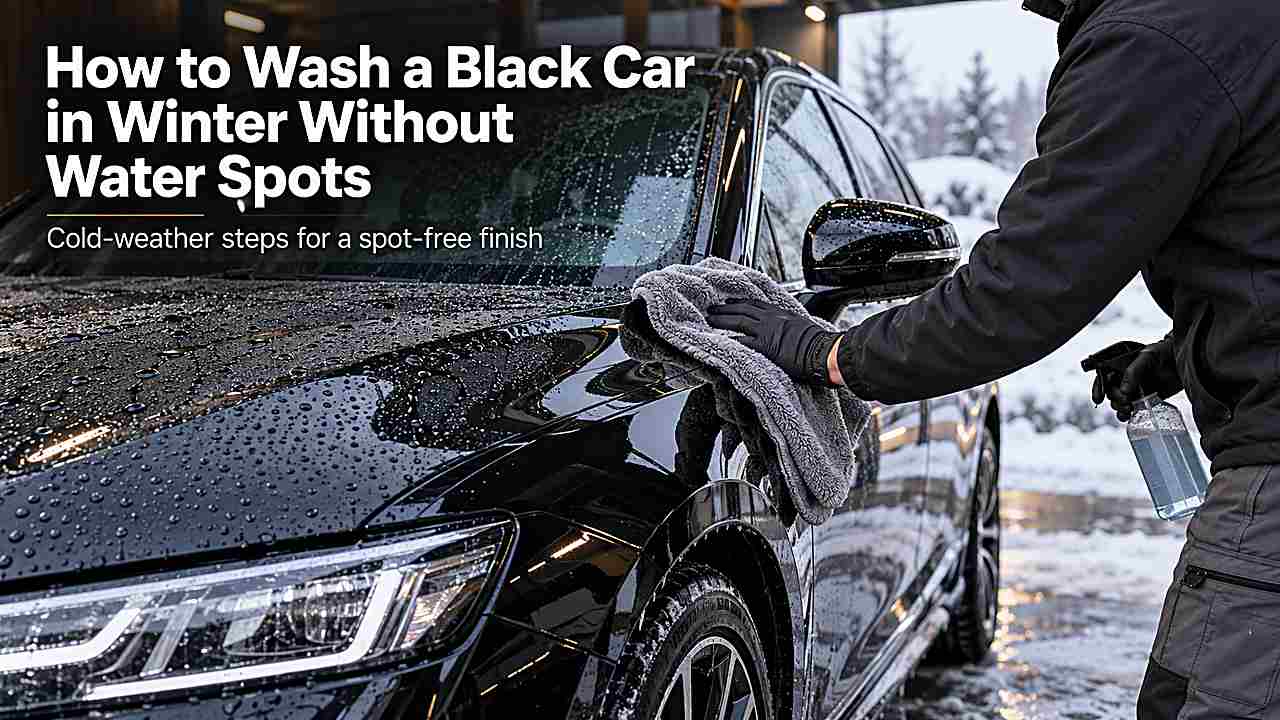
Black paint turns small winter-wash mistakes into obvious marks. Mineral residue, road-salt film, soap trapped around trim, and drips from mirrors can all dry into pale spots that are much easier to see on a dark hood or door.
Cold weather adds another complication because the car may dry slowly in some places and freeze quickly in others. A good winter routine therefore depends less on aggressive washing and more on controlled rinsing, low-mineral final water, and a drying plan that starts before the vehicle leaves the bay.
A black car can be washed in winter without water spots by working on cool panels, rinsing thoroughly, using low-mineral final water when available, and drying paint, trim, glass, and trapped-water areas before freezing begins.
Why winter water spots show so clearly on black paint
Water spots are usually residue left after a droplet evaporates rather than damage caused by the color itself. Calcium, magnesium, salts, soap film, and wax residues become visible as light rings or streaks against dark paint. Black paint simply provides more contrast, so a small amount of residue that would disappear visually on silver can stand out immediately on a black roof or trunk lid.
Winter road film can make the problem look even worse. Salt and fine grime remain on lower panels and can mix with rinse water, creating streaks that resemble mineral spots after drying. That is why a spotless-looking final rinse begins with complete soil removal rather than relying on a spot-free setting to hide unfinished cleaning.
Choose the right conditions before the wash
A heated or enclosed self-serve bay is ideal because the car can be cleaned without water freezing on contact. If the vehicle has been sitting outside in severe cold, a few minutes inside the bay allows glass, trim, and paint to move toward a more moderate temperature before water is applied. That gradual change is especially sensible when the windshield already has chips or cracks.
Direct winter sun can still create trouble. A black hood may warm significantly even when the air is cold, which means rinse water can evaporate unevenly and leave residue. Shade, overcast conditions, or a bay roof gives the wash process more time and makes the final drying stage easier to control.
Wash from the cleanest areas toward the dirtiest
The upper body usually carries less abrasive grit than rocker panels, bumpers, and wheel arches. A thorough pre-rinse first removes as much loose material as possible, reducing the chance that salt crystals and sand are dragged across the clear coat later. Winter washing is one of the times when extra rinse time is often more valuable than extra scrubbing.
If physical contact is needed, clean microfiber or a well-maintained wash mitt is safer than a contaminated communal brush. The lower third of the vehicle should be treated as a separate contamination zone because it holds the most road grit. Fresh rinse water between sections keeps that material from migrating back onto cleaner black paint.
Rinsing is where most spotting is prevented
Soap residue becomes very obvious on black paint, so the normal rinse needs to be complete before any final-rinse program begins. Mirrors, badges, fuel doors, grille openings, license-plate recesses, and window trim deserve extra attention because they hold concentrated detergent and dirty water. A top-to-bottom rinse lets gravity work with the process instead of pulling residue back across finished areas.
Spot-free rinse can help when the wash uses properly maintained reverse-osmosis or deionized water. Its job is to displace ordinary mineral-rich rinse water with lower-mineral water, not to remove dirt that was left behind. On a black car, a generous final pass over horizontal panels is especially worthwhile because the hood, roof, and trunk hold droplets longer than vertical doors.
A winter drying routine that leaves fewer marks
Drying should begin with the largest painted panels while the car is still in the bay or another above-freezing area. A clean, high-absorbency microfiber towel can be laid flat and gently pulled or used for blotting, which reduces repeated passes across the paint. If the car is not perfectly clean, forced air is safer than rubbing a towel over remaining grit.
Trapped water deserves as much attention as the visible paint. Mirror housings, door handles, emblems, grille edges, weather seals, fuel doors, and trunk seams can release drips after the main panels already look dry. A small towel or filtered blower around those areas prevents late streaks and reduces the chance of frozen seals once the vehicle moves outside.
How to handle spots that appear after the wash
Fresh spots that are mainly dried rinse residue may disappear with a damp microfiber followed by immediate drying, provided the surface is clean. More stubborn mineral deposits need a product specifically intended for automotive water spots and compatible with glossy clear coat. Rubbing a dry spot aggressively is a poor response because the deposit may contain abrasive road grit.
Etched spots are different from surface residue. If the mark remains after safe chemical cleaning and the paint feels smooth, the clear coat may have been affected and light polishing could be required. Winter is often a poor time for correction work outdoors, so protecting the finish and postponing polishing until stable conditions return can be the more practical choice.
Small habits that make black paint easier to maintain
A durable wax, sealant, or compatible coating reduces how strongly road film and mineral residue cling to the surface, even though no protection makes the car self-cleaning. Regular winter rinses also keep salt from building into thick layers that require more contact later. The paint generally looks better when cleaning is frequent and gentle rather than rare and aggressive.
Towel care matters just as much as product choice. A microfiber towel that has been dropped on the bay floor or used on wheels should never return to black paint. Separate towels for paint, glass, lower trim, and wheels keep contamination controlled and reduce the swirl marks that become especially obvious under spring sunlight.
How water quality and drying speed change the result
Two black cars can be washed with the same technique and finish differently because the water itself is different. Hard water contains more dissolved minerals, so every droplet carries more material that can remain after evaporation. A self-serve facility with a well-maintained reverse-osmosis or deionized final rinse reduces that mineral load, but the system still needs regular service. If a bay repeatedly leaves chalky rings after careful rinsing, the label on the control panel matters less than the real result on the paint.
Drying speed changes what those minerals have time to do. A warm black hood under winter sun may evaporate droplets surprisingly fast, while shaded doors remain wet for many minutes. This uneven behavior is why horizontal panels often show spots first. Working from the roof and upper surfaces downward, then drying the warmest panels early, keeps the finish more uniform. The same principle applies inside a heated bay if the heater is blowing directly across one side of the car.
Road-salt residue can also imitate classic hard-water spotting. A panel may look clean while a thin salty film remains, especially near mirrors, rocker panels, and the rear of SUVs where turbulent air deposits grime. When that residue is diluted during the final rinse and then allowed to dry, it can form pale streaks. Extra rinsing in those areas is more effective than immediately reaching for a water-spot remover. True mineral spots should only be treated after the paint has been washed clean again.
Black paint rewards consistent towel discipline. A towel that starts clean can become loaded with lower-panel grit quickly in winter, and the contamination is harder to see on dark microfiber than on the paint it can scratch. Folding towels into several clean faces and changing them before they feel dirty gives each section a fresh contact surface. The visual result is fewer swirls in spring, which matters more than achieving a perfectly dry car a few minutes faster.
A realistic routine for different winter wash situations
A quick maintenance rinse and a full contact wash do not need the same finishing process. When the car carries only a light salt film and the bay provides strong rinsing, the priority may be removing corrosive residue and drying the critical water traps. After several dirty highway trips, a more complete wash is justified because residue left under a drying towel can create swirls that are far more visible on black paint than a few temporary spots.
Touchless washing is useful when the paint is heavily contaminated and safe hand-contact conditions are not available, but strong chemistry can leave its own residue or reduce wax protection. A black car often looks cleaner immediately under bay lights than it does outside in daylight, so the final inspection should include glass edges, mirror drips, lower doors, and the rear panel. Those are the areas where winter film usually survives the first pass.
Rinseless washing can be practical in a heated garage when local conditions make outdoor water use difficult, but it requires enough clean towels and solution to keep salt grit away from the paint. The method is not a shortcut for a car covered in packed mud or thick road crust. Pre-rinsing the worst contamination first reduces risk. Black paint rewards whichever method leaves the least abrasive material under the towel, not whichever method uses the fewest steps.
The final decision is about priorities on that day. When temperatures are falling quickly, complete drying of seals and glass may matter more than chasing a faint mineral trace on one panel. When the weather is mild, extra time can go toward perfect towel drying and spot inspection. A consistent winter routine protects the finish better than treating every wash as a concours detail regardless of conditions.
Frequently Asked Questions
These questions cover the practical details that commonly come up after the main process is understood.
Does spot-free rinse guarantee no water spots on a black car?
No. Spot-free water can greatly reduce mineral residue when the system is working correctly, but it cannot compensate for soap, dirt, or ordinary water left trapped in trim. Dark paint also reveals streaks from protectants and detergents that are not true mineral spots. A complete regular rinse should come first, followed by the spot-free pass. Drying still gives the most predictable finish when appearance matters. The quality of the wash’s water-treatment system ultimately determines how much the final rinse helps.
Should I air-dry a black car in winter?
Air-drying is possible when the final water is genuinely low in minerals, but winter introduces dripping and freezing concerns. Water can remain inside mirror housings, door handles, badges, and weather seals long after large panels look dry. Those drips may leave visible trails on black paint or freeze at the edges. A careful towel or blower finish is more consistent. Air-drying works best as a supplement rather than the only drying method.
Can I wash a black car when the temperature is below freezing?
The safer choice is a heated or enclosed wash where water will not freeze on the panels, floor, seals, or controls. Outdoor washing below freezing can create ice on the body before rinsing is complete and can make doors, locks, and wipers difficult to use afterward. The windshield also deserves gradual temperature changes, especially if it has existing damage. If a heated facility is unavailable, waiting for a milder period is usually better. Road salt should still be removed promptly when safe conditions allow.
Are water spots worse on ceramic-coated black paint?
A ceramic coating does not create more water spots, but strong water beading can leave many distinct droplets that dry in place. If those droplets contain minerals, the deposits may still be visible on a dark finish. The coating can make washing easier because grime releases more readily, but it does not replace proper rinsing or drying. Low-mineral final water remains helpful. Coating-specific maintenance products should be used according to the installer or manufacturer guidance.
What towel is safest for drying black paint in winter?
A clean, soft, high-absorbency microfiber drying towel is a practical choice because it removes water with fewer passes. The towel should be reserved for paint and kept separate from wheel or lower-body towels. A saturated towel should be replaced or wrung out rather than dragged repeatedly across the panel. Very cold microfiber can become less pleasant to handle, so storing clean towels in the warm cabin before the wash helps. Technique and cleanliness matter more than chasing a specific towel color or marketing label.
Conclusion
Winter water spots on black paint are mostly controlled by what happens before the droplets are allowed to dry. Complete soil removal, a thorough rinse, low-mineral final water when available, and careful drying around both open panels and hidden drip points create the cleanest result.
The routine does not need to be aggressive. Frequent, gentle winter washes with clean towels and sensible temperature management will usually preserve a black finish better than occasional heavy scrubbing after weeks of salt accumulation.