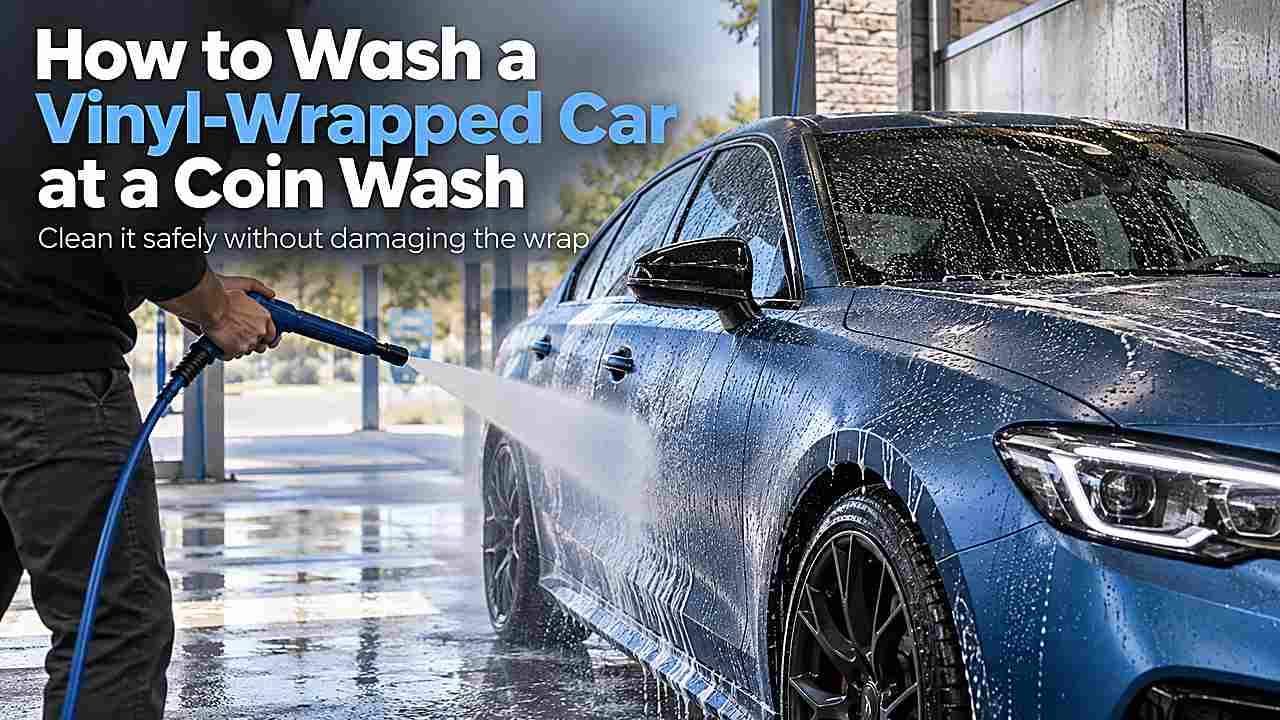
A vinyl wrap can be cleaned at a coin wash, but it should not be treated like ordinary factory paint. Film edges, seams, cut lines, and damaged areas are vulnerable to concentrated pressure, while harsh chemistry and dirty brushes can dull or scratch the surface.
Wrap manufacturers still prefer careful hand washing whenever possible. When a self-service bay is the practical option, use it as a controlled wash station: moderate pressure, compatible soap, no shared brush on the film, thorough rinsing, and gentle drying.
At a coin wash, keep pressure broad and controlled, stay well back from wrap edges, avoid communal brushes and harsh chemicals, use mild wrap-compatible soap, rinse thoroughly, and dry with clean microfiber. Follow the film manufacturer’s care limits if they are stricter.
Start with the wrap condition, not the wash selector
Freshly installed film, lifting edges, cracked seams, and damaged laminate all change what is safe. Many wrap manufacturers advise waiting before the first wash after installation, and installers may set their own curing period. If any edge has already begun to lift, direct water pressure can drive underneath it and enlarge the problem.
Finish type also matters. Gloss vinyl can tolerate products that would leave uneven shine on matte or satin film, while textured or specialty wraps can have their own chemical restrictions. When the film brand is known, its care bulletin should be treated as the primary rulebook rather than generic car-wash advice.
Pressure-washer technique is the biggest coin-wash variable
Major wrap manufacturers publish pressure-washing limits because nozzle angle, distance, and pressure determine whether water pushes across the surface or under an edge. 3M and Avery Dennison both emphasize wide spray patterns, controlled pressure, and meaningful distance from film edges. Those limits are safer than copying how the person in the next bay washes bare paint.
A wrap-safe coin-wash sequence
The sequence below keeps the risky steps separated and makes it easier to notice film problems before pressure or towels reach them.
1. Inspect every seam, edge, and repair before turning on pressure
Walk around the car and look closely at hood edges, door cups, bumper transitions, mirror caps, fuel-door edges, and any place where one piece of film meets another. A small lifted corner may survive a gentle hand wash but fail quickly when a jet is aimed into it. Dirt packed along an edge also deserves gentle pre-rinsing rather than a direct blast. If you find a loose section, avoid that area and arrange an installer repair. Washing is maintenance, not a test of adhesive strength.
2. Pre-rinse with the wand farther away than you would on bare paint
Use a wide fan and keep the nozzle perpendicular to the film whenever possible instead of aiming diagonally into seams. The first pass should loosen sand, salt, and road film from the top down without trying to strip stubborn contamination in one hit. Lower rocker areas can need more time because grit accumulates there, but extra dwell is safer than closing the nozzle distance. Be especially conservative around bumper edges, wheel-arch returns, and door jamb transitions. The goal is coverage, not impact.
3. Use mild, wrap-compatible soap and keep the film wet
A pH-balanced automotive wash that the film manufacturer allows is the safest baseline. Avoid abrasive cleaners, strong solvents, aggressive degreasers, and wax programs unless the wrap maker specifically approves them for your finish. Apply soap in sections if the bay or weather is warm so the film does not dry with chemical residue on it. Matte and satin wraps deserve extra caution because products that add gloss or wax can create visible patchiness. Test unfamiliar chemistry on a small inconspicuous area before committing to the whole vehicle.
4. Skip the communal foaming brush on the wrap
Shared brushes carry the same grit risk on vinyl that they carry on paint, with the added possibility of catching an edge. A clean microfiber mitt or soft non-abrasive wash pad is more predictable if the bay allows personal contact media. Move with the film rather than scrubbing across seams, and keep hand pressure light. Stubborn sap, tar, or bug residue should be softened with an approved spot cleaner rather than attacked with more brush pressure. The finish will last longer when contamination is dissolved instead of abraded.
5. Rinse from the center of panels toward safe runoff paths
A wrap can hold soap along badges, trim gaps, and film overlaps just like paint, but the rinse direction matters more around exposed edges. Keep the water flow across the film instead of toward the underside of a seam. Work methodically from roof to lower body and give mirrors, spoilers, and bumper contours enough time to clear detergent. If the film has a ceramic topper or sealant, normal water behavior may look different from untreated wrap. Clean-rinsing chemistry matters more than maximum beading during the wash itself.
6. Dry without dragging a heavy towel over vulnerable edges
A clean microfiber towel or soft drying towel is safer than rough chamois-style friction when the wrap is delicate. Blot or make light passes in the direction of the film, and avoid hooking towel edges under seams or emblems. Water trapped around mirrors and handles can run back over the film later, so a small finishing towel is useful after the main dry. Air blowers can reduce towel contact if they are clean and used at a sensible distance. Any newly lifted edge noticed after drying should be repaired before the next wash.
Matte, satin, and textured wraps need their own finish strategy
A gloss wrap can tolerate some approved waxes or sealants, while matte and satin films can develop shiny patches when a gloss-enhancing product is used. That is why generic “wax” or “clear coat protectant” bay programs should not be selected automatically. Finish-specific wrap sealants are safer when the installer or film maker recommends them.
Textured films add another challenge because residue can stay in the surface pattern. More product is not the solution; thorough rinsing and clean towels matter more. If the wrap has a printed or laminated graphic, care instructions for that exact construction should override generic color-change-wrap advice.
Contaminants that deserve spot treatment instead of more pressure
Bird droppings, tree sap, tar, fuel residue, and baked bugs should be removed promptly because they can stain or attack film. Wrap makers commonly recommend softening difficult contamination with compatible cleaner and allowing contact time rather than using abrasive tools. A clean microfiber folded into a small pad gives control over the affected area.
Fuel spills deserve immediate attention because petroleum exposure can degrade some films and adhesives. Wash and dry the area as soon as practical using the approved method. If a stain remains after gentle treatment, contact the wrap installer before experimenting with stronger solvents.
Common coin-wash mistakes that shorten wrap life
Aiming pressure into a film edge
An angled jet can force water underneath an edge that looked completely secure from a few feet away. Once water and pressure begin lifting adhesive, repeated washes can enlarge the failure. Keep the spray broad, controlled, and perpendicular to the film. More distance is especially important at seams and bumper transitions. If an edge already looks questionable, avoid pressure there entirely.
Selecting every wax and protectant option on the dial
Coin-wash protectants are designed for broad vehicle use, not necessarily the chemistry or sheen of your exact wrap. Matte and satin finishes can become blotchy or glossy, and some wrap makers caution against waxes containing petroleum distillates. A known wrap-safe sealant is a better choice when protection is desired. The wash bay should clean the film first; finishing chemistry can be applied later under controlled conditions.
Treating a dirty wrap like hard paint
Vinyl is durable, but it can scratch, stain, and lift. Aggressive scrubbing does not become safe simply because the vehicle is heavily soiled. More pre-rinse, more compatible dwell time, and smaller working sections are the better response to grime. If the film cannot be cleaned without force, professional wrap care is cheaper than replacing damaged panels.
A final practical check before you finish
Before calling the job finished, inspect the result under different light and from the position that matters most in daily use. Residue, missed contamination, irritation, or a vulnerable edge is easier to correct when it is noticed immediately rather than after the vehicle or dog has been put away. A good process should leave the surface or coat clean without requiring aggressive follow-up. If the result only looks good while wet, wait until it is fully dry before deciding whether another step is actually necessary.
The safest second pass is usually more targeted than the first. Repeat only the part of the process that did not work, keep the tools clean, and avoid increasing pressure or chemical strength simply because one stubborn area remains. That approach saves time and protects the material you are trying to preserve. Consistency is more valuable than turning one maintenance session into an improvised restoration project.
Check the wrap again after the drive home
A coin-wash rinse can reveal a weak edge that was difficult to see when the vehicle was dry and dusty. Once the car is parked, inspect the front bumper, mirror caps, wheel arches, door cups, and any seams where water pressure had direct access. Fresh lifting usually appears as a clean line, small bubble, or edge that no longer sits flat against the paint. Catching that change early gives the installer a better chance to repair the film before wind and future washing enlarge it.
The same inspection is useful for matte and satin films because uneven gloss or streaking is easier to notice after the vehicle has fully dried. Do not try to correct finish changes with abrasive polish, rubbing compound, or household solvent. Photograph the area, note which wash program was used, and ask the film installer or manufacturer for the correct recovery method. A controlled after-wash inspection protects the investment just as much as careful pressure-wand technique.
Frequently Asked Questions
These questions address the decisions that usually come up once the main method is clear. The direct answer comes first, followed by the details that change what you should do in practice.
Can I pressure wash a vinyl-wrapped car?
Yes, many wrap manufacturers allow controlled pressure washing, but they publish limits for pressure, nozzle angle, and distance. 3M and Avery Dennison both favor wide spray patterns and caution strongly against aiming into film edges. The exact film manufacturer’s instructions should take priority because products differ. Hand washing remains the preferred method when it is practical.
Can I use the foaming brush at a coin wash on vinyl wrap?
It is better not to use a communal brush on wrapped body panels. Dirt trapped in the bristles can scratch the film, and the brush can catch edges or seams. A clean personal microfiber mitt is more predictable if the facility allows it. The shared brush is better reserved for durable non-wrap areas when appropriate.
Should I use wax at the coin wash on a wrapped vehicle?
Only if the film manufacturer approves that type of product for your exact finish. Matte and satin wraps are especially sensitive to gloss-enhancing waxes, and some manufacturers warn against petroleum-distillate waxes. A dedicated wrap sealant is easier to control. When in doubt, skip the bay wax and protect the film later with an approved product.
How soon can I wash a newly wrapped car?
The waiting period depends on the film and installer, but major manufacturers advise allowing the installation time to settle before washing. Some 3M care guidance specifies waiting at least 72 hours. Your installer may give a longer period based on weather, film, and edge work. Follow the installer’s written recommendation rather than assuming all wraps cure at the same rate.
What if a wrap edge lifts after the wash?
Do not keep spraying, scrubbing, or trying to push contaminated adhesive back down. Dry the area gently and avoid further pressure until the installer can inspect it. A small clean edge issue may be repairable, while dirt or stretched film can make a simple re-stick unreliable. Early attention usually costs less than allowing wind and future washing to enlarge the lifted section.
Conclusion
A coin wash can work for vinyl when it is treated as a controlled rinse-and-clean station rather than a high-pressure shortcut. Protect edges, use compatible chemistry, avoid communal brushes on film, and dry with clean soft materials.
Before the next wash, identify the film brand or ask the installer for its care sheet. Knowing the exact pressure, chemical, and finish limits removes guesswork and is the best way to keep the wrap looking intentional instead of prematurely worn.