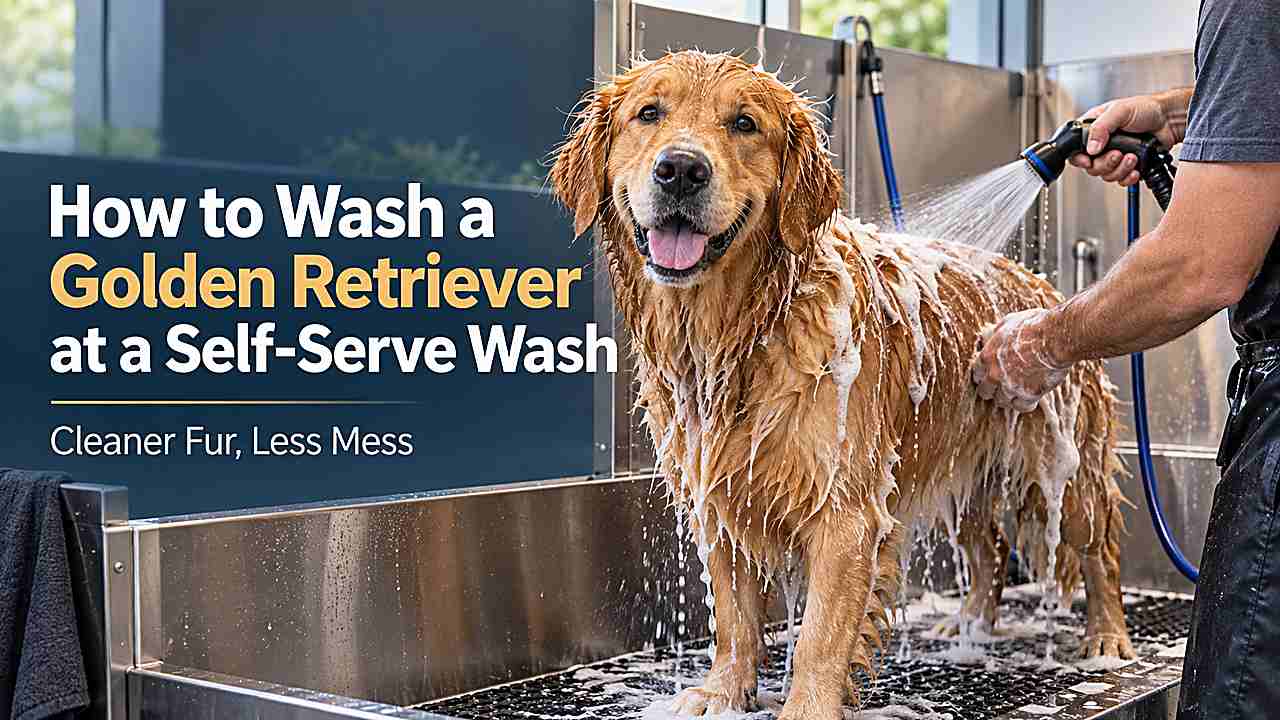
Golden Retrievers carry a water-resistant double coat with feathering that can hold dirt, loose undercoat, shampoo, and moisture. A self-serve station gives you the tub and dryer power to handle that coat, but preparation and thorough rinsing matter more than using extra shampoo.
A strong result comes from choosing the least stressful method that still gets the dog clean. Coat type, age, skin health, mobility, and previous grooming experiences all change how quickly you should move and which tools make sense.
Brush a Golden Retriever before the bath, wet the coat to the skin, use mild dog shampoo, rinse until completely clear, towel-blot, then force-dry in sections while checking feathering and undercoat for remaining moisture.
Prepare before you start
Preparation shortens the wet part of the session and prevents the common mistake of leaving a dog unattended while you search for supplies. Set up the space first, then bring the dog into it.
- Brush out loose undercoat and tangles before getting the dog wet.
- Pay special attention behind the ears, armpits, tail, and rear feathering.
- Bring a dog-specific shampoo and conditioner if the facility permits personal products.
- Use a non-slip tub and safe tether.
- Plan enough time for drying the dense coat completely.
If you notice open wounds, painful swelling, severe matting, infected-looking ears, breathing trouble, or a level of fear you cannot manage safely, postpone the routine bath and get appropriate professional advice.
Why Golden Retriever coats need extra rinsing
The combination of guard hairs, undercoat, and feathering creates many places for diluted shampoo to remain. A quick surface rinse can leave product near the skin even when the coat looks clean.
Use your free hand to part the coat and direct water through the undercoat. Rinsing usually deserves at least as much attention as shampooing.
Ear care around bath time
Goldens have drop ears that can trap moisture. Keep the sprayer out of the ear canal and dry the outer ear leather after the bath.
If you notice strong odor, discharge, pain, severe redness, or repeated head shaking, do not treat it as a simple grooming issue. Ask a veterinarian to check for infection.
Step-by-step routine
Work in a consistent order so the dog knows what happens next. Short, controlled stages also make it easier to pause if the dog becomes uncomfortable.
1. Brush before the bath
Remove loose hair and minor tangles so water can move through the coat. A packed undercoat slows rinsing and drying. Never pull hard through mats.
Pro tip: Keep treats, shampoo, and drying tools on the same side of the tub so you can maintain one-hand contact with the dog.
2. Wet all the way to the skin
Golden coats can repel water at first. Work section by section, using your fingers to open the coat while the sprayer wets the undercoat.
Pro tip: If the dog stops taking a favorite treat, lower the intensity before continuing.
3. Shampoo with the coat, not against it
Massage mild dog shampoo through the body while avoiding eyes and ear canals. Use a damp cloth for the face. Concentrate on dirty chest, belly, legs, and tail rather than piling shampoo onto already clean areas.
Pro tip: Use your free hand to separate thick coat so water and airflow reach the skin without increasing pressure.
4. Rinse repeatedly
Rinse until the water runs clear and the coat no longer feels slippery. Check armpits, groin, tail base, and feathering. Product residue can cause itch and make the coat feel dull.
Pro tip: Check the dog’s skin temperature and footing every few minutes rather than waiting until the end.
5. Dry the undercoat methodically
Blot first, then use a pet high-velocity dryer if tolerated. Work in narrow sections, keeping the nozzle moving. Shield the ears and face from strong airflow.
Pro tip: Finish one body zone completely before moving on so you do not lose track of rinsing or drying.
6. Finish with a comb check
Once mostly dry, comb through feathering and dense areas to find damp spots or tangles. The comb should move through the coat without catching on hidden knots.
Pro tip: End on a calm, manageable step instead of using every remaining minute on the timer.
Handling heavy seasonal shedding
During coat blow, pre-brushing plus a thorough bath and force dry can release a large amount of undercoat. Work gently and keep the dryer moving rather than concentrating pressure on one spot.
Do not shave a healthy Golden Retriever simply to reduce shedding. Routine coat maintenance preserves the protective double coat.
What to bring even when the station supplies everything
Bring a regular leash, high-value treats, any veterinarian-recommended shampoo, and a familiar brush suited to your dog’s coat. A waterproof bag for wet personal items is useful on the way home.
If your dog has mobility limits, call ahead about ramps and tub height. If your dog is reactive to other dogs, ask when the wash is usually quiet.
Inspect shared equipment before use
Look at the tub floor, tether, sprayer, brushes, and dryer hose before putting the dog in. Skip a shared brush that is packed with hair or visibly dirty, and tell staff if equipment appears damaged.
A self-serve station should make grooming easier, but you still choose what touches your dog. Bringing your own brush is often the simplest way to control cleanliness and tool type.
Self-serve wash safety that applies to every dog
Even when the article focuses on one coat or grooming problem, the basic safety rules do not change. The station should reduce physical strain and mess, not encourage you to rush or use stronger restraint than you would at home.
Read the dog before you read the timer
Self-serve stations often run on a timer, but the dog sets the safe pace. A nervous dog may need thirty seconds to settle before water starts, while a confident dog may be ready immediately. Rushing because paid time is counting down can turn a simple wash into a handling problem.
Watch posture, breathing, willingness to take food, and attempts to escape. If stress keeps rising, simplify the task, lower water pressure, move away from noisy equipment, or stop. Paying for another session is cheaper than creating an injury or a lasting fear of grooming.
Protect eyes, ears, and footing
Keep strong spray and shampoo away from the eyes and inside the ears. Clean the face with a damp cloth when practical, and dry the outer ears after bathing. A rubber mat or textured tub floor is equally important because wet paws on stainless steel can slide suddenly.
Gather supplies before you begin so the dog is never left alone in a raised tub. If you use a grooming tether, treat it as backup restraint rather than permission to step away.
Rinse more than you think you need to
Residual shampoo is a common avoidable cause of post-bath itch and dull-feeling coat. Work from the neck backward and rinse in sections until the water runs clear and the hair no longer feels slick.
Dense undercoats, armpits, groin, tail base, feathering, and skin folds need extra attention. If you used conditioner, follow its label and rinse to the recommended level rather than guessing.
Common mistakes to avoid
Most bath problems come from rushing, using the wrong product, or continuing after the dog has stopped coping. Avoid these shortcuts even when the dog is very dirty or the timer is running.
- Starting with full water pressure on the face or ears.
- Using human shampoo because the dog is especially dirty.
- Scrubbing tangles or gritty mud harder instead of removing debris first.
- Leaving shampoo in dense areas of the coat.
- Using hotter dryer air to finish faster.
- Leaving a tethered dog unattended on a raised surface.
- Continuing after the dog is panicking, choking against restraint, or at risk of biting.
A slower, organized wash is usually faster overall because you do not have to repeat rinsing, untangle a stressed dog, or correct irritation afterward. If one step is not working, change the method instead of adding force.
A practical finishing checklist
Before you leave the wash area or consider the job finished, pause for a full nose-to-tail check. The dog should be standing comfortably on secure footing, the coat should feel free of slippery shampoo residue, and no area should be dripping enough to soak bedding or stay wet for hours. A final check takes only a few minutes and catches many problems while they are still easy to fix.
Run your fingers through dense areas rather than judging dryness from the surface. Feel behind the ears, under the collar area, in the armpits, along the belly, at the tail base, between the toes, and through any long feathering. If the hair close to the skin feels cool, clumped, or heavy, it probably still holds moisture and needs more drying.
Check the dog’s skin and behavior at the same time. Mild tiredness after a grooming session can be normal, but limping, persistent trembling, repeated head shaking, frantic scratching, facial swelling, hives, vomiting, breathing changes, or obvious pain are reasons to stop treating the issue as ordinary grooming. Rinse away any suspected product residue and contact a veterinarian when signs are significant or persistent.
Pack wet brushes and towels separately from clean equipment, and follow the station’s posted cleanup rules. Wash reusable towels and brushes before the next session so dried shampoo, hair, mud, or skin oils do not get carried back onto the dog. A clean kit makes future baths faster and reduces the chance of introducing debris into freshly washed coat or sensitive skin.
Finally, make one mental note about what worked. Maybe the dog tolerated lower airflow, entered more easily with a ramp, stayed calmer when the face was cleaned last, or needed much more rinsing than expected. Turning those observations into the next routine is how grooming becomes easier over time rather than starting from zero at every bath.
How to know the bath worked
A successful bath leaves the coat clean without obvious residue, the skin comfortable, and the dog able to recover normally after grooming. Run your hands over the coat after drying and check the paws, belly, armpits, tail base, and behind the ears for dampness, missed dirt, tangles, or irritation.
Watch the dog during the next several hours. Persistent scratching, redness, hives, strong odor, head shaking, pain, vomiting, breathing changes, or unusual weakness are not normal finishing details. Rinse away suspected product residue and contact a veterinarian when symptoms are significant or do not settle.
Keep notes when a particular shampoo, dryer setting, station layout, or handling technique works well. Repeating a predictable routine can make future grooming easier for both dog and owner, especially for dogs that are sensitive to noise or restraint.
Frequently Asked Questions
Should I use conditioner on a Golden Retriever?
A dog-specific conditioner can help with feathering and dryness, but it is optional for many healthy coats. Rinse according to the label.
The safest choice also depends on the individual dog’s coat, skin, age, health, and behavior, so adjust the general rule when your veterinarian, groomer, or product instructions provide more specific guidance.
How long does drying take?
It varies with coat density, dog size, towel efficiency, and dryer power. Dense Goldens can take much longer than short-coated dogs, so do not rush the undercoat.
The safest choice also depends on the individual dog’s coat, skin, age, health, and behavior, so adjust the general rule when your veterinarian, groomer, or product instructions provide more specific guidance.
Can I use the station’s de-shedding shampoo?
You can if it is dog-safe and your dog has tolerated similar products, but shampoo is only one part of de-shedding. Brushing and drying technique matter more.
The safest choice also depends on the individual dog’s coat, skin, age, health, and behavior, so adjust the general rule when your veterinarian, groomer, or product instructions provide more specific guidance.
How often should a Golden Retriever be bathed?
Bath frequency depends on lifestyle, odor, coat condition, and skin health. Bathe when dirty and maintain the coat with regular brushing between baths.
The safest choice also depends on the individual dog’s coat, skin, age, health, and behavior, so adjust the general rule when your veterinarian, groomer, or product instructions provide more specific guidance.
Conclusion
Washing a golden retriever at a self serve wash becomes much easier when you prepare the dog and equipment first, use dog-specific products, control water and restraint carefully, and give rinsing and drying enough time. The fastest routine is the one that avoids creating a second problem such as fear, residue, matting, skin irritation, or incomplete drying.
Use the practical steps above as a baseline, then adapt them to your dog’s coat and comfort. When behavior, skin, ears, mobility, or contamination moves beyond ordinary grooming, stop the DIY process and involve a qualified groomer or veterinarian.