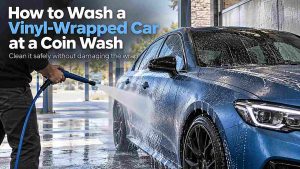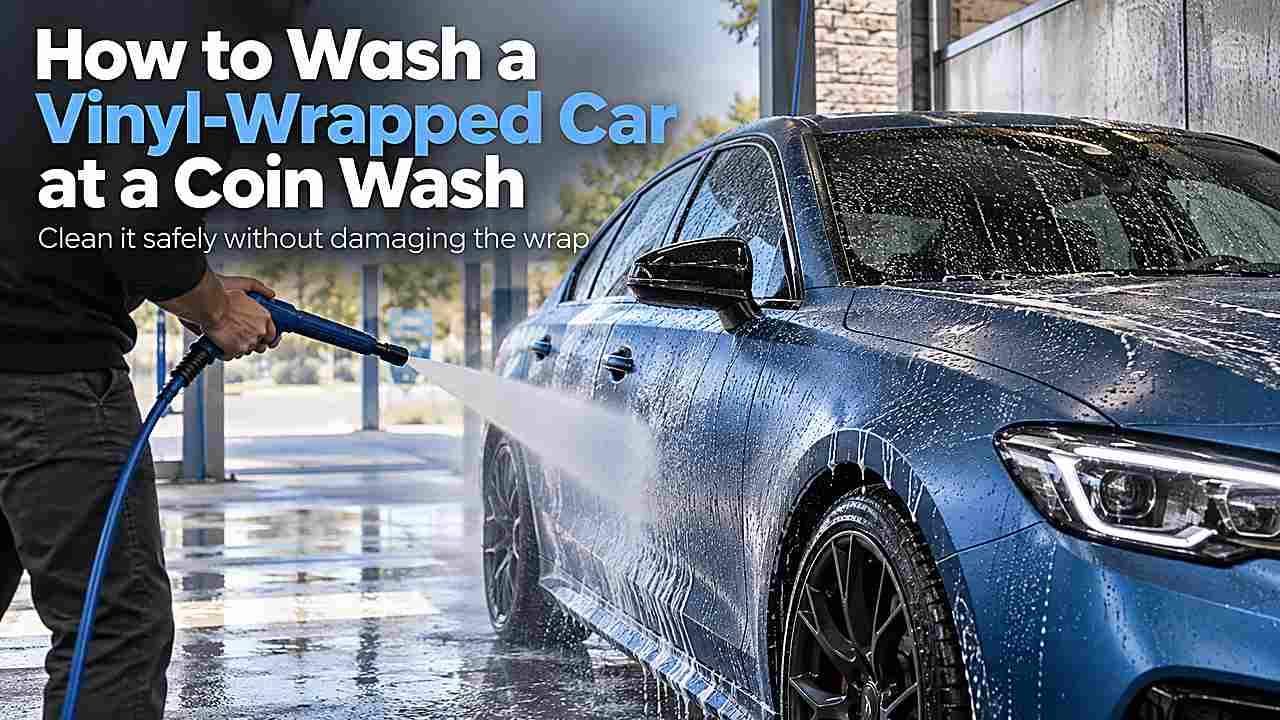
A vinyl-wrapped vehicle can be cleaned at a self-service wash, but the wrap changes how you should use the pressure wand, soap, and drying towel. The highest-risk areas are film edges, seams, damaged sections, and any place where concentrated pressure can force water under the adhesive.
Wrap manufacturers generally prefer careful hand washing. When a coin wash is your practical option, use it as a controlled rinse station and keep the spray broad, moderate, and away from vulnerable edges.
At a coin wash, rinse a vinyl wrap with a wide spray from a safe distance, use mild wrap-compatible soap, avoid communal brushes and harsh chemicals, never aim pressure into film edges, and dry gently with clean microfiber. Follow your film manufacturer’s care limits if they are stricter.
Know your wrap before you wash it
Not every wrap behaves the same way. Gloss, satin, matte, printed graphics, chrome-effect films, and protection wrap products can have different chemical and aftercare limits. If you know the film brand and product line, read its maintenance guidance before using an unfamiliar wash chemical.
3M and Avery Dennison both emphasize gentle cleaning and caution around high-pressure washing. Their published guidance warns that excessive pressure can push water under the film and promote edge lift or curling, especially when the spray hits an edge at a shallow angle.
Freshly installed film also needs time before washing. Manufacturer guidance commonly calls for waiting at least 48 to 72 hours after installation, so confirm the installer’s instructions before the first wash.
Use pressure conservatively
For 3M wrap-related products, published pressure-wash guidance includes a maximum of about 1,200 psi, a wide fan pattern, and at least 12 inches of distance under specified conditions. Avery Dennison also publishes a 1,200 psi maximum and a minimum distance of roughly 30 cm for applicable graphic films. Your specific wrap may require more conservative limits.
At a coin wash, you usually cannot verify nozzle pressure precisely. Compensate by increasing distance, keeping the wand moving, and avoiding direct attacks on edges, seams, stone chips, lifted corners, and repaired areas.
Hold the stream close to perpendicular when cleaning the middle of a panel rather than slicing across an edge. Never use the nozzle to test whether a loose edge is still attached.
A safe coin-wash sequence for wrapped cars
1. Inspect the film
Look for lifted edges, bubbles, scratches, damaged seams, or exposed adhesive before you start. Hand-clean damaged areas later rather than putting pressure directly on them.
2. Pre-rinse from a distance
Use a broad fan of water to remove loose grit. Work top to bottom and give extra attention to the lower doors and rear of the vehicle without moving the nozzle dangerously close.
3. Use mild compatible soap
Choose a wrap-safe automotive detergent or a mild wash solution within the film maker’s recommendations. Avoid strong alkaline presoak, solvents, abrasive cleaner, and unknown degreasers.
4. Perform gentle contact washing if allowed
Use your own clean microfiber mitt or soft sponge rather than a communal brush. Clean straight across the surface with light pressure and rinse the wash media often.
5. Rinse thoroughly
Remove all soap, especially around door handles, mirrors, badges, panel seams, and graphic overlaps. Keep the spray from driving directly into film edges.
6. Dry carefully
Use a clean soft microfiber towel and dab or gently wipe the surface. Do not catch a towel edge under a seam or pull against a partially lifted corner.
Why the communal foaming brush is risky
The problem with a shared brush is not only the bristle material. You do not know whether the previous customer used it on muddy rocker panels, wheels, tires, or a truck bed. Any trapped grit can scratch or haze vinyl just as it can paint.
Brushes can also snag graphic edges or raised seams. Wrap manufacturers that discuss automatic car washes often prefer brushless options for the same reason: mechanical contact can dull the film and promote edge lifting.
If the facility does not allow your own wash mitt, use a careful touchless routine and address any remaining bonded contamination later with a product approved for the wrap.
Choose chemicals by finish, not by marketing label
Matte and satin wraps should stay matte or satin. Products that contain gloss enhancers, conventional wax, aggressive polish, or abrasives can create uneven shiny patches that are difficult or impossible to reverse without replacing film.
Printed graphics and specialty films also need compatible cleaners. Solvents and strong alkaline or acidic products can attack ink, laminate, adhesive, or the film surface. Test unfamiliar products in an inconspicuous location when the manufacturer allows it.
If the coin wash’s presoak or wax cycle has no useful ingredient information, skipping it is reasonable. Clean water and a known mild shampoo provide more control.
Remove bugs, bird droppings, and sap without scrubbing
Bonded contamination should be softened before removal. 3M’s product-care guidance suggests soaking difficult contaminants such as tree sap with hot soapy water for several minutes, then rinsing and drying rather than using rough scrubbing or abrasive tools.
For bird droppings and bugs, act promptly because staining becomes more likely with time and heat. Re-wet the material, use a film-compatible spot cleaner if necessary, and lift it away with soft microfiber.
Do not attack a stubborn spot with the pressure nozzle at close range. The contaminant may remain while the edge of the wrap lifts.
Drying and water-spot control
Wrap films can show water spots just like paint. Dry promptly after rinsing, especially on horizontal panels and dark colors. 3M recommends washing and drying in a shaded or protected area when possible to reduce hard-water spotting.
Use a clean towel and light pressure. If the wrap has exposed edges, wipe with the edge rather than against it so the towel does not catch underneath.
A spot-free final rinse can be useful when the bay maintains its water system, but you should still remove trapped drips from mirrors, handles, and trim before they run across the film.
When not to use a coin wash
Skip pressure washing if the wrap is already lifting, cracking, peeling, or poorly bonded around an accident repair. High-pressure water can make a local defect spread quickly.
Also postpone the wash if the film was just installed and has not completed the installer’s recommended waiting period. Heat, adhesive type, weather, and film product can affect that timeline.
If you own a rare specialty finish and cannot confirm its care limits, a wrap installer or detailer familiar with that product is safer than experimenting with unknown bay chemicals.
How to adapt the method when conditions are not ideal
Real wash bays rarely give you perfect conditions, so washing a vinyl wrapped car at a coin wash sometimes requires changing the plan rather than forcing the normal sequence. Hot panels, weak water pressure, a crowded facility, unknown chemicals, wind, or unusually heavy contamination all affect what is safe and efficient.
If a product begins drying before you can rinse it, stop adding more product and rinse the affected area first. If pressure feels unusually strong, increase nozzle distance and keep the fan moving. If pressure is weak, use more dwell time and repeated passes instead of moving the nozzle dangerously close to paint, seals, graphics, trim, or accessories.
When the bay is busy, do preparation before entering and move to the designated drying or vacuum area as soon as the spray work is finished. That lets you work carefully without blocking the stall for tasks that do not require the bay’s water system.
If you are unsure whether a chemical, brush, or pressure setting is compatible with a specialty surface, choose the lower-risk option and finish that detail later with a known product. Leaving one stubborn mark for another day is safer than creating permanent damage while a timer is running.
A final inspection before you leave
Walk around the vehicle or equipment in good light before packing up. Look for soap trapped below mirrors or trim, dirty runoff from seams, missed contamination on lower areas, fresh water spots, and any streak that is easier to correct while the surface is still wet.
Keep clean and dirty tools separated as you pack. Anything used on wheels, tires, floor mats, muddy lower areas, trailer parts, or the bay floor should stay away from paint-safe microfiber until it has been thoroughly washed.
Make a mental note of how that particular bay performed. Water pressure, chemical strength, timer length, spot-free quality, hose reach, and drainage vary between facilities. A consistent process gets easier when you know which settings at a reliable local wash actually work for your vehicle.
Practical details that improve the result
Inspect the wrap more closely after seasonal temperature changes. Heat and cold cycles can reveal a weak edge, a lifting corner, or a seam that looked perfect when the film was installed. If you find one, keep the pressure stream well away from it and have the installer repair the area before the defect grows.
Pay attention to matte and satin films during drying. These finishes are designed to scatter light evenly, so polishing or rubbing one small spot harder than the rest can create a visible gloss change. Use even, gentle towel contact and avoid trying to buff away a stain with abrasive polish unless the film manufacturer specifically allows that method.
Fuel spills, bird droppings, bugs, and tree sap deserve prompt cleaning because they can stain or degrade film when left in place. The coin wash is useful for a quick rinse after contamination, but stubborn residue should be softened with a compatible product rather than attacked with high pressure. Fast treatment reduces the amount of force you need later.
If your vehicle has printed graphics, remember that the top laminate can protect the ink while edges and cut lines remain vulnerable. Direct the water across the surface rather than into the edge of lettering or a stripe. The goal is to flush contamination away without giving the water a path underneath the film.
Do not assume a shiny spray wax is harmless simply because it is offered by the bay. Some films accept approved protectants while others, especially matte products, can develop uneven sheen. When the ingredient or compatibility information is unknown, a complete rinse and careful dry is the safer finish.
Keep a record of the wrap brand and product line in your phone. If you ever need to check pressure limits or cleaner compatibility at the wash, having the exact film name is more useful than relying on generic advice for all vinyl.
Frequently Asked Questions
Can I pressure wash a vinyl wrap?
Many wrap films can tolerate controlled pressure washing, but manufacturer limits matter. Use a wide fan, keep your distance, stay below the film maker’s pressure limit, and never aim directly into edges or seams.
Can I use car wash wax on a vinyl wrap?
Only if the film manufacturer allows that type of product. Matte and satin wraps are especially sensitive to gloss-enhancing waxes and polishes.
Should I use the coin wash foaming brush on a wrap?
It is safer to avoid a communal brush because it may contain grit and can catch film edges. Use your own clean soft wash media if the facility allows it.
How soon after wrapping can I wash the car?
Follow your installer’s instructions. Major film manufacturers commonly advise waiting at least 48 to 72 hours before washing freshly applied film.
What if an edge starts lifting after the wash?
Do not keep spraying or press the contaminated edge down. Let it dry and contact the installer so the area can be cleaned and repaired correctly.
Conclusion
A coin wash can work for a wrapped vehicle when you treat the pressure wand as a precision tool rather than a dirt blaster. Use mild chemistry, wide spray, conservative distance, clean contact media, and gentle drying. The wrap manufacturer’s instructions always outrank generic wash advice, especially for pressure limits and specialty finishes.