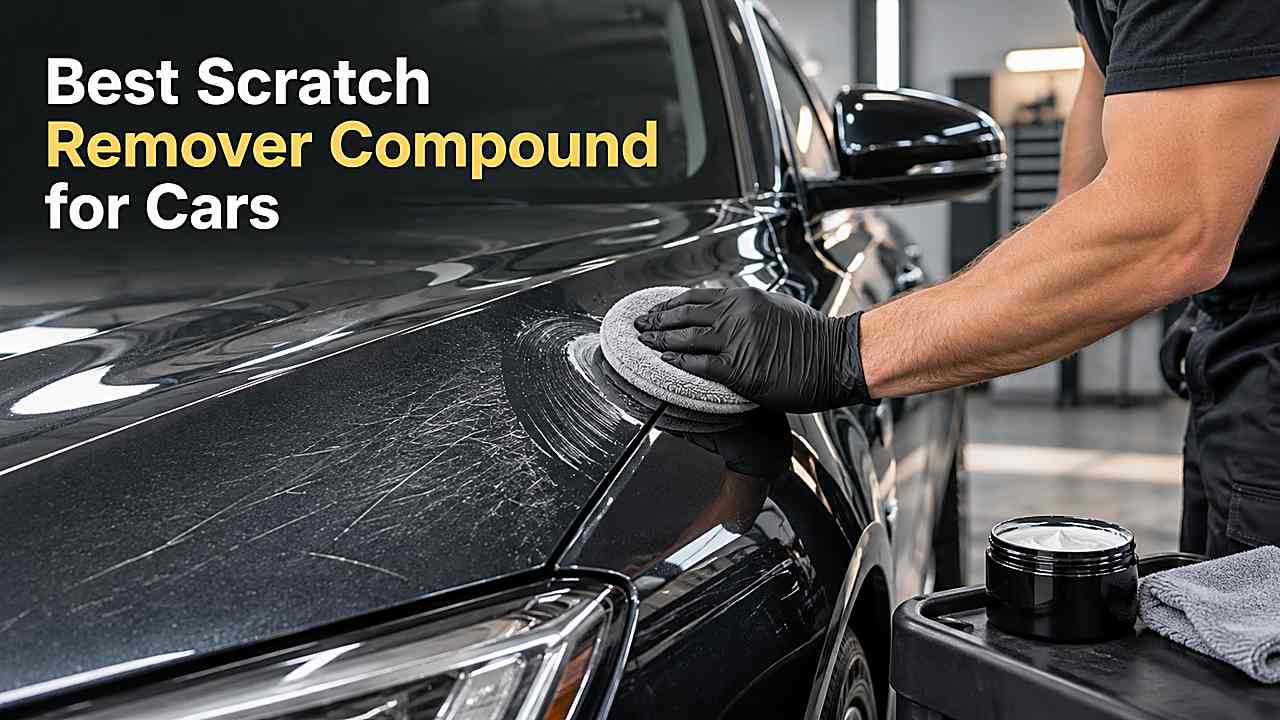
Best car scratch remover compound is not a useful shopping question until the job is defined clearly. A product can look excellent in a rating table and still be the wrong choice for the surface, vehicle, pet, garage, or workflow that will actually use it.
This guide compares current options by the details that change real-world performance, then explains where each pick fits and where its trade-offs become important. The aim is to make the shortlist useful after the first week of ownership, not just persuasive on purchase day.
Meguiar’s Ultimate Compound is the best general DIY compound because it is clear-coat safe, works by hand or dual-action polisher, and can correct swirls, oxidation, water spots, and many light clear-coat scratches. Deeper scratches that expose color, primer, or metal need a different repair.
What matters before you buy
The most important specifications are the ones that control the real task. Marketing claims are easier to evaluate once the surface, workload, compatibility limits, and maintenance burden are clear.
Scratch depth decides whether compound can help
Compounds remove a microscopic amount of surrounding clear coat to level shallow defects. If the scratch is only in the clear coat, correction may greatly reduce or eliminate its appearance. A mark that reaches color coat, primer, or bare metal cannot be safely polished away because missing paint has to be replaced. That distinction matters in everyday use because the wrong setup can make a capable product feel disappointing. A small compatibility test also reduces the chance of creating a bigger problem while trying to solve the original one.
Cutting power should match the defect
A heavy compound removes defects faster but can leave haze that needs a finishing polish, especially on soft dark paint. One-step products sacrifice some raw cut for a cleaner finish. The mildest product that achieves the correction is usually the best place to start. That distinction matters in everyday use because the wrong setup can make a capable product feel disappointing. A small compatibility test also reduces the chance of creating a bigger problem while trying to solve the original one.
Application method changes the product
The same compound behaves differently by hand, dual-action polisher, microfiber pad, and foam pad. Machine polishing increases consistency and cutting ability, but it also makes pad choice important. Treat the liquid and pad as one correction system rather than separate decisions. That distinction matters in everyday use because the wrong setup can make a capable product feel disappointing. A small compatibility test also reduces the chance of creating a bigger problem while trying to solve the original one.
Low dust and easy wipe-off improve real results
A compound that cuts well but dries into heavy dust creates extra wiping, and that wiping can introduce new marring. Long working time lets abrasives cycle without constant reloads. Easy residue removal also makes inspection more honest because fillers and smears are less likely to hide defects. That distinction matters in everyday use because the wrong setup can make a capable product feel disappointing. A small compatibility test also reduces the chance of creating a bigger problem while trying to solve the original one.
Quick comparison of the strongest options
Each product below wins for a different type of buyer. The table narrows the field quickly, while the detailed notes explain the practical trade-offs that a star rating cannot show.
| Product | Best for | Why it stands out |
| Meguiar’s Ultimate Compound | Best overall DIY compound | Meguiar’s states that Ultimate Compound is clear-coat safe, works by hand or DA polisher, and removes swirls, scratches, oxidation, and water spots with micro-abrasive technology. |
| 3D ONE Hybrid Compound and Polish | Best one-step machine option | 3D ONE combines cutting and finishing behavior in one product, with pad choice controlling how aggressive the correction becomes. |
| Griot’s Garage Complete Compound | Best user-friendly enthusiast compound | Griot’s compound line emphasizes manageable working time and a finish that reduces how much follow-up polishing is needed. |
| SONAX CutMax | Best heavy-cut professional-style option | CutMax is aimed at more serious correction where fast defect removal matters before a refining polish. |
| Meguiar’s Scratch Eraser Kit | Best localized spot-repair kit | Current October 2026 testing names the Meguiar’s Scratch Eraser Kit a top overall option for improving light surface-level marks. |
The best choices in detail
1. Meguiar’s Ultimate Compound: Best overall DIY compound
Meguiar’s Ultimate Compound earns the best overall diy compound position because meguiar’s states that Ultimate Compound is clear-coat safe, works by hand or DA polisher, and removes swirls, scratches, oxidation, and water spots with micro-abrasive technology. It gives beginners useful correction without immediately moving to professional heavy-cut chemistry. It cannot repair scratches that have gone through the clear coat into color or primer. It is the best starting point for most owners correcting ordinary clear-coat defects. Before buying, confirm the current package contents, compatibility, warranty, and any revised manufacturer directions because bundles and specifications can change over time.
2. 3D ONE Hybrid Compound and Polish: Best one-step machine option
3D ONE Hybrid Compound and Polish earns the best one-step machine option position because 3D ONE combines cutting and finishing behavior in one product, with pad choice controlling how aggressive the correction becomes. One bottle can handle moderate correction and finishing when paired with the right DA pad. Maximum heavy-defect removal may still require a dedicated compound and separate finishing step. It suits DA-polisher users who want one liquid for moderate swirls and scratches. Before buying, confirm the current package contents, compatibility, warranty, and any revised manufacturer directions because bundles and specifications can change over time.
3. Griot’s Garage Complete Compound: Best user-friendly enthusiast compound
Griot’s Garage Complete Compound earns the best user-friendly enthusiast compound position because griot’s compound line emphasizes manageable working time and a finish that reduces how much follow-up polishing is needed. Easy wipe-off and predictable behavior reduce frustration during first-time machine correction. Severe defects can demand more cut than a consumer-oriented compound provides. It is a comfortable choice for owners who prioritize controllability. Before buying, confirm the current package contents, compatibility, warranty, and any revised manufacturer directions because bundles and specifications can change over time.
4. SONAX CutMax: Best heavy-cut professional-style option
SONAX CutMax earns the best heavy-cut professional-style option position because cutMax is aimed at more serious correction where fast defect removal matters before a refining polish. Its stronger cut can save time on neglected paint when the operator already understands pads and paint thickness. The aggressive capability makes follow-up finishing and conservative edge technique more important. It belongs with experienced users correcting heavily swirled clear coat. Before buying, confirm the current package contents, compatibility, warranty, and any revised manufacturer directions because bundles and specifications can change over time.
5. Meguiar’s Scratch Eraser Kit: Best localized spot-repair kit
Meguiar’s Scratch Eraser Kit earns the best localized spot-repair kit position because current October 2026 testing names the Meguiar’s Scratch Eraser Kit a top overall option for improving light surface-level marks. The bundled drill pad and product simplify small door-handle scuffs and isolated defects. The small pad is intended for localized work and only reduces the appearance of deeper scratches. It is useful for owners who do not own a full dual-action polisher. Before buying, confirm the current package contents, compatibility, warranty, and any revised manufacturer directions because bundles and specifications can change over time.
A fingernail test is useful but not a paint-thickness measurement
If a clean fingernail catches strongly in the scratch, the defect is more likely to be too deep for safe complete removal. That does not mean the mark cannot be improved, but chasing it until invisible may require excessive clear-coat removal. Good lighting from several angles shows whether primer or bare material is exposed.
When depth is uncertain, partial improvement is a safer target than perfection. A paint-thickness gauge can add information on metal panels, but it still does not identify every individual layer precisely.
Paint correction should end with protection
Compounding removes oxidation, defects, and any wax or sealant in the worked area. The corrected surface should be wiped clean, inspected, and then protected with a wax, sealant, or coating that suits the owner’s maintenance plan.
Protection does not prevent every future scratch, but it makes washing easier and reduces chemical exposure. The correction step is only half of restoring the panel.
Common buying and use mistakes
Most disappointing purchases in this category are not completely useless products. They are capable products matched to the wrong job, or good products used in a way that defeats the feature that made them worth buying.
Trying to erase a deep scratch completely
A deep defect can tempt the owner into repeated aggressive passes. Clear coat is finite, and removing too much around one scratch creates a larger problem than the mark itself. Improvement is sometimes the correct endpoint. That distinction matters in everyday use because the wrong setup can make a capable product feel disappointing. A small compatibility test also reduces the chance of creating a bigger problem while trying to solve the original one.
Using a dirty or overloaded pad
A pad packed with spent compound and removed paint stops cutting consistently and can create haze. Cleaning pads between sections keeps abrasive behavior predictable. Several fresh pads are safer than forcing one pad through an entire vehicle. That distinction matters in everyday use because the wrong setup can make a capable product feel disappointing. A small compatibility test also reduces the chance of creating a bigger problem while trying to solve the original one.
Polishing edges like flat panels
Body lines and panel edges can have less paint and concentrate machine pressure. They deserve lighter technique and sometimes masking. A defect near an edge is not worth risking a strike-through. That distinction matters in everyday use because the wrong setup can make a capable product feel disappointing. A small compatibility test also reduces the chance of creating a bigger problem while trying to solve the original one.
Keep pads and inspection tools as clean as the paint
Pads and towels should be stored clean and sealed away from garage dust. One contaminated polishing pad can create more marring than the compound removes. Portable inspection lighting also reveals whether the chosen pad-and-compound combination is actually improving the surface.
Paint-correction liquids last longer when kept sealed and away from freezing or extreme heat. Shake older liquids thoroughly before use and discard products that have separated abnormally or developed hard particles.
Frequently Asked Questions
These questions cover the decisions that usually remain after the shortlist has been narrowed down and the basic trade-offs are clear.
Can scratch remover compound remove a scratch that catches my fingernail?
It may reduce the appearance, but a strong fingernail catch suggests the defect is relatively deep. Complete removal could require taking away too much surrounding clear coat. If primer or bare metal is visible, compound cannot replace the missing paint. That distinction matters in everyday use because the wrong setup can make a capable product feel disappointing. A small compatibility test also reduces the chance of creating a bigger problem while trying to solve the original one.
Is rubbing compound safe on clear coat?
Modern compounds made for automotive clear coat can be safe when used with the correct pad, pressure, and working time. Safety does not mean unlimited use because every abrasive correction removes some material. Test a small section and stop once the defect is acceptably improved. That distinction matters in everyday use because the wrong setup can make a capable product feel disappointing. A small compatibility test also reduces the chance of creating a bigger problem while trying to solve the original one.
Should I use compound by hand or with a DA polisher?
Hand application works for isolated light defects and small areas, while a dual-action polisher produces more consistent correction over larger panels. A DA also allows controlled pad selection. Beginners should practice on a test section and avoid edges and sharp body lines. That distinction matters in everyday use because the wrong setup can make a capable product feel disappointing. A small compatibility test also reduces the chance of creating a bigger problem while trying to solve the original one.
Do I need polish after compound?
It depends on the compound, pad, paint hardness, and finish left behind. Some modern one-step products can finish well enough for direct protection. Heavy-cut compounds often leave micro-haze that becomes obvious on dark paint and benefits from a finishing polish. That distinction matters in everyday use because the wrong setup can make a capable product feel disappointing. A small compatibility test also reduces the chance of creating a bigger problem while trying to solve the original one.
Can compound remove scratches from matte paint?
No. Matte and satin finishes should not be compounded or polished because abrasion changes the texture and creates shiny spots. Scratch repair on matte paint follows a different refinishing process. Conventional compounds are for glossy painted surfaces unless a manufacturer explicitly states otherwise. That distinction matters in everyday use because the wrong setup can make a capable product feel disappointing.
Conclusion
The strongest choice for best car scratch remover compound depends on the exact job and the conditions in which the product will be used. The best overall pick is the safest starting point, but another option may be better when portability, compatibility, finish, capacity, or maintenance matters more.
Check the current manufacturer specifications before buying, then use the product within its stated limits from the first session. A well-matched product maintained properly will usually outperform a more expensive option that was chosen for features the job never needed.