Best iron remover for white car paint is not a useful shopping question until the job is defined clearly. A product can look excellent in a rating table and still be the wrong choice for the surface, vehicle, pet, garage, or workflow that will actually use it.
This guide compares current options by the details that change real-world performance, then explains where each pick fits and where its trade-offs become important. The aim is to make the shortlist useful after the first week of ownership, not just persuasive on purchase day.
CARPRO IronX is the strongest all-around recommendation for white paint because the manufacturer describes it as acid-free, near-neutral in pH, and safe on clear coat when used as directed. Adam’s Iron Remover and P&S Iron Buster are strong alternatives for enthusiast and higher-volume use.
What matters before you buy
The most important specifications are the ones that control the real task. Marketing claims are easier to evaluate once the surface, workload, compatibility limits, and maintenance burden are clear.
Paint safety comes before dramatic color change
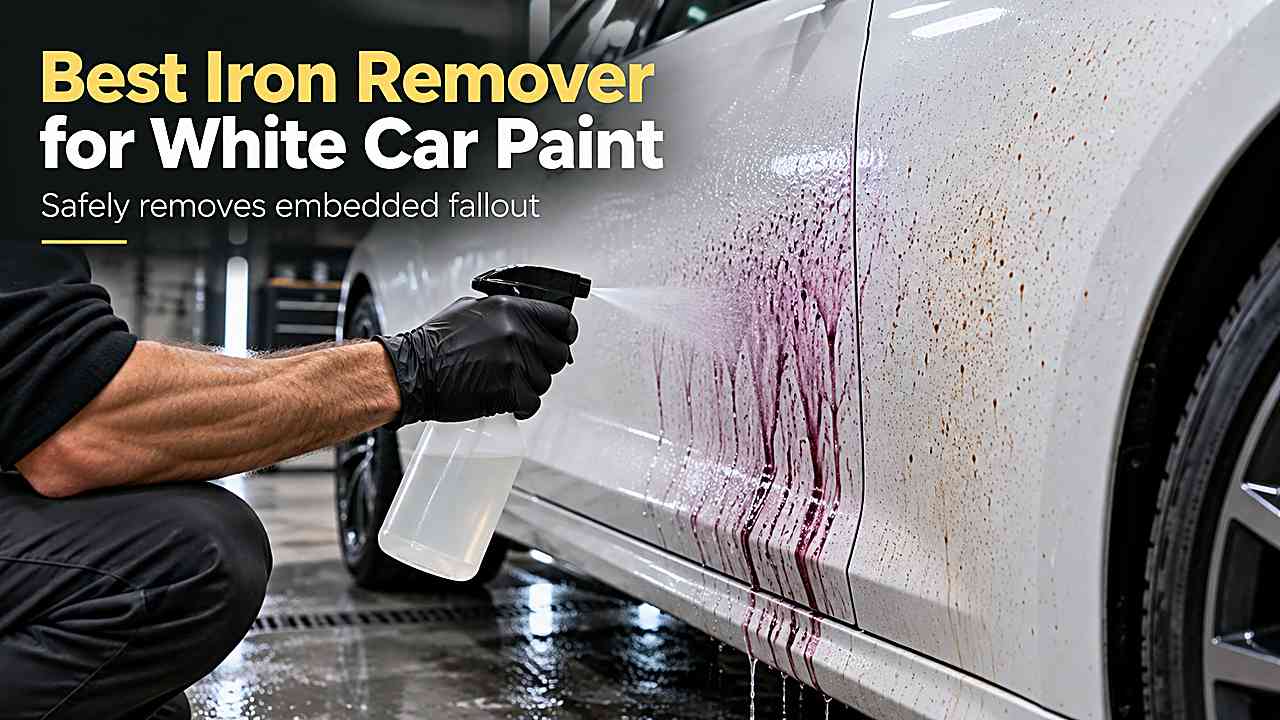
The purple reaction looks satisfying on white paint, but the real goal is to dissolve iron particles without staining trim or drying on the surface. Paint-rated, near-neutral formulas reduce risk when used correctly. Direct sun, hot panels, and excessive dwell time can make any iron remover harder to rinse clean. That distinction matters in everyday use because the wrong setup can make a capable product feel disappointing. A small compatibility test also reduces the chance of creating a bigger problem while trying to solve the original one.
Odor and ventilation are real usability issues
Many iron removers use sulfur-containing chemistry that produces a strong characteristic smell. That does not automatically indicate poor quality, but it changes where and how the work should be done. Outdoor use, gloves, and good ventilation make the process more tolerable. That distinction matters in everyday use because the wrong setup can make a capable product feel disappointing. A small compatibility test also reduces the chance of creating a bigger problem while trying to solve the original one.
White paint makes coverage easy to inspect
Light paint reveals the purple bleeding reaction from iron fallout clearly. That makes it easy to see where contamination has accumulated, particularly behind wheels, along rocker panels, and on the rear hatch. Even coverage is more important than oversaturating clean upper panels. That distinction matters in everyday use because the wrong setup can make a capable product feel disappointing. A small compatibility test also reduces the chance of creating a bigger problem while trying to solve the original one.
Wheel and paint compatibility are not always identical
Many iron removers are marketed for both paint and wheels, but wheel finishes vary more than body paint. Bare aluminum, anodized parts, damaged clear coat, and unknown aftermarket finishes deserve extra caution. A product that is safe on factory clear coat may still have exclusions elsewhere. That distinction matters in everyday use because the wrong setup can make a capable product feel disappointing. A small compatibility test also reduces the chance of creating a bigger problem while trying to solve the original one.
Quick comparison of the strongest options
Each product below wins for a different type of buyer. The table narrows the field quickly, while the detailed notes explain the practical trade-offs that a star rating cannot show.
| Product | Best for | Why it stands out |
| CARPRO IronX | Best overall for white paint | CARPRO describes IronX as acid-free, around pH 6 to 7, and safe on clear-coat paint when used as directed. |
| Adam’s Iron Remover | Best enthusiast alternative | Adam’s offers a dedicated color-changing fallout remover intended for paint decontamination before clay, polishing, or protection. |
| P&S Iron Buster | Best professional-value option | P&S Iron Buster is popular with detailers who decontaminate multiple vehicles and want a product suitable for paint and wheels. |
| Gtechniq W6 Iron and General Fallout Remover | Best premium multi-contaminant choice | Gtechniq W6 is designed around iron and general fallout removal and is commonly used as part of coating preparation. |
| GYEON Q2M Iron | Best premium alternative | GYEON’s iron remover is designed for chemical decontamination of paint and wheels before further detailing steps. |
The best choices in detail
1. CARPRO IronX: Best overall for white paint
CARPRO IronX earns the best overall for white paint position because cARPRO describes IronX as acid-free, around pH 6 to 7, and safe on clear-coat paint when used as directed. Its strong color-changing reaction makes iron contamination easy to monitor on white paint. The odor is strong and the product should not dry on the surface or be used on excluded finishes. It is the easiest recommendation when visible iron fallout is the main contamination problem. Before buying, confirm the current package contents, compatibility, warranty, and any revised manufacturer directions because bundles and specifications can change over time.
2. Adam’s Iron Remover: Best enthusiast alternative
Adam’s Iron Remover earns the best enthusiast alternative position because adam’s offers a dedicated color-changing fallout remover intended for paint decontamination before clay, polishing, or protection. It is easy to work into a normal DIY decontamination sequence and is widely available. Like most products in this category, it has a strong smell and needs controlled dwell time. It suits DIY detailers who want a straightforward spray-and-rinse product. Before buying, confirm the current package contents, compatibility, warranty, and any revised manufacturer directions because bundles and specifications can change over time.
3. P&S Iron Buster: Best professional-value option
P&S Iron Buster earns the best professional-value option position because p&S Iron Buster is popular with detailers who decontaminate multiple vehicles and want a product suitable for paint and wheels. Bulk-oriented availability can reduce cost per vehicle for frequent users. Professional value does not remove the need for cool panels, careful dwell, and thorough rinsing. It makes sense for enthusiasts or detailers who use iron remover often. Before buying, confirm the current package contents, compatibility, warranty, and any revised manufacturer directions because bundles and specifications can change over time.
4. Gtechniq W6 Iron and General Fallout Remover: Best premium multi-contaminant choice
Gtechniq W6 Iron and General Fallout Remover earns the best premium multi-contaminant choice position because gtechniq W6 is designed around iron and general fallout removal and is commonly used as part of coating preparation. Its positioning fits detailers who want decontamination integrated into a premium coating workflow. Premium pricing can be difficult to justify for owners who decontaminate only once or twice a year. It suits coating-focused users who already follow a more technical process. Before buying, confirm the current package contents, compatibility, warranty, and any revised manufacturer directions because bundles and specifications can change over time.
5. GYEON Q2M Iron: Best premium alternative
GYEON Q2M Iron earns the best premium alternative position because gYEON’s iron remover is designed for chemical decontamination of paint and wheels before further detailing steps. It fits naturally into a coating-oriented wash and preparation system. It still requires testing around unusual finishes and careful rinsing before the product dries. It is a good option for owners already using GYEON maintenance products. Before buying, confirm the current package contents, compatibility, warranty, and any revised manufacturer directions because bundles and specifications can change over time.
White paint can look clean while still feeling contaminated
Brake dust and industrial fallout can embed in clear coat long before the panel looks dirty from a few feet away. After washing, a protected hand or detailing bag may reveal roughness that normal shampoo did not remove. Iron remover targets ferrous contamination chemically, while clay addresses other bonded material mechanically.
Using chemistry first reduces how much abrasive claying the paint needs. This is especially useful on white vehicles because orange specks and the purple reaction make progress easy to inspect.
Iron remover is a preparation step, not a weekly wash product
Most daily drivers do not need iron remover every wash. Frequent use adds cost, odor, chemical exposure, and unnecessary contact with trim. It makes more sense before seasonal protection, polishing, or when visible orange specks and roughness indicate contamination.
A normal wash and regular wheel care slow the buildup between deeper decontamination sessions. The surface condition should determine the interval instead of a rigid calendar.
Common buying and use mistakes
Most disappointing purchases in this category are not completely useless products. They are capable products matched to the wrong job, or good products used in a way that defeats the feature that made them worth buying.
Spraying hot white paint in direct sun
Iron remover can dry quickly on a hot panel and leave stubborn residue. Shade and cool paint extend safe working time and make the reaction easier to manage. The product should remain wet until it is rinsed. That distinction matters in everyday use because the wrong setup can make a capable product feel disappointing. A small compatibility test also reduces the chance of creating a bigger problem while trying to solve the original one.
Using iron remover as a normal shampoo
Iron chemistry targets specific contamination and does not replace ordinary washing. Frequent unnecessary use adds cost and chemical exposure without improving a clean panel. A regular wash should always come first. That distinction matters in everyday use because the wrong setup can make a capable product feel disappointing. A small compatibility test also reduces the chance of creating a bigger problem while trying to solve the original one.
Forgetting sensitive trim and aftermarket finishes
Bare aluminum, anodized parts, recycled-rubber trim, and unknown aftermarket finishes can have restrictions depending on the product. Overspray is easy to ignore on white bodywork because attention stays on the purple reaction. The label’s exclusions matter as much as its headline compatibility. That distinction matters in everyday use because the wrong setup can make a capable product feel disappointing. A small compatibility test also reduces the chance of creating a bigger problem while trying to solve the original one.
Store and maintain iron-removal products carefully
Sprayers often fail before the bottle is empty because iron-removal chemistry is hard on trigger mechanisms. Rinsing the spray head with clean water after use or replacing the shipping cap can reduce leaks. The bottle should stay upright and away from heat in a ventilated storage area.
White paint makes progress easy to inspect, so there is no need to over-apply product to areas that show little reaction. Targeting contaminated lower panels and rear surfaces saves chemical and shortens rinse time.
Frequently Asked Questions
These questions cover the decisions that usually remain after the shortlist has been narrowed down and the basic trade-offs are clear.
Why does iron remover turn purple on white paint?
The color change comes from the chemical reaction with iron contamination, not from the white paint itself. White simply makes the reaction easier to see. Areas near wheels and the rear of the vehicle often show the strongest response because they collect brake and road fallout. That distinction matters in everyday use because the wrong setup can make a capable product feel disappointing. A small compatibility test also reduces the chance of creating a bigger problem while trying to solve the original one.
Can iron remover stain white paint?
A paint-safe remover used on cool panels and rinsed before drying should not stain healthy clear coat. Problems are more likely when product is allowed to dry, used on damaged finishes, or exposed to strong heat and sun. Trim and unusual aftermarket finishes may have separate restrictions. That distinction matters in everyday use because the wrong setup can make a capable product feel disappointing. A small compatibility test also reduces the chance of creating a bigger problem while trying to solve the original one.
Should I clay the car before or after iron remover?
Chemical iron removal normally comes before claying. Dissolving ferrous particles first means the clay has less contamination to drag across the clear coat. After rinsing and drying, the paint can be evaluated for remaining roughness. That distinction matters in everyday use because the wrong setup can make a capable product feel disappointing. A small compatibility test also reduces the chance of creating a bigger problem while trying to solve the original one.
Is iron remover safe on ceramic coating?
Many near-neutral iron removers are used on coated vehicles, but product and coating compatibility still needs to be checked. Stronger dual-purpose mineral removers can be more aggressive toward coatings. A maintenance-focused iron remover is usually the safer choice. That distinction matters in everyday use because the wrong setup can make a capable product feel disappointing. A small compatibility test also reduces the chance of creating a bigger problem while trying to solve the original one.
How often should white paint be chemically decontaminated?
There is no fixed interval because driving environment matters. Cars parked near railways, industry, construction, or heavy traffic can collect fallout faster than lightly used garage vehicles. Many enthusiasts inspect the paint seasonally or before applying protection. That distinction matters in everyday use because the wrong setup can make a capable product feel disappointing. A small compatibility test also reduces the chance of creating a bigger problem while trying to solve the original one.
Conclusion
The strongest choice for best iron remover for white car paint depends on the exact job and the conditions in which the product will be used. The best overall pick is the safest starting point, but another option may be better when portability, compatibility, finish, capacity, or maintenance matters more.
Check the current manufacturer specifications before buying, then use the product within its stated limits from the first session. A well-matched product maintained properly will usually outperform a more expensive option that was chosen for features the job never needed.