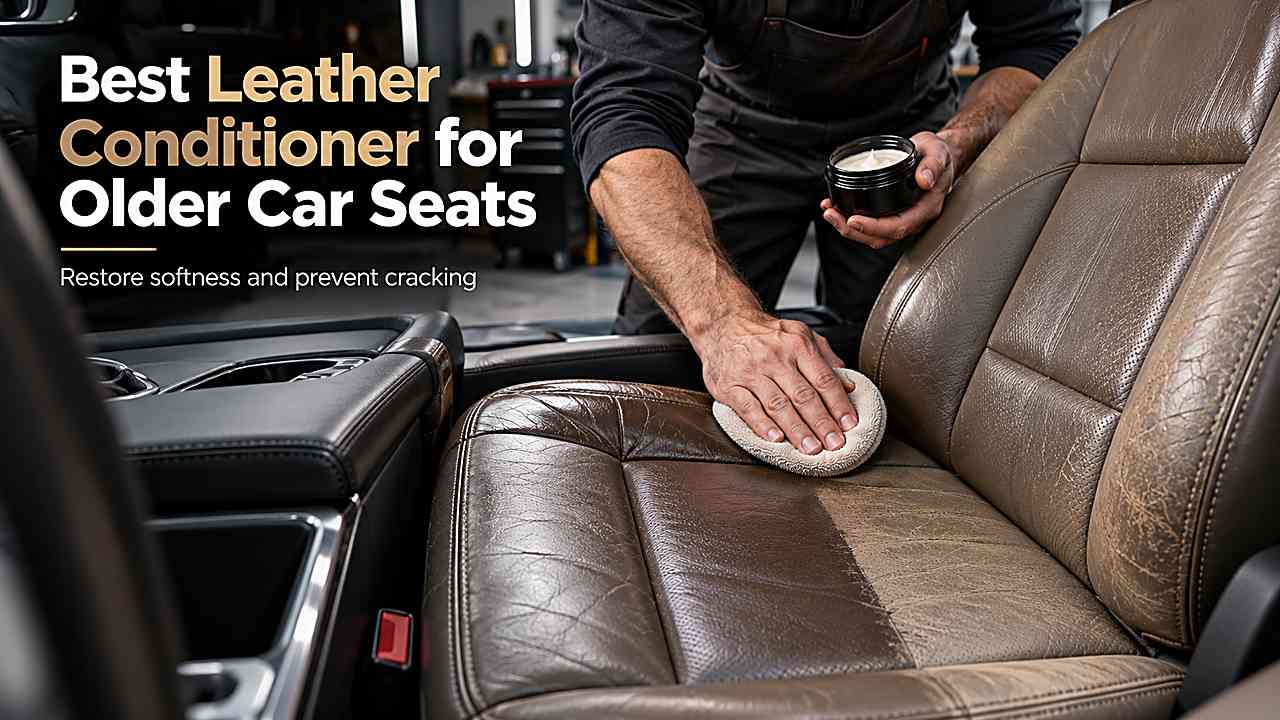
Best leather conditioner for older car seats is not a useful shopping question until the job is defined clearly. A product can look excellent in a rating table and still be the wrong choice for the surface, vehicle, pet, garage, or workflow that will actually use it.
This guide compares current options by the details that change real-world performance, then explains where each pick fits and where its trade-offs become important. The aim is to make the shortlist useful after the first week of ownership, not just persuasive on purchase day.
For older modern cars with coated leather, Meguiar’s Gold Class Rich Leather is the easiest maintenance choice because it combines cleaning, conditioning, and UV protection without chasing a greasy finish. Leather Honey is better reserved for genuinely absorbent or vintage leather after a careful compatibility test.
What matters before you buy
The most important specifications are the ones that control the real task. Marketing claims are easier to evaluate once the surface, workload, compatibility limits, and maintenance burden are clear.
First identify whether the leather is coated
Most modern automotive leather has a protective topcoat, which changes what a conditioner can realistically do. Heavy oils may sit on that coating rather than soaking deep into the hide. Older does not automatically mean uncoated, so age alone is not a reason to choose the richest product. That distinction matters in everyday use because the wrong setup can make a capable product feel disappointing. A small compatibility test also reduces the chance of creating a bigger problem while trying to solve the original one.
Clean before conditioning
Body oil, denim dye, sunscreen, and grime can make older leather feel shiny and stiff even when the hide is not truly dry. Conditioner applied over that contamination traps dirt under a new film. A mild leather cleaner and soft brush should restore the surface before protection is evaluated. That distinction matters in everyday use because the wrong setup can make a capable product feel disappointing. A small compatibility test also reduces the chance of creating a bigger problem while trying to solve the original one.
Natural finish matters on a worn interior
Older seats often have polished bolsters and shiny high spots caused by abrasion and body oils. Adding a high-gloss conditioner can exaggerate that wear rather than make the interior look restored. Products that dry matte or natural are easier to live with and less slippery. That distinction matters in everyday use because the wrong setup can make a capable product feel disappointing. A small compatibility test also reduces the chance of creating a bigger problem while trying to solve the original one.
Cracks cannot be conditioned back together
Conditioner can improve feel and reduce further drying, but it does not reverse broken surface coating or structural cracks. Deep cracks, color loss, and exposed backing require repair or refinishing rather than repeated product application. Preservation and restoration are different jobs. That distinction matters in everyday use because the wrong setup can make a capable product feel disappointing. A small compatibility test also reduces the chance of creating a bigger problem while trying to solve the original one.
Quick comparison of the strongest options
Each product below wins for a different type of buyer. The table narrows the field quickly, while the detailed notes explain the practical trade-offs that a star rating cannot show.
| Product | Best for | Why it stands out |
| Meguiar’s Gold Class Rich Leather Cleaner & Conditioner | Best easy maintenance choice | Meguiar’s combines light cleaning, conditioning, and UV protection in a one-step automotive leather product with a non-greasy target finish. |
| Lexol All Leather Conditioner | Best straightforward value | Lexol remains a widely used conditioner with a relatively simple maintenance approach and broad availability. |
| Chemical Guys Leather Cleaner & Conditioner Kit | Best two-step system | A separate cleaner and conditioner encourages the correct order instead of applying conditioner over accumulated body oils and dirt. |
| Leather Honey Leather Conditioner | Best for genuinely dry absorbent leather | Leather Honey is a rich conditioner with a long history on leather goods and can make sense on older, porous leather that actually absorbs treatment. |
| Mothers VLR Vinyl-Leather-Rubber Care | Best quick mixed-material maintenance | Mothers VLR cleans, conditions, and protects in one step, making it useful for older cabins with leather, vinyl, and rubber in close proximity. |
The best choices in detail
1. Meguiar’s Gold Class Rich Leather Cleaner & Conditioner: Best easy maintenance choice
Meguiar’s Gold Class Rich Leather Cleaner & Conditioner earns the best easy maintenance choice position because meguiar’s combines light cleaning, conditioning, and UV protection in a one-step automotive leather product with a non-greasy target finish. It works well for older daily drivers whose coated seats mainly need regular maintenance rather than restoration. It will not match a dedicated cleaner on heavily soiled leather and cannot repair cracked coating. It is the simplest choice for older coated seats in generally sound condition. Before buying, confirm the current package contents, compatibility, warranty, and any revised manufacturer directions because bundles and specifications can change over time.
2. Lexol All Leather Conditioner: Best straightforward value
Lexol All Leather Conditioner earns the best straightforward value position because lexol remains a widely used conditioner with a relatively simple maintenance approach and broad availability. The thinner format is easy to spread in a controlled film after the leather has been cleaned. Very dry vintage leather may need a more specialized restoration process, while heavily coated seats may absorb little product. It suits owners who want a familiar, uncomplicated conditioner for routine use. Before buying, confirm the current package contents, compatibility, warranty, and any revised manufacturer directions because bundles and specifications can change over time.
3. Chemical Guys Leather Cleaner & Conditioner Kit: Best two-step system
Chemical Guys Leather Cleaner & Conditioner Kit earns the best two-step system position because a separate cleaner and conditioner encourages the correct order instead of applying conditioner over accumulated body oils and dirt. The two-bottle approach gives more control when an older seat needs a true cleaning reset before protection. The kit takes more time than a one-step maintenance spray. It is useful for visibly dirty older seats that are not yet structurally damaged. Before buying, confirm the current package contents, compatibility, warranty, and any revised manufacturer directions because bundles and specifications can change over time.
4. Leather Honey Leather Conditioner: Best for genuinely dry absorbent leather
Leather Honey Leather Conditioner earns the best for genuinely dry absorbent leather position because leather Honey is a rich conditioner with a long history on leather goods and can make sense on older, porous leather that actually absorbs treatment. A small amount can provide long-lasting conditioning on compatible absorbent leather. Modern coated automotive leather may not accept heavy conditioning in the same way, and light leather can change appearance. It belongs on carefully tested older leather rather than being treated as a universal modern-seat product. Before buying, confirm the current package contents, compatibility, warranty, and any revised manufacturer directions because bundles and specifications can change over time.
5. Mothers VLR Vinyl-Leather-Rubber Care: Best quick mixed-material maintenance
Mothers VLR Vinyl-Leather-Rubber Care earns the best quick mixed-material maintenance position because mothers VLR cleans, conditions, and protects in one step, making it useful for older cabins with leather, vinyl, and rubber in close proximity. One bottle can simplify a light maintenance session across several compatible surfaces. It is less specialized than a dedicated cleaner followed by a dedicated conditioner. It suits seats in decent condition that need routine care rather than restoration. Before buying, confirm the current package contents, compatibility, warranty, and any revised manufacturer directions because bundles and specifications can change over time.
A shiny seat may be dirty rather than well conditioned
Factory automotive leather is usually closer to satin or matte than glossy. When an old driver bolster turns shiny, body oil and repeated friction are often responsible. Gentle cleaning can improve the look before any conditioner is applied.
Assessing the seat after cleaning is more useful than choosing the richest conditioner first. A natural clean surface also makes new cracks, color loss, and coating wear easier to identify.
Perforated and ventilated seats need less product, not more
Heavy conditioner can collect in perforations and migrate toward foam, sensors, or ventilation channels. A lightly damp applicator gives far better control than spraying directly onto the seat. Any product lodged in the holes should be wiped or gently removed before it dries.
The goal is an even surface film, not saturation. Ventilated and heated seats should also follow the vehicle manufacturer’s care guidance because internal construction varies.
Common buying and use mistakes
Most disappointing purchases in this category are not completely useless products. They are capable products matched to the wrong job, or good products used in a way that defeats the feature that made them worth buying.
Conditioning dirty leather
Conditioner over body oil and grime can make a shiny old seat look even darker and greasier. Cleaning reveals the real condition of the finish and gives any protectant an even surface. Older seats often improve dramatically from cleaning alone. That distinction matters in everyday use because the wrong setup can make a capable product feel disappointing. A small compatibility test also reduces the chance of creating a bigger problem while trying to solve the original one.
Treating coated leather like a raw leather boot
Most modern automotive leather has a protective coating that changes absorption. Heavy oils may sit on top instead of nourishing deeply. Product choice should match the finish, not simply the age of the vehicle. That distinction matters in everyday use because the wrong setup can make a capable product feel disappointing. A small compatibility test also reduces the chance of creating a bigger problem while trying to solve the original one.
Expecting conditioner to repair damage
Dry feel can improve, but cracks, missing color, and worn-through coating are physical damage. Adding more conditioner cannot rebuild material that is gone. Restoration products or upholstery repair are needed when structure or pigment has failed. That distinction matters in everyday use because the wrong setup can make a capable product feel disappointing. A small compatibility test also reduces the chance of creating a bigger problem while trying to solve the original one.
Preserve older leather between conditioning sessions
A soft brush, clean microfiber towels, and a mild cleaner will influence leather longevity more than premium conditioner applied over dirt. Seats should be inspected periodically for new wear at bolsters, seams, and perforations. Early repair of a small damaged coating is easier than treating a large crack later.
Sunshades, window tint where legal, and avoiding unnecessary cabin heat reduce UV and thermal stress without adding chemical residue. Conditioner works best as one part of preservation, not as the entire preservation strategy.
Frequently Asked Questions
These questions cover the decisions that usually remain after the shortlist has been narrowed down and the basic trade-offs are clear.
Can leather conditioner fix cracked car seats?
No. Conditioner can help maintain flexibility around undamaged areas, but it cannot reconnect leather or coating that has already cracked. Cosmetic repair may require filler, color coating, or professional upholstery work. That distinction matters in everyday use because the wrong setup can make a capable product feel disappointing. A small compatibility test also reduces the chance of creating a bigger problem while trying to solve the original one.
How often should older leather seats be conditioned?
Frequency depends on the leather finish, climate, sun exposure, and the product used. Many coated seats benefit more from regular gentle cleaning and UV protection than frequent heavy conditioning. A few times per year is often enough for ordinary maintenance. That distinction matters in everyday use because the wrong setup can make a capable product feel disappointing. A small compatibility test also reduces the chance of creating a bigger problem while trying to solve the original one.
Is Leather Honey safe for every car seat?
No product is appropriate for every leather finish. Leather Honey can work well on absorbent finished leather, but modern coated seats may not absorb heavy conditioners and light leather can change appearance. Suede, nubuck, Alcantara, and synthetic materials need different care. That distinction matters in everyday use because the wrong setup can make a capable product feel disappointing. A small compatibility test also reduces the chance of creating a bigger problem while trying to solve the original one.
Should older leather feel slippery after conditioning?
No. A slippery seat usually means excess product remains on the surface or the formula is too rich for the coating. Buffing with a clean microfiber towel can remove residue. Driver seat surfaces should feel clean and natural rather than oily. That distinction matters in everyday use because the wrong setup can make a capable product feel disappointing.
Do heated seats need special conditioner?
The heat itself does not require a special branded conditioner, but it can accelerate drying and make residue more noticeable. Products should be applied sparingly, especially on perforated heated and ventilated seats. The heating system should not be used to force product to dry. That distinction matters in everyday use because the wrong setup can make a capable product feel disappointing. A small compatibility test also reduces the chance of creating a bigger problem while trying to solve the original one.
Conclusion
The strongest choice for best leather conditioner for older car seats depends on the exact job and the conditions in which the product will be used. The best overall pick is the safest starting point, but another option may be better when portability, compatibility, finish, capacity, or maintenance matters more.
Check the current manufacturer specifications before buying, then use the product within its stated limits from the first session. A well-matched product maintained properly will usually outperform a more expensive option that was chosen for features the job never needed.