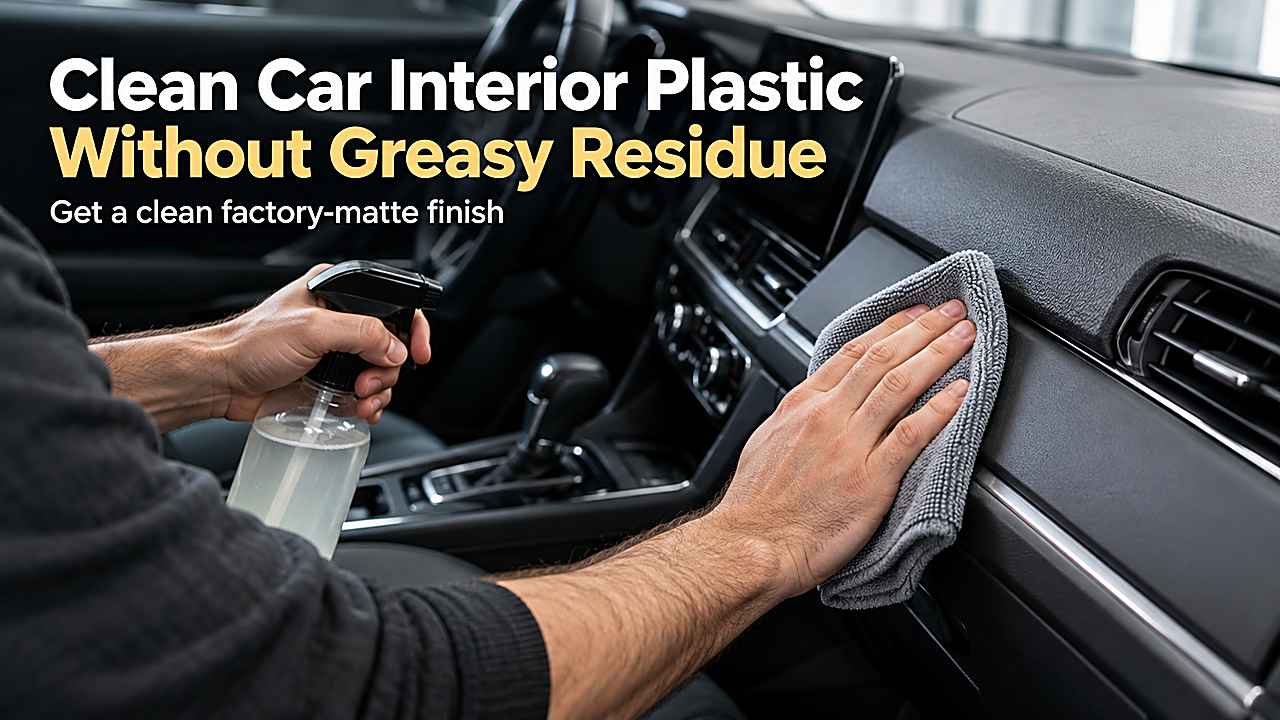
Interior plastic looks best when it is clean, even, and close to the factory finish. A greasy dashboard may look shiny for a few minutes, but it attracts dust, leaves fingerprints, reflects in the windshield, and often feels unpleasant on steering-wheel-adjacent surfaces.
The best method separates cleaning from dressing. Dirt and body oils should be removed with a plastic-safe interior cleaner first, and any protectant should be a low-residue, low-gloss product applied sparingly rather than used to hide soil under shine.
Clean interior plastic with a plastic-safe automotive cleaner, soft microfiber, and a detailing brush for texture. Finish with a low-gloss protectant only if desired, and buff away all excess to avoid greasy residue.
Why interior plastic becomes greasy
Most interior plastic does not produce grease on its own. The slippery film usually comes from skin oils, hand creams, food vapor, cleaning-product residue, or silicone-heavy dressings applied during earlier detailing. High-touch areas such as door pulls, center consoles, steering-column trim, and armrest surrounds accumulate that film fastest.
Dust then bonds to the oily layer and makes the surface look uneven. Adding more dressing can temporarily darken the plastic, but it also builds another layer that attracts contamination. A true reset removes the old residue before deciding whether the surface needs protection at all.
Choose cleaner based on the surface, not maximum strength
An automotive interior cleaner labeled for plastic and vinyl is the safest starting point because it is formulated around common cabin materials. Consumer Reports also recommends products intended for automotive interiors rather than assuming household cleaners are compatible. Strong degreasers can discolor soft-touch coatings, dry out surfaces, or affect printed icons if used at the wrong concentration.
Screens, clear instrument-cluster plastic, piano-black trim, leather, and touch-sensitive controls may need separate products and towels. A cleaner that is safe on a textured lower door panel may be too aggressive for a glossy screen coating. Interior cleaning is more reliable when the cabin is treated as several materials rather than one large plastic surface.
A two-towel method leaves less residue
Cleaner should usually go onto the towel or brush rather than being sprayed heavily across the dashboard. That approach reduces overspray onto glass, electronics, and seams. The first microfiber loosens and lifts the soil, while a second clean, slightly damp or dry towel removes remaining product before it dries into streaks.
Working in small sections keeps the cleaner under control. Textured plastic can hold residue in its grain, so a soft detailing brush helps move contamination out of low spots without creating shine through abrasion. The final towel should come away clean rather than oily or heavily darkened.
Deep texture needs agitation, not more chemical
Door panels and dashboards often have molded grain that traps skin oil and dust below the surface. Pouring on more cleaner does not necessarily reach that contamination better and can leave wet product in switch gaps. A soft interior brush provides the mechanical movement needed to release the film.
The brush can be worked gently while the cleaner remains damp, followed immediately by microfiber removal. Compressed air or a vacuum with a soft brush attachment can help clear loose material around vents and seams before wet cleaning begins. This keeps mud and crumbs from becoming a slurry.
Low-gloss protectant is optional, not mandatory
Clean plastic often looks excellent without any dressing. If UV protection or a slightly richer appearance is desired, a water-based low-gloss interior protectant is easier to live with than a heavy shiny coating. A thin application should be buffed until the surface feels dry to the touch.
High-gloss products can create distracting windshield reflections when used on the top of the dashboard. They can also make steering wheels, pedals, shift knobs, or other control surfaces slippery, so those areas should remain free of dressing. Protection should never compromise grip or visibility.
Sensitive areas need a separate routine
Instrument-cluster lenses and glossy trim scratch more easily than textured plastic. A clean plush microfiber and a compatible cleaner are safer than the stiff brush used on a lower door panel. Dry dusting with a contaminated towel can create fine scratches that show badly in sunlight.
Buttons and printed legends also deserve restraint. Excess liquid can seep into switch assemblies, and aggressive solvents may fade printed markings. A lightly damp towel or small swab gives better control around edges while keeping the cleaner on the surface where it belongs.
Maintain the factory look with light, frequent cleaning
A quick wipe every few weeks prevents body oils from becoming a thick film that requires strong chemistry later. High-touch areas can be cleaned more often than the rest of the cabin without redoing the entire dashboard. The result is a consistently matte or satin interior instead of a cycle between dusty and freshly over-dressed.
Microfiber towels should remain dedicated to interiors so wax, tire dressing, and wheel cleaner never migrate into the cabin. Clean tools also make it easier to judge whether the plastic itself is oily or whether the towel is simply redepositing old product. Good maintenance is mostly about contamination control rather than shine.
What a factory-like finish should feel and look like
Clean interior plastic should not necessarily look newly glossy. Many dashboards are intentionally molded with a low-sheen texture to reduce windshield reflections, and a shiny appearance can mean residue rather than restoration. After cleaning, the surface should feel dry to the touch and should not transfer product onto a finger. Color should look even across the panel, including around vents and switch bezels where dressing often collects.
Older plastic may remain slightly uneven even when perfectly clean. UV exposure, abrasion from hands, and previous chemical use can permanently change the sheen of high-touch areas. Repeated scrubbing will not restore molded texture and may make the wear more obvious. Knowing when a surface is clean prevents overworking a cosmetic issue that is actually material aging.
Dashboard reflections are a useful practical test. If a freshly detailed dash produces a strong bright image in the windshield, too much glossy product has probably been left behind. Buffing with a dry microfiber can often reduce the sheen without adding more cleaner. A low-reflection finish is not only more authentic-looking but also better for forward visibility in strong sun.
Smell is another clue to over-application. A light product scent may remain briefly, but a cabin that smells heavily of dressing for days often contains more residue than necessary. Strong fragrance can also mask damp carpet or other odor sources. The best interior cleaning result is visually even, dry, and neutral enough that the materials themselves are not competing for attention.
A simple product hierarchy keeps the cabin consistent
Most interiors can be maintained with three categories rather than a shelf full of chemicals: a mild interior cleaner, a glass-safe product, and a low-gloss protectant if desired. Specialty surfaces such as leather, screens, or unfinished metal may need their own products, but the dashboard itself rarely benefits from constant switching. Fewer products make it easier to identify which one caused streaking or residue.
Towel choice matters almost as much as cleaner choice. One microfiber can handle initial cleaning, while a second dry towel removes residue and levels the finish. A third dedicated towel for screens or glossy trim prevents gritty contamination from textured plastics from reaching scratch-prone surfaces. This simple separation mimics professional contamination control without adding complexity.
Cleaning frequency should follow use. A family vehicle with frequent passengers and food may need weekly attention to door pulls and console areas, while the upper dashboard can go much longer between wet cleanings. Dust removal with a clean microfiber or soft brush is often enough between deeper sessions. Over-cleaning with strong chemistry can age soft-touch surfaces faster than ordinary dust would.
The best end result is consistent rather than dramatic. Every panel should have a similar natural sheen, switch legends should remain crisp, and no area should feel slippery. If one section looks noticeably darker and shinier than the rest, excess product is usually the cause. Buffing it back to match is better than adding dressing to every other panel for uniformity.
What to do with stubborn sunscreen and body-oil residue
Sunscreen, hand lotion, and skin oil can form a tenacious film on door panels and center-console trim because they contain oils, waxes, and UV-filter ingredients. A mild interior cleaner may need extra dwell time and soft-brush agitation rather than a stronger chemical. Several controlled passes are safer than one harsh degreasing attempt. The surface should be allowed to dry between passes so the remaining sheen can be judged accurately instead of chasing moisture that only looks like grease.
If a pale or chalky mark remains after the oily residue is gone, the material itself may have been stained or chemically affected. Some sunscreens are especially difficult to remove from textured dark plastic once they have sat in heat. At that point, repeated scrubbing can create a polished spot that looks worse than the stain. Professional interior repair or carefully matched restoration products may be more appropriate than escalating cleaning strength.
Frequently Asked Questions
These questions cover the practical details that commonly come up after the main process is understood.
Why does my dashboard feel greasy after cleaning?
The most common causes are excess product, a cleaner that was not fully wiped away, or an oily dressing applied after cleaning. Old silicone-based dressings can also remain in textured plastic and reappear as streaks. A second pass with a compatible interior cleaner and a fresh microfiber usually removes the residue. The surface should then be buffed until it feels dry. More product is rarely the answer when the dashboard already feels slick.
Can I use dish soap on car interior plastic?
Dish soap is designed for kitchen grease and may not be ideal for soft-touch coatings, printed controls, or specialty automotive plastics. It can also leave surfactant residue if the dilution and rinsing are not controlled. A purpose-made automotive interior cleaner is easier to use safely across common cabin materials. If a manufacturer specifically approves a mild soap solution for a certain surface, that guidance takes priority. General household cleaning strength is not necessary for routine dashboard soil.
What should I use on piano-black interior trim?
Glossy piano-black trim scratches easily, so it should be treated more like delicate paint than textured dashboard plastic. Loose dust should be removed gently before wiping, and the microfiber must be extremely clean. A mild compatible interior cleaner or damp towel is usually enough. Brushes and abrasive pads should stay away from the glossy surface. A separate towel prevents grit from rougher panels from being transferred onto the trim.
Is interior protectant necessary after every cleaning?
No. Protectant can be useful for UV exposure or appearance, but it does not need to be reapplied every time dust is removed. Layering product too frequently can create the greasy film many owners are trying to avoid. A clean factory-like surface is already a successful result. When protection is used, a thin low-gloss coat followed by buffing is more practical than a wet-looking layer. The product label and material compatibility should guide the interval.
Can greasy interior dressing be completely removed?
Usually, yes, although several controlled cleaning passes may be needed when the buildup is heavy. A plastic-safe interior cleaner, soft brush for texture, and fresh microfiber towels can progressively lift the old film. Extremely strong solvent use is risky because it can damage coatings before the dressing is gone. The surface should be allowed to dry between passes so progress can be judged accurately. If the plastic itself has become shiny from wear, cleaning will not restore the original texture.
Conclusion
The best-looking interior plastic is clean rather than coated in shine. A compatible automotive cleaner, controlled agitation, and a two-towel wipe remove the grease while preserving the molded texture and soft-touch finishes that give the cabin its original appearance.
Protectant can still have a place, but it should be subtle and dry to the touch. Keeping high-touch areas clean on a regular schedule prevents the heavy buildup that tempts owners to reach for aggressive degreasers later.