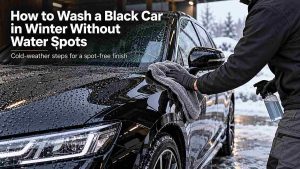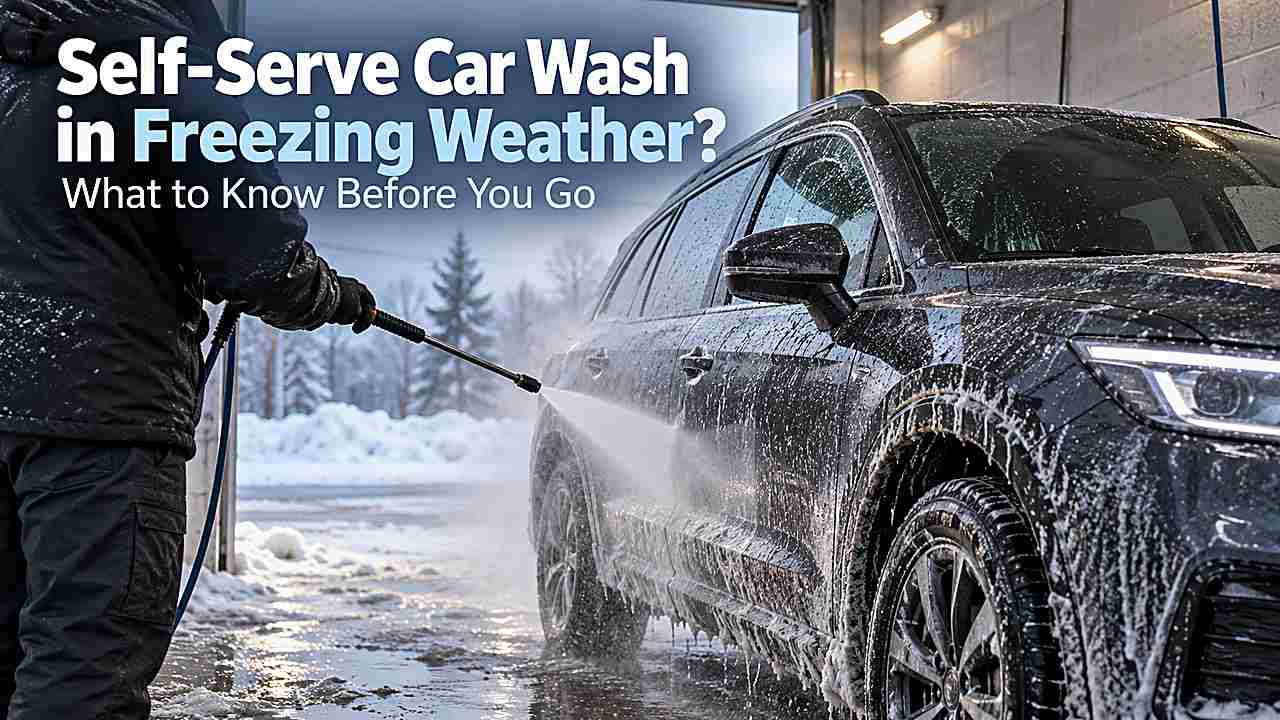
You can wash a car in winter, and removing road salt is valuable, but a self-serve bay below freezing adds a new problem: rinse water can freeze on door seals, locks, handles, mirrors, wipers, the ground, and the vehicle itself.
AAA recommends washing through winter but favors a relatively mild day or the warmest part of the day when outdoor temperatures are very low.
Yes, but it is safest at a heated bay or during the mildest part of the day, with enough time to dry doors, seals, locks, mirrors, and wipers before the car sits outside. In extreme cold, waiting for warmer conditions may be the better choice.
When a winter wash makes sense
Wash when salt and brine are accumulating and you have access to a bay that stays above freezing or provides enough warmth for water to drain. Midday is generally better than late evening because temperatures are more likely to rise rather than fall immediately after the wash.
A quick rinse can be worthwhile even if you cannot perform a full detail. Removing a heavy salt film and flushing the undercarriage addresses the most important winter contamination.
When to postpone the wash
Postpone if the bay floor is dangerously icy, the sprayer or doors are freezing, or the temperature is so low that water is turning to ice immediately on the car. A wash that creates frozen locks and seals can cause more inconvenience than it solves.
Also wait if you cannot dry the vehicle enough for safe visibility. Frozen mirrors, windows, wipers, cameras, and sensors can interfere with driving.
A freezing-weather wash sequence
Rinse salt and loose grit first, then use a proper automotive wash soap rather than household detergent. Keep the wash efficient and finish with a thorough rinse, including lower panels and wheel wells.
Before leaving the bay, dry door jambs, weather seals, handles, mirror edges, fuel or charge doors, and the top edges of windows. Lift wipers only if the vehicle manufacturer permits it and dry the blades and cowl area.
Prevent doors and locks from freezing afterward
AAA winter guidance recommends keeping weather strips treated with an appropriate silicone product and using suitable lubricants for locks and latches. The best time to maintain seals is when they are clean and dry, not while ice is already bonding them shut.
Do not pour hot water over a frozen lock or door. It can create more water that refreezes and may damage glass or finishes through sudden temperature change.
Check the vehicle before you drive away
Dry the areas that trap water rather than focusing only on the large body panels. Door seals, jambs, handles, mirror housings, window edges, fuel or charge doors, wiper areas, and trunk seals can hold enough water to freeze later.
A short drive after drying can help move water out of body gaps, but it is not a substitute for wiping seals before a severe temperature drop. If you have a warm garage, allowing the vehicle to drip dry there can reduce freeze-up further.
What to do when the bay, pavement, or vehicle is already icing
Inspect the vehicle after the job. Look for salt still packed in wheel wells, water dripping from trim, frozen wiper blades, fogged lamps, or areas where a protective coating or paint appears damaged. Small problems are easier to address before the next storm.
If the vehicle has fresh paint, cracked clear coat, exposed metal, torn boots, or other damaged components, reduce mechanical and chemical aggression. Winter contamination is important to remove, but damaged materials may need repair rather than harder cleaning.
Quick check before the next step
Confirm that water is draining rather than freezing, visibility equipment is working, and no seal, trim, coating, or component is reacting badly. If conditions are deteriorating, finish the essential task and stop.
Work from the least aggressive method toward stronger intervention only when the surface or condition actually requires it Keep paint-contact tools clean because winter grit and road film can create scratches when rubbed across the finish If runoff is freezing or footing is unsafe, end the job rather than trying to perfect a cosmetic result.
Work from the least aggressive method toward stronger intervention only when the surface or condition actually requires it Keep paint-contact tools clean because winter grit and road film can create scratches when rubbed across the finish.
Work from the least aggressive method toward stronger intervention only when the surface or condition actually requires it.
What to bring for a below-freezing self-serve wash
Prevention reduces the amount of force needed later. Maintain weather seals, touch up paint chips, keep winter washer fluid in the reservoir, and use a compatible wax, sealant, or coating when appropriate for the finish.
A regular light-cleaning schedule is usually easier on paint and components than waiting until a thick crust of salt, ice, and road film has built up. Consistency lets water and mild chemistry do more of the work.
Favor a short salt-removal wash over a full winter detail
Keep winter tools clean. A snow brush, microfiber towel, wash mitt, or scraper that has been stored on a gritty floor can transfer abrasive debris to the vehicle. Store paint-contact tools separately from wheel and undercarriage tools.
Replace damaged wiper blades and worn scrapers rather than forcing them to work. A small defect in a winter tool can create scratches, streaks, or poor visibility at exactly the time the vehicle is hardest to clean.
Quick check before the next step
Confirm that water is draining rather than freezing, visibility equipment is working, and no seal, trim, coating, or component is reacting badly. If conditions are deteriorating, finish the essential task and stop.
Work from the least aggressive method toward stronger intervention only when the surface or condition actually requires it Keep paint-contact tools clean because winter grit and road film can create scratches when rubbed across the finish If runoff is freezing or footing is unsafe, end the job rather than trying to perfect a cosmetic result.
Work from the least aggressive method toward stronger intervention only when the surface or condition actually requires it Keep paint-contact tools clean because winter grit and road film can create scratches when rubbed across the finish.
Work from the least aggressive method toward stronger intervention only when the surface or condition actually requires it.
Aftercare that keeps the wash from creating frozen hardware
When conditions are marginal, solve the highest-risk problem first. Clearing glass and lights for visibility, flushing heavy salt from the underside, or drying door seals can be more important than achieving a perfect cosmetic finish.
Winter maintenance is successful when the vehicle remains usable, visible, and protected without creating new damage. Cosmetic perfection can wait for a safer temperature window.
Dry seals, handles, mirrors, and wipers before the temperature drops further
If you wash in cold weather, spend the final minutes on the places where trapped water can create a functional problem. Wipe door seals, jamb edges, handles, mirror joints, fuel or charge doors, trunk seals, and the lower edge of windows with clean microfiber. Clear standing water from the wiper area and confirm that washer nozzles, cameras, headlights, and mirrors are usable before leaving.
A short drive can help move water out of some seams, but it does not replace direct drying when temperatures are well below freezing. If the bay floor or access road is icing, end the wash rather than trying to perfect the finish in unsafe footing conditions. Cold-weather washing is worthwhile when it removes corrosive salt without leaving you with frozen doors, poor visibility, or an unsafe surface around the vehicle.
Choose the wash window strategically. A sunny afternoon that is several degrees warmer than dawn or late evening gives water more time to drain before refreezing, and a sheltered bay can be easier to manage than an exposed one in strong wind. Check the pavement around the entrance and exit as well as the stall itself, because black ice outside the bay can turn a routine wash into a driving hazard.
Keep the wash sequence short and purposeful in deep cold. Rinse away salt and grime, skip optional wax or protectant steps if they extend the wet time without adding much value, and move promptly to drying the areas that can freeze shut. The goal is winter maintenance, not a show-car finish while water is turning to ice around you.
If your vehicle has power-folding mirrors, frameless windows, retractable handles, a power charge door, or other moving exterior parts, consider how water and ice affect those mechanisms. Avoid repeatedly operating a component that is beginning to freeze. The owner’s manual may contain cold-weather instructions that are more specific than general wash advice.
Bring the drying tools with you before you start the wash. Clean microfiber towels, a vehicle-safe air blower if you use one, and a way to keep towels from falling onto salty pavement make the final stage much faster. Searching the trunk for supplies while water is already freezing defeats the purpose of choosing a short, controlled winter wash.
If the wash has heated bays, do not assume the vehicle will stay warm once you pull outside. Water hidden in mirrors, handles, and seals can freeze quickly during the drive. Dry those areas before leaving the protected space rather than relying on the heated stall to prevent later problems.
Frequently Asked Questions
What temperature is too cold for a self-serve car wash?
There is no universal cutoff because wind, sunshine, bay design, water temperature, and drainage all affect freezing. The practical concern is whether water freezes on the vehicle or ground before you can rinse and dry safely. If spray is turning to ice on contact or the bay floor is becoming slick, stop.
Choose the warmest part of the day and a facility designed to operate in winter conditions. Extremely low temperatures make postponing the wash the safer option.
Is it bad to leave road salt on the car because it is cold?
Leaving heavy salt and brine on the vehicle for long periods is not ideal because they promote corrosion on exposed metal and hardware. That does not mean you should wash in dangerously icy conditions. Wait for a safer temperature window or use a winter-capable facility when possible.
Prioritize the lower body and undercarriage where salt accumulates heavily. Regular safe rinsing is better than choosing between constant salt buildup and risky washing.
How do I keep doors from freezing after the wash?
Dry door seals, jamb edges, handles, and latch areas before leaving the bay. Open and close the doors once after drying so trapped water is less likely to remain between sealing surfaces. Use only automotive rubber-care products that are compatible with the seals if the manufacturer allows them.
Avoid pouring hot water on a frozen door later. Prevention is mainly about removing water before the temperature falls further.
Should I dry the entire car in freezing weather?
Prioritize functional freeze points first, including door seals, mirrors, window edges, fuel or charge doors, wipers, and cameras. Drying every body panel perfectly may not be practical when the ground is icing or the wind is severe. A clean microfiber towel can remove standing water from large panels if conditions are safe.
Do not remain in a dangerous bay just for cosmetic perfection. Visibility and access to the vehicle matter more than eliminating every droplet.
Is an automatic wash safer in extreme cold?
It can be more sheltered and may include forced-air drying, but safety still depends on the facility and the temperature. Automatic washes can also leave water in seals, mirrors, and trim that may freeze afterward. Self-serve washing gives you more control over where water is directed and which areas you dry.
Choose a facility that is operating normally in the weather and has safe, non-icy access. The wash type matters less than safe conditions and thorough post-wash drying.
Conclusion
Winter washing is a balance between removing corrosive contamination and avoiding freeze-up. Choose a warmer window, use a heated bay when possible, and spend the final minutes drying the areas that trap water.