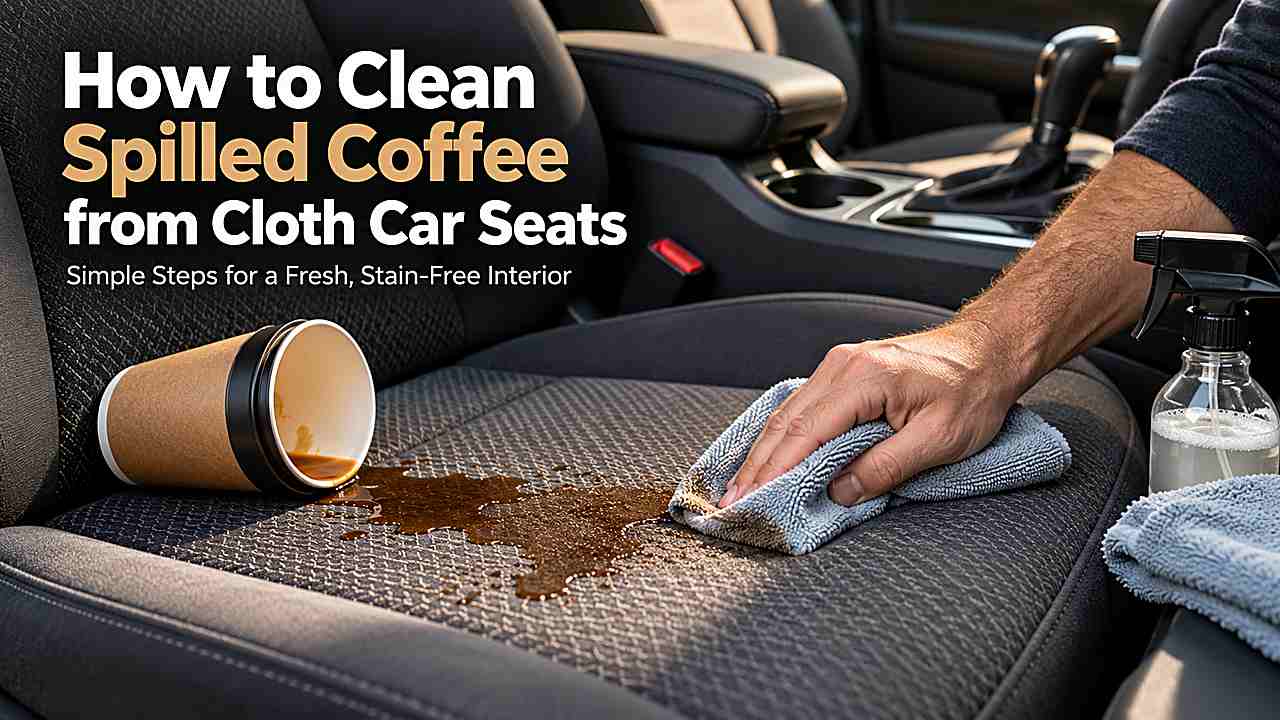
Coffee spreads quickly through cloth upholstery because the liquid can move past the visible fabric and into foam underneath. The stain may also contain milk, cream, sugar, or flavoring, which means the job can involve color, odor, protein, and sticky residue at the same time.
The best cleanup removes as much liquid as possible before adding more moisture. Blotting, controlled cleaning solution, light agitation, and extraction work better than soaking the seat or scrubbing the spill across a wider area.
Blot fresh coffee first, then use a fabric-safe automotive upholstery cleaner with minimal moisture. Work from the outer edge inward, extract or blot residue, and dry the seat fully to prevent rings and odor.
Fresh coffee is easier to manage than a dried stain
A new spill still contains liquid that can be physically removed before it bonds to fibers or migrates deeper into the cushion. Clean white towels or absorbent microfiber can draw out that liquid with repeated pressing and lifting. Rubbing is less effective because it spreads the stain and can push coffee sideways through the weave.
If the cup contained milk or cream, speed matters for odor as well as appearance. Sugary drinks can leave sticky residue that attracts soil even after the color seems gone. Removing the liquid quickly reduces how much later cleaning has to reach into the padding.
Check the upholstery material before choosing chemistry
Most modern cloth car seats tolerate water-based upholstery cleaners, but seat fabrics, stain-resistant coatings, heating elements, ventilation systems, and aftermarket treatments vary. The vehicle manual and cleaner label provide better guidance than a universal household recipe. A small hidden spot can reveal color transfer or water marking before the visible area is treated.
Household products may work on some fabrics, but automotive cleaners are easier to control because they are intended for cabin materials and low-residue use. Strong bleach, solvent, or highly alkaline cleaners can discolor fabric or affect nearby trim. The goal is stain removal without creating a larger clean-looking halo around the original spill.
Blot, treat, and extract in controlled cycles
After the initial blot, a small amount of cleaner can be applied to the towel or directly to the stained fabric according to the product directions. Working from the outside of the mark toward the center reduces spreading. A soft upholstery brush can provide gentle agitation on durable fabric when the stain has dried.
The treated area should then be blotted or extracted so dissolved coffee leaves the seat rather than drying back into it. A wet-dry extractor is especially helpful because it removes liquid from the fabric and upper foam while limiting overwetting. Several light cycles are usually safer than one saturated cleaning attempt.
Milk, cream, and sugar change the cleanup
Black coffee is largely a colored water-based stain, while milk and cream add proteins and fats that can sour if they remain in the seat. Sugar and syrups dry sticky and pull new dirt into the fabric. A cleaner with appropriate surfactants or enzymes may therefore be more useful for a flavored latte than for plain coffee.
Hot water is not automatically better. Excess heat can set some protein-containing residues and can make moisture harder to control in foam padding. Cool or lukewarm solution within the cleaner manufacturer’s recommendations is usually easier to manage.
Avoid soaking the seat foam
The visible cloth is only the top layer of the seat. Too much liquid can reach the cushion foam, where it dries slowly and may carry coffee odor back to the surface. Overwetting can also create tide marks when dirty solution migrates outward as the seat dries.
A portable extractor should be used with more dry passes than wet passes once the stain is breaking up. If only towels are available, repeated blotting with clean sections removes more moisture than rubbing. The seat should feel only damp when the active cleaning phase is finished.
Drying determines whether odor returns
Airflow is the most important drying tool after the visible stain has been removed. Open doors in a secure dry location, a fan, or the vehicle’s ventilation system can move moisture out of the fabric and foam. Seat heaters should not be used as a shortcut unless the manufacturer permits it, because concentrated heat can affect materials and does not guarantee deep moisture removal.
The seat should be inspected after it is fully dry, not while dark damp fabric hides the result. A light ring may indicate remaining residue or uneven wetting, while a sour smell suggests contamination remains deeper in the cushion. A second controlled extraction is preferable to masking odor with fragrance.
Old coffee stains need patience rather than stronger scrubbing
Dried coffee may require longer dwell time and repeated extraction because the residue has bonded to fibers. Rehydrating the stain gradually lets the cleaner work without flooding the seat. Aggressive brushing can roughen the fabric and still leave color in the padding below.
When an old spill has penetrated deeply or produced persistent odor, professional interior extraction can be more efficient. Seats with integrated airbags, occupancy sensors, ventilation, or complex electronics also make controlled moisture especially important. Cosmetic stain removal should never compromise the seat’s safety systems.
How different coffee drinks change the stain
Plain black coffee is mostly water, dissolved coffee compounds, and natural oils, so color removal is often the main visible challenge. A latte or cappuccino adds milk protein and fat, which increases the risk of sour odor if residue reaches the foam. Flavored drinks may add syrups, chocolate, or sugar that remain sticky even after the brown color fades. Knowing what was in the cup helps explain why one spill cleans easily and another returns as an odor problem.
Artificial sweeteners do not necessarily make the stain harmless because the drink can still contain dairy and coffee oils. Conversely, a very sugary iced coffee may leave a clear sticky patch after the dark stain is mostly gone. Touch is therefore part of the final inspection. A seat that looks clean but feels stiff or tacky still contains residue that will attract soil.
Seat construction affects how far the liquid can travel. Deep bolsters and perforated fabric can funnel coffee toward seams, while flat tightly woven cloth may keep more of it near the surface. Heated and ventilated seats contain additional layers or air channels that make overwetting more risky. Controlled extraction becomes more important as seat construction becomes more complex.
Time changes the chemistry and the required patience. A fresh spill may come out with blotting and one cleaning cycle, while an old stain can require several rehydration and extraction passes. Stronger cleaner is not always the answer because aged fabric may also be more sensitive to aggressive brushing. Gradual improvement with proper drying between passes is safer than trying to erase years of residue in one soaked session.
Preventing odor and water rings after the visible stain is gone
A coffee stain can look successful while the seat is still damp and then reappear as a ring once moisture migrates to the drying edge. Controlled extraction reduces that problem by removing both dissolved coffee and excess cleaning solution. The area should be dried evenly with airflow rather than with concentrated heat. Uneven drying encourages residue to move toward the perimeter.
A sour smell several days later usually points to milk, cream, or moisture remaining in the foam. Fragrance sprays may cover it temporarily, but the odor tends to return as the cabin warms. Another extraction pass focused on the original spill path is more useful. When the seat foam is deeply contaminated, professional extraction can recover more liquid than surface towels.
Color transfer on the cleaning towel is a warning sign that the upholstery itself may be losing dye rather than only releasing coffee. Work should stop until the material can be assessed. Stronger chemistry or harder brushing can turn a manageable stain into permanent fading. A hidden spot test before the main treatment is the simplest way to reduce that risk.
The final seat should feel normal as well as look clean. Stiffness or tackiness indicates residual sugar or cleaner, and an overly damp feel after hours of drying suggests the foam was saturated. A clean dry fabric surface has no sticky hand feel and no obvious darker ring. That tactile check is valuable because sugar can remain almost invisible until it starts attracting new dirt.
Special care around seams, stitching, and seat electronics
Coffee that reaches a seam can travel farther than the visible stain because stitching holes provide a path toward the foam. A narrow towel edge or controlled extractor nozzle can remove moisture from the seam without flooding it. Seat-mounted airbags, heaters, occupancy sensors, and ventilation systems make heavy saturation especially undesirable. The vehicle manual can identify sensitive areas that should not be soaked or aggressively probed.
If the spill occurred near an electrical connector under the seat, the cleanup should focus on blotting and professional assessment rather than spraying more solution downward. Modern seats are safety systems as well as upholstery. Stain removal is important, but it should never involve disconnecting or manipulating airbag wiring casually. A professional detailer or repair facility is the better choice when liquid has clearly reached electronics.
Frequently Asked Questions
These questions cover the practical details that commonly come up after the main process is understood.
Can I use vinegar on a coffee stain in a car seat?
Diluted vinegar appears in many household stain recipes, but it is not automatically suitable for every automotive fabric, foam, adhesive, or nearby trim material. A purpose-made upholstery cleaner is easier to match to the seat. If a manufacturer-approved method includes vinegar, spot testing is still important. Excess liquid is a bigger risk than the specific acid in many cases. Residue should always be removed so the seat does not dry with a strong odor or sticky film.
What if the coffee had milk or cream in it?
Milk and cream add fat and protein, which increases the chance of lingering odor if the spill reaches the foam. Blotting quickly is especially important, followed by a cleaner suitable for food and protein-based soils. Extraction helps remove dissolved residue rather than leaving it in the cushion. The seat needs thorough airflow until completely dry. A sour smell after drying means more contamination remains and may justify deeper professional cleaning.
Can baking soda remove coffee odor from cloth seats?
Baking soda can absorb some odor and moisture, but fine powder can also become difficult to remove from textured automotive fabric and seat seams. It does not replace extraction of the coffee itself. The better priority is removing the source, rinsing away cleaner residue, and drying the seat fully. If an odor product is used later, it should be compatible with the upholstery and easy to remove. Masking a damp spill with powder rarely solves the underlying problem.
How do I stop a coffee stain from leaving a ring?
Rings often form when too much liquid spreads beyond the original stain and carries dissolved soil outward as it dries. Controlled application, working from the outside inward, and thorough extraction reduce that movement. Cleaning the entire small seat panel evenly can sometimes produce a more uniform result than spot-soaking the center. Fast airflow also shortens the time available for residue to migrate. The final assessment should happen only after the fabric is fully dry.
When should I call a professional detailer for a coffee spill?
Professional extraction is worthwhile when the spill was large, sugary, dairy-based, old, or still smells after a careful cleaning attempt. It is also sensible when the seat contains ventilation channels, sensitive electronics, or difficult-to-access foam. A detailer can use controlled extraction and drying equipment without saturating the cushion. Deep brown staining that repeatedly returns after drying usually indicates residue below the surface. At that point, additional home scrubbing may create wear without reaching the source.
Conclusion
Coffee comes out of cloth seats most successfully when the cleanup removes liquid instead of spreading it. Blotting, restrained chemistry, gentle agitation, and repeated extraction protect both the visible fabric and the foam underneath.
The seat is not finished when the color looks better; it is finished when the material has dried completely without a ring, sticky feel, or sour odor. That final dry inspection tells you whether another controlled pass is needed.