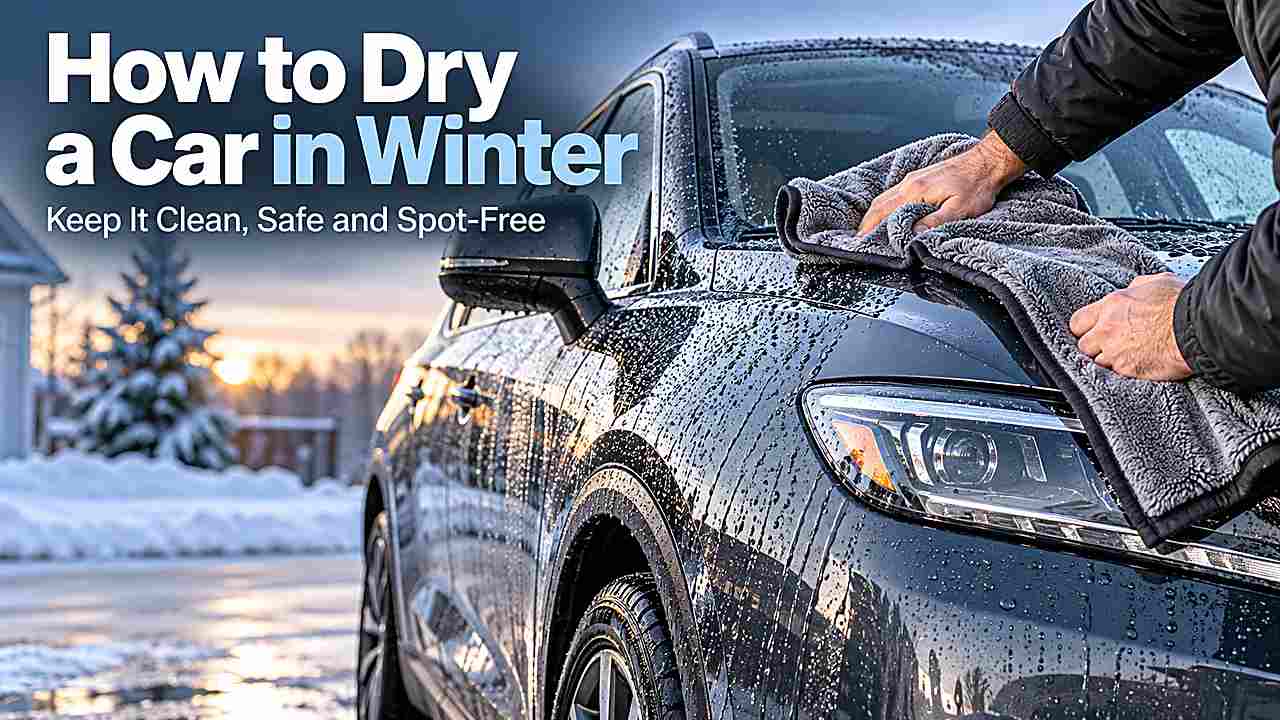
Drying a car in winter is not just about appearance. Water left in door seals, mirrors, locks, badges, fuel doors, and trunk seams can freeze after the vehicle leaves a warm wash bay, while mineral-rich droplets on paint and glass can still leave spots.
A good winter drying routine therefore works in two layers: remove most of the water from visible surfaces, then chase the hidden water that would otherwise drip or freeze later. The process can be fast once the right areas receive priority.
Winter drying works best with a clean microfiber towel or filtered air on the large panels, followed by careful drying of door seals, handles, mirrors, locks, fuel doors, and other water traps.
Why winter drying is different from summer drying
In warm weather, a missed droplet may simply evaporate. In winter, that same droplet can freeze inside a seal or mechanism, creating a door that will not open or a mirror that is difficult to adjust. The slower evaporation of cold air also means water stays in seams longer even when the outside panel looks dry.
Heated wash bays create another transition. Water remains liquid while the vehicle is inside, then cools rapidly as soon as the car reaches subfreezing air. The few minutes before leaving the bay are therefore the best time to remove water from places that cannot be reached once they freeze.
Start with the roof and large painted panels
The roof, hood, trunk, and upper doors hold the most visible water and are easiest to dry before attention shifts to smaller details. A high-absorbency microfiber towel reduces the number of passes needed across the paint. Blotting or a gentle drag on a thoroughly clean surface minimizes friction and lowers the chance of marring.
Filtered air or a vehicle-safe blower is useful when the car may still have a little contamination, because it avoids rubbing the paint. Air also pushes water out of trim channels and badges that towels cannot reach. The method does not have to be all towel or all air; many winter routines are fastest when both are used.
Door jambs and seals deserve priority
Rubber weather seals can hold a thin film of water that freezes the door to the body. Drying both the seal and the mating painted surface makes a much bigger difference than wiping only the exterior door skin. Lower door drains should remain open so water is not trapped inside the door.
A clean microfiber towel works well for accessible seals, while compressed or filtered air can clear corners around hinges and latch areas. If a rubber-care product is used, it should be compatible with automotive seals and applied sparingly according to its directions. Heavy oily films can attract dirt and are not a substitute for actual drying.
Chase water from mirrors, handles, badges, and fuel doors
These small areas are responsible for many of the streaks that appear ten minutes after a car seems dry. Mirror housings can hold surprising amounts of rinse water, and recessed door handles or badges often release drips only after the car starts moving. On dark paint, those trails are especially visible.
A blower is particularly effective here because it can move water out rather than merely absorbing the portion that has reached the surface. A small detailing towel can then catch the runoff. Opening the fuel door and trunk briefly inside a warm bay also exposes hidden edges that would otherwise freeze shut.
Glass and wipers need a separate finish
Windshield streaks can freeze into a visibility problem, so the glass should be dry before the car returns to very cold air. A dedicated glass towel prevents wax or drying-aid residue from being transferred from paint towels. The wiper blades can be lifted gently and wiped clean if the vehicle design allows it.
Washer nozzles and the lower cowl should not be flooded deliberately during the drying stage. Any remaining water in those areas will cool quickly outside. Winter-grade washer fluid and clean blades are the better tools for maintaining visibility after the wash.
When drying aids help and when they do not
A compatible spray drying aid or rinseless-wash drying product can add lubrication and help the towel move smoothly over clean paint. It may also leave temporary hydrophobic protection that makes future water removal easier. The product must be appropriate for the existing wax, sealant, ceramic coating, matte finish, or vinyl wrap.
A drying aid cannot fix poor rinsing. Soap trapped behind trim or salty water dripping from a mirror will still leave residue even if the main panel looks glossy. The foundation remains thorough rinsing followed by physical water removal from both exposed and hidden areas.
The first few minutes after leaving the bay
A short drive can shake additional water out of mirrors, trim, and the rear hatch area. If conditions allow, a quick walk-around after the drive can catch those new drips before they freeze or spot. This is particularly useful on SUVs and trucks with complex mirrors, roof rails, tailgates, and rear wipers.
Doors should be opened and closed normally rather than slammed if temperatures are very low and the windshield has existing damage. If a seal begins to stick, forcing the door can tear the rubber. Returning the car to warmth or allowing the ice to release gradually is safer than yanking against a frozen seal.
Adapting the drying method to the temperature
Near-freezing weather gives the most flexibility because there is enough time to towel-dry normally before remaining water turns to ice. As temperatures drop further, hidden water traps become more urgent and the value of a heated bay increases. In severe cold, exterior detailing perfection should become secondary to functional drying around doors, locks, mirrors, cameras, and wipers. A few harmless droplets on paint are less important than a frozen seal that tears the next morning.
Vehicle design also changes the workload. Frameless windows, retractable door handles, power-folding mirrors, sliding doors, panoramic roofs, and complex tailgates create extra seams where water can collect. Owners learn quickly which features release a second wave of drips after the first drive. Those recurring spots deserve direct airflow or a dedicated small towel every winter wash. A generic drying checklist is less useful than knowing the water traps on one specific vehicle.
Electric vehicles and modern cars with cameras or sensors do not need exotic drying methods, but unnecessary high-pressure air or water should be avoided around vulnerable openings. Parking sensors and camera lenses can be dried with a soft towel rather than blasting them at point-blank range. Charge-port doors on EVs and plug-in hybrids deserve the same attention as fuel doors because trapped water can freeze around the hinge or latch. Vehicle manufacturer instructions should guide any special precautions.
The drying tools themselves need winter care. A microfiber towel that is wet and left in the trunk can freeze into a stiff block, while a blower stored with moisture in the nozzle may be inconvenient the next time it is needed. Bringing towels indoors for laundering and drying keeps them absorbent and clean. A small dry emergency towel in the cabin is also useful for surprise drips, fogged glass edges, or a door seal that was missed during the main wash.
What to do when the car starts freezing before drying is finished
If thin ice begins forming while the car is still being dried, continuing to rub the surface can create more risk than benefit. Ice may trap grit against the paint, and a towel dragged across that mixture can leave fine scratches. The priority should shift to functional areas such as door seals, mirrors, glass edges, and handles. Cosmetic droplets on broad panels can wait for a warmer environment if necessary.
A heated garage is the best recovery option because the remaining water can thaw and be removed under controlled conditions. Parking the car in direct winter sun may help slightly, but body panels warm unevenly and hidden cavities can stay frozen. Hot water should not be poured onto frozen glass or paint as a quick fix. Gradual warming remains safer for both materials and electronics.
If no warm space is available, doors can be opened briefly after the wash and the seals dried before the vehicle sits overnight. A small amount of moisture at the lower door edge is less troublesome than water across the upper weatherstrip where the seal bonds to the body. Wipers should be checked for frozen attachment before operation. The goal is to preserve function until the next milder period allows a more complete finish.
The same triage applies after freezing rain. A perfectly spotless exterior is not realistic when water is turning to ice as fast as it can be removed. Keeping glass clear, doors operable, and sensitive seams free of trapped water is the practical standard. Winter detailing works best when safety and function come before cosmetic perfection.
Why winter drying protects more than paint
Modern vehicles place cameras, sensors, retractable handles, and electronic latches in areas that collect wash water. These components are designed for outdoor use, but freezing water can still interfere mechanically with moving parts or cover optical surfaces. Drying a backup camera lens, radar-adjacent trim, or a retractable handle area takes only seconds and can prevent a frustrating frozen feature later. The aim is not to keep electronics dry at all costs; it is to prevent avoidable ice from forming around exposed mechanisms.
License-plate frames, roof racks, running boards, and trailer connectors are other vehicle-specific water traps. Trucks and SUVs usually need more finishing time because their exterior hardware creates additional seams and ledges. Building a personal checklist from the places that drip after each wash is more efficient than wiping every square inch repeatedly. Once those trouble spots are known, winter drying becomes a short routine rather than an open-ended detailing session.
Frequently Asked Questions
These questions cover the practical details that commonly come up after the main process is understood.
Is it okay to let a car air-dry in winter?
Air-drying is less predictable in winter because water can freeze in seams before it evaporates. Low-mineral spot-free water may reduce visible spotting on open panels, but it does not remove water from door seals, mirrors, locks, and fuel doors. Those hidden areas are the main reason some physical drying is worthwhile. A blower can reduce paint contact while still clearing water traps. Air-drying alone is best reserved for mild conditions where freezing is not a concern.
Can I use a leaf blower to dry a car in winter?
A clean electric blower can work well if it does not pull dust, grit, or exhaust toward the paint. The intake should be kept away from dirty floors and loose debris, especially in a wash bay. Warm, filtered vehicle-drying air is even better because it reduces moisture without contaminating the finish. Strong airflow should be used carefully around loose trim and damaged seals. The biggest advantage is reaching mirrors, badges, seams, and grilles without rubbing them.
Should I wipe rubber door seals after every winter wash?
Drying seals after a winter wash is a useful habit whenever the car will return to freezing temperatures. Water trapped between the rubber and the door opening can freeze the two surfaces together. A quick wipe of both mating surfaces takes little time and prevents many frozen-door problems. Rubber conditioner may help some seals stay supple, but compatibility with the vehicle material matters. The conditioner does not replace drying because water can still freeze on top of it.
Why do water streaks appear after the car was already dry?
Hidden water is usually the cause. Mirror housings, badges, handles, roof rails, fuel doors, and trunk seams can hold water until vibration or airflow releases it. Dark paint makes these delayed drips especially obvious. Blowing out the cavities before leaving the bay reduces the problem. A small clean towel kept in the car can handle the final walk-around a few minutes later.
What is the safest drying towel for winter use?
A large, clean microfiber drying towel with good absorbency is the practical default for glossy paint. It should be stored clean and kept off the wash-bay floor because winter grit is highly abrasive. Paint towels should remain separate from wheel, door-jamb, and lower-body towels. The towel should glide with light pressure on a properly rinsed surface rather than being scrubbed back and forth. On specialty finishes, the vehicle or coating manufacturer’s care guidance takes priority.
Conclusion
Winter drying is really a freeze-prevention routine disguised as a detailing step. Large panels matter for appearance, but the highest-value areas are often door seals, handles, mirrors, locks, fuel doors, trunk edges, and other places that trap water out of sight.
A combination of absorbent microfiber and clean airflow is fast, gentle, and effective. Finishing the job before the car leaves a heated bay saves far more time than dealing with frozen doors or streaked black paint later.