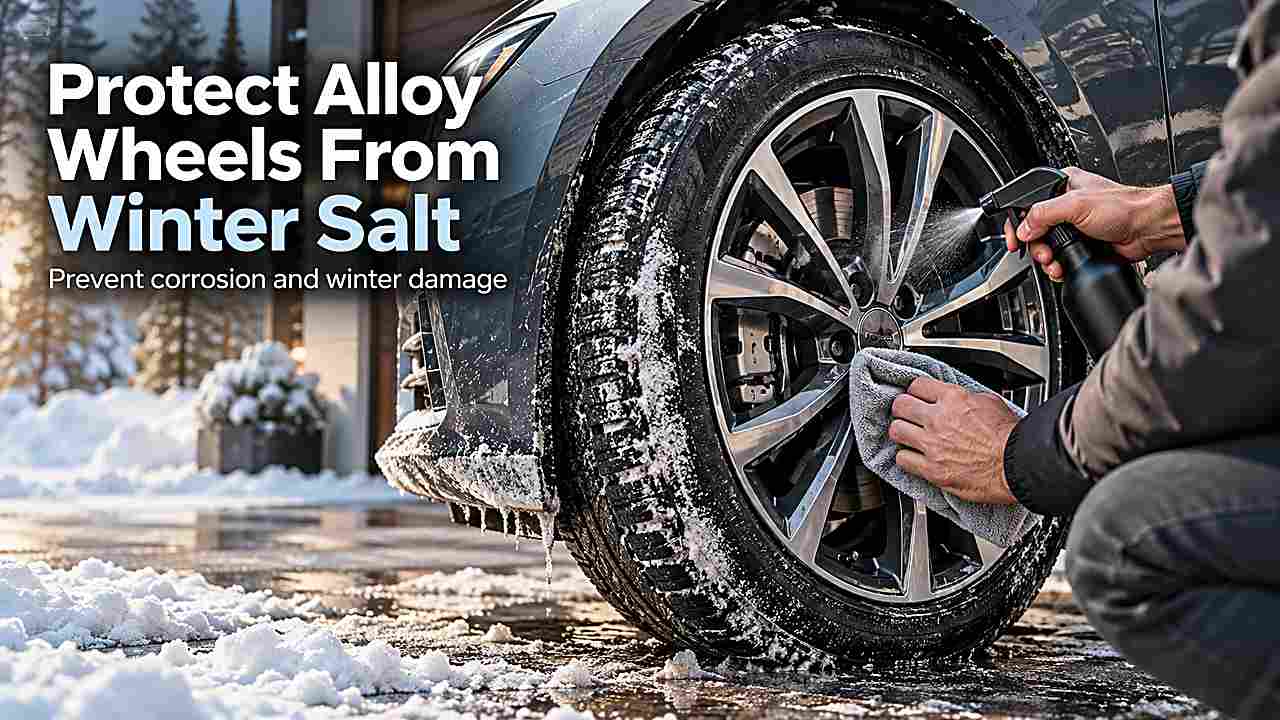
Alloy wheels spend winter in one of the harshest places on a vehicle. They are constantly exposed to salty spray, brake dust, grit, temperature changes, and moisture, and damage often begins at chips, curb rash, or areas where the clear finish has already failed.
Protection works best as a system rather than a single product. Clean wheels, intact finishes, frequent rinsing, and a compatible protective layer all reduce how long corrosive residue remains in contact with aluminum.
Alloy wheels are best protected from winter salt by repairing damaged finishes, cleaning them regularly with wheel-safe products, rinsing behind spokes and barrels, and maintaining a compatible sealant or coating through the season.
Why winter salt is hard on alloy wheels
Road salt lowers the freezing point of water, which is why it helps keep roads passable, but the salty moisture that reaches a wheel can remain active for long periods. Aluminum naturally forms a protective oxide layer, yet painted or clear-coated alloy wheels still rely on their finish to keep contamination away from the metal. Once that finish is chipped, scratched, or lifting, corrosion can spread beneath it.
Brake dust complicates the picture because it adds metallic particles and heat to an already dirty surface. The combination of salt, moisture, and brake residue creates dark staining in corners and can accelerate cosmetic deterioration. Winter cleaning therefore needs to reach more than the front face that is easy to see.
Start winter with an honest inspection
Clean, dry wheels reveal problems that are easy to miss under summer brake dust. Small clear-coat chips, curb rash, flaking paint, corrosion around the center bore, and bubbling near spoke edges deserve attention before salt exposure becomes constant. A protective product can slow contamination, but it cannot rebuild failed paint or stop corrosion that is already lifting the finish from underneath.
Wheel type matters as well. Painted and clear-coated alloys tolerate many mainstream pH-balanced wheel cleaners, while polished, anodized, matte, or bare aluminum may require more specific chemistry. The safest product choice follows the wheel manufacturer’s finish guidance rather than assuming every aluminum wheel is chemically identical.
A protective layer makes routine cleaning easier
Wheel waxes, synthetic sealants, and ceramic-style wheel coatings create a sacrificial layer above the finish. Their biggest winter benefit is not making salt harmless; it is reducing adhesion so grime and brake dust are easier to rinse away before they sit for weeks. A coating that is easy to maintain encourages more frequent gentle cleaning, which is often more valuable than maximum claimed durability.
Application works best on decontaminated, fully dry wheels. Residual brake dust or oily tire dressing can interfere with bonding and may be sealed under the product. Owners who remove the wheels for a seasonal change can protect the barrels and backs of the spokes more thoroughly than is possible with the wheels mounted.
How often to rinse salt during winter
There is no single calendar interval because road treatment varies widely, but visible salt film is a good reason to rinse. Cars driven daily on treated roads may benefit from wheel and underbody rinsing several times during a stormy period, while a vehicle that stays parked can go longer. The practical goal is to avoid leaving a wet salt layer on the wheel for extended periods.
A self-serve wash can work well when temperatures and drainage are safe. Water should reach the inner barrel, back of the spokes, lug recesses, and lower suspension-facing surfaces instead of concentrating only on the front face. Moderate pressure and good coverage remove more contamination than holding the nozzle very close to one stubborn spot.
Choose wheel chemistry with the finish in mind
Strong acidic or alkaline wheel cleaners can be effective on heavy contamination, but they are not the default choice for every winter wash. Frequent maintenance is usually better served by a wheel-safe cleaner recommended for the specific finish. The product should be allowed to work for its labeled dwell time without drying on the surface.
Cold weather slows some cleaners and makes rinsing more important because residues can remain in lug holes and spoke junctions. A soft wheel brush or microfiber tool can help once loose grit has been rinsed away. Separate tools for wheels prevent brake dust and road grit from being carried onto body paint.
Pay attention to chips, center bores, and hardware
Corrosion often starts where the protective finish is weakest. Curb rash that exposes metal, stone chips near the rim edge, and damaged areas around the lug seats can hold salty moisture against aluminum. Small cosmetic defects may be touch-up candidates, while widespread peeling or white corrosion under the clear coat usually needs refinishing rather than more cleaning.
The wheel-to-hub interface also deserves care during seasonal wheel changes. Corrosion at the center bore can make wheels difficult to remove and can interfere with clean seating if it becomes severe. Any corrosion treatment or anti-seize use should follow vehicle and wheel manufacturer guidance because lug torque surfaces must remain free of inappropriate lubricants.
Storage matters if you switch to winter wheels
Owners who run a dedicated winter wheel set can extend the life of the summer alloys by storing them clean and dry. Salt residue should never be packed away for months because moisture trapped in bags or between stacked wheels can continue affecting the finish. Tires should also be stored in conditions suitable for rubber, away from solvents and excessive heat.
A dedicated winter setup is not automatically immune to corrosion, especially if it uses inexpensive painted alloys or steel wheels. The same rinse-and-inspect habits still apply. The advantage is mainly that seasonal wear is concentrated on a wheel set chosen for harsh conditions rather than on a delicate premium finish.
A winter maintenance plan for daily-driven wheels
A practical wheel plan can be divided into pre-winter preparation, in-season rinsing, and spring inspection. Before winter, the wheel should be cleaned deeply enough to expose the actual finish condition, because brake dust can hide chips and corrosion. Protective sealant or coating goes on after that inspection, not before it. Starting the season with clean barrels and intact center caps also makes later maintenance easier because new contamination stands out instead of blending into old residue.
During winter, frequency should follow exposure rather than the calendar. A car that crosses heavily salted highways every day experiences far more contamination than a garage-kept weekend car. After a storm, a visible white film on the wheel is a strong cue for rinsing, particularly around the inner barrel and back of the spokes. The rinse does not need to become a full detailing session every time. Removing the bulk salt early prevents the heavy crust that later requires stronger chemistry and more agitation.
Spring inspection is the point to decide whether the wheel merely needs decontamination or actual refinishing. Brown brake residue and road film may clean off, while white powdery corrosion, bubbling clear coat, and lifting paint indicate coating failure. Those defects are not solved by another layer of sealant because moisture is already reaching the metal. Early refinishing can contain the damage before it spreads across a spoke or around the rim edge.
Wheel hardware deserves attention in the same seasonal cycle. Center caps, valve stems, decorative lug covers, and exposed wheel weights all live in the same salt environment and can deteriorate independently of the main wheel finish. A wheel that looks good from three feet away can still have corrosion starting around a valve stem or cap opening. Small inspections during routine tire-pressure checks help catch those issues before they become leaks or seized parts.
What to do when corrosion is already visible
Early corrosion often appears as white powdery spots, cloudy clear coat, or small bubbles near a chip. Cleaning can remove surface contamination around the defect, but it cannot reverse finish separation once moisture has reached the aluminum. Covering the area with wax may slow new contamination, yet it should not be mistaken for a repair. The useful next step is deciding whether a small touch-up is appropriate or whether the wheel needs refinishing.
Curb rash deserves attention because it often cuts through the protective coating at the rim edge. Winter salt repeatedly wets that exposed aluminum, and corrosion can creep under adjacent clear coat. A small damaged edge may remain mostly cosmetic for a time, but spreading lifting or pitting becomes harder to refinish cleanly. Addressing the damage before another winter usually costs less than waiting until several inches of coating have failed.
Corrosion around the bead seat or valve-stem area can move beyond appearance and affect air sealing. Slow tire-pressure loss in winter is often blamed on cold temperature alone, so persistent pressure decline after adjustment deserves inspection. A tire shop can determine whether the leak comes from a puncture, valve hardware, or corrosion where the tire seals to the wheel. Cosmetic cleaning should never replace diagnosis of a pressure-loss problem.
The wheel should also be checked after refinishing because repaired surfaces need the same winter maintenance as factory finishes. Fresh clear coat, powder coat, or paint may have specific cure and cleaning requirements during its first weeks. Harsh wheel acid immediately after refinishing can shorten the life of an otherwise good repair. Following the refinisher’s care instructions gives the renewed finish the best chance to survive the next salt season.
Frequently Asked Questions
These questions cover the practical details that commonly come up after the main process is understood.
Does road salt permanently damage alloy wheels?
Road salt can contribute to permanent cosmetic damage when it reaches exposed aluminum or remains trapped under a failing finish. Intact clear coat or paint provides a strong first barrier, so well-maintained wheels can handle winter use for years. Damage usually begins at chips, curb rash, or peeling areas where moisture can reach the metal. Frequent rinsing reduces the time salt stays in contact with those weak points. Once corrosion is spreading under the coating, refinishing is often more effective than repeated cleaning.
Is ceramic coating worth using on winter wheels?
A compatible wheel coating can be useful because it makes brake dust and salty grime easier to release during routine washes. It does not make the wheel corrosion-proof, and damaged paint still needs attention. The benefit is greatest when the wheels are fully cleaned and decontaminated before application. Barrels and backs of spokes can be coated more thoroughly when the wheels are off the car. Maintenance washing remains necessary even with a durable coating.
Can I use household dish soap on alloy wheels?
Dish soap is not the best routine choice because it was not designed around automotive wheel finishes or protective products. Some formulas can strip waxes or leave residues, and they provide no advantage over a proper wheel-safe cleaner. A pH-balanced automotive product is easier to match to clear-coated or painted alloys. Specialty bare or polished finishes may need even more specific chemistry. Product compatibility matters more than how strong the cleaner feels.
Should I dry alloy wheels after a winter rinse?
Drying is helpful, especially when temperatures are near freezing or the water is mineral-rich. Standing water around lug recesses, center caps, and spoke junctions can leave spots and may freeze after the car leaves a heated bay. A dedicated microfiber towel or filtered air works well. The towel should remain separate from paint towels because wheels carry abrasive brake dust. Drying also creates a chance to notice fresh chips or corrosion before they spread.
Are steel wheels better than alloys for road salt?
Steel wheels are often chosen for winter because cosmetic damage is cheaper to tolerate and repair, not because salt cannot affect them. Steel can rust when its paint is chipped, while alloy wheels can corrode beneath damaged clear coat. A simple steel wheel may be easier and less expensive to refinish after harsh winters. Premium clear-coated alloys can also survive winter well when cleaned and maintained. The better choice depends on cost, appearance priorities, brake clearance, and the quality of the finish.
Conclusion
Protecting alloy wheels from winter salt is mostly about limiting how long salty moisture sits against vulnerable areas. An intact finish, a compatible protective layer, regular rinsing, and gentle wheel-safe cleaning give the metal the best chance of coming through winter without bubbling or staining.
The easiest time to catch trouble is during routine washes. A quick inspection of rim edges, lug recesses, spoke junctions, and the inner barrel can identify coating damage early, before corrosion has months to spread beneath the finish.