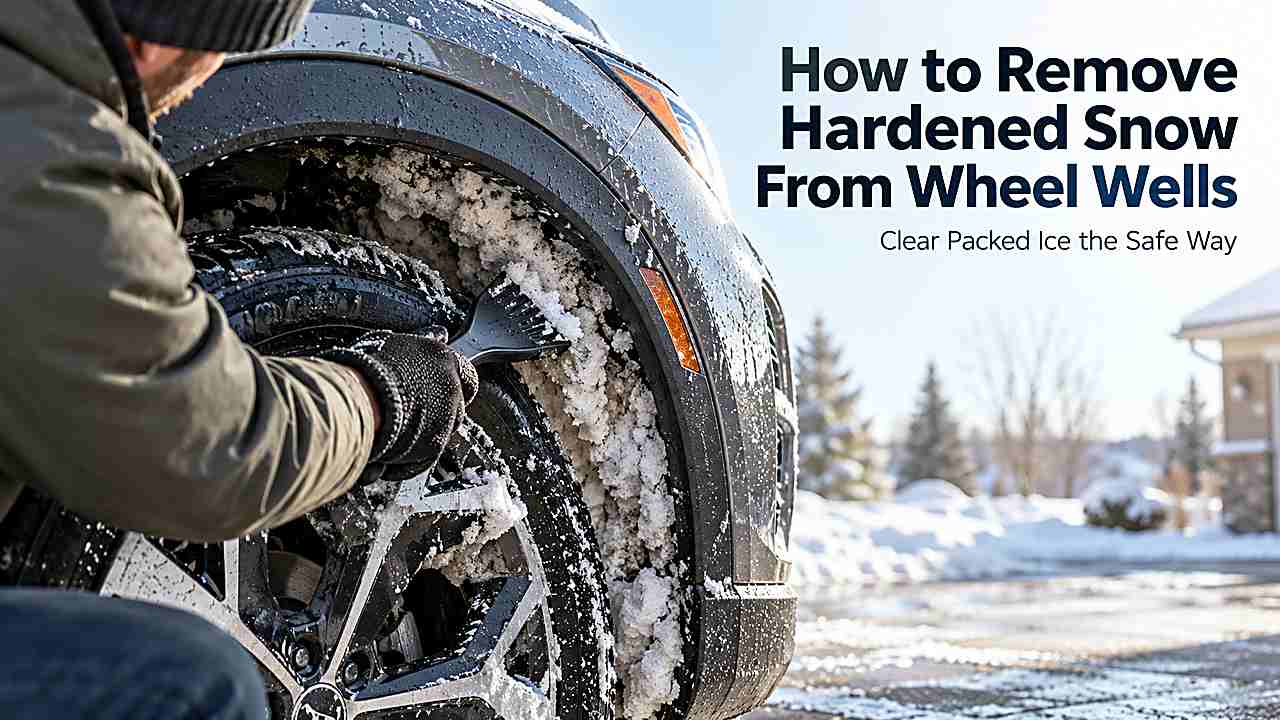
Packed snow in a wheel well can turn into a hard block after a few freeze-thaw cycles. The problem is more than cosmetic because a large buildup can reduce tire clearance, rub during steering, trap salty slush against metal, and hide fasteners or wiring behind the liner.
The safest approach is to soften the buildup before trying to remove it. Hard impacts, metal scrapers, and boiling water can damage plastic liners, paint, sensors, or nearby brake and suspension parts even when the ice itself looks solid enough to attack aggressively.
The safest way to remove hardened wheel-well snow is to warm and soften it gradually, then break it away by hand or with a plastic tool while protecting liners, wiring, and painted edges.
Why wheel-well snow becomes a hard block
Fresh snow is usually easy to knock loose, but wheel wells collect a mixture of snow, road spray, grit, and deicing salts. Heat from the brakes, tires, and engine bay can partially melt that mixture during a drive, and the wet slush then refreezes when the car sits outside. Repeated cycles create dense layers that can bond to the liner and to one another much more firmly than ordinary snow.
The shape of the wheel opening makes the problem worse. Tires throw slush upward into pockets behind splash shields, mud flaps, and liner edges, so the buildup often forms where it is difficult to see. On vehicles with tight tire clearance, larger winter tires, or lowered suspension, a surprisingly small ridge can begin touching the tire during turns or suspension compression.
Know what is hiding behind the ice
A wheel well is not an empty cavity. Depending on the vehicle, the area may contain plastic liners, painted metal lips, ABS sensor wiring, brake hoses, clips, fasteners, air guides, sound insulation, and sometimes electronic suspension components. Treating the frozen mass as if it were attached to bare steel can lead to damage that is far more expensive than the cleanup itself.
A flashlight helps reveal where the ice ends and the vehicle begins. Painted fender edges and thin liner sections deserve particular care because they can crack or chip if a rigid block is pried sideways. If the buildup surrounds a wire harness or hose, gradual thawing is safer than trying to separate the ice mechanically.
The safest ways to soften hardened buildup
The easiest method is simply to move the vehicle into a warmer garage or wash bay and give the wheel wells time to rise above freezing. Even a modest temperature increase can weaken the bond between the ice and the liner, which means much less force is needed later. A heated self-serve bay can be useful if the floor drains properly and the operator allows underbody rinsing.
Moderately warm water can speed the process when conditions permit, but the goal is gradual thawing rather than thermal shock. Water that feels comfortably warm to the hand is enough to soften slush without creating a large temperature difference across cold plastics or nearby glass. Directing a pressure washer at one frozen point from very close range is less desirable because pressure can flex liners, disturb clips, and drive dirty water into connectors.
A low-risk removal sequence
Once the outer layer begins to soften, the easiest pieces often release with gentle hand pressure. Thick gloves protect fingers from sharp ice and cold plastic, while a flexible plastic scraper can help at broad, accessible areas. The movement should be away from the vehicle surface rather than levering against a painted lip or forcing the liner inward.
Large chunks are better removed in several pieces than in one dramatic pull. If a section does not move with light pressure, more thawing is usually the right answer because the frozen material may still be wrapped around a fastener or tucked behind the liner. A second rinse can carry away loosened grit so that the remaining ice is not being dragged across paint or plastic.
When a self-serve wash helps
A self-serve wash is useful because it combines above-freezing water, drainage, and room to work without filling a home driveway with frozen runoff. A broad rinse pattern from a sensible distance can melt and flush slush from the back of the wheel opening, especially after the car has been driven long enough to warm the area slightly. Starting at the lower part of the wheel well lets dirty water escape instead of trapping it higher in the cavity.
The strongest setting is not automatically the best one. Close-range pressure can peel weakened undercoating, bend loose liner edges, or force water into damaged electrical connectors. The safer goal is to remove salt and slush with coverage and dwell time, not to cut frozen buildup off the vehicle with a concentrated jet.
What not to use on a frozen wheel well
Metal screwdrivers, pry bars, chisels, and rigid ice scrapers can puncture a liner or chip paint with very little warning. A hammer may shatter the ice, but the impact also travels into plastic clips and body seams that are brittle in very cold weather. Boiling water creates a different problem because the sudden heat can stress cold materials and the runoff may refreeze almost immediately on the ground or nearby components.
Chemical deicers also deserve caution. Products made for sidewalks may contain salts or chemicals that increase corrosion risk and were never intended for painted bodywork, wheel finishes, rubber, or suspension parts. Ordinary thawing and rinsing are slower, but they are far easier to control.
Prevent the buildup from returning
Frequent winter rinsing keeps snow from gaining the thickness and density that makes removal difficult. Wheel wells, rocker panels, and the lower bumper areas collect the same salty slurry, so a quick underbody rinse after heavily treated roads can reduce both packed snow and corrosion exposure. The timing matters most after storms, thawing weather, or long highway drives where slush is continuously thrown into the arches.
Parking habits can also make a difference. A warm garage melts wheel-well snow, but that moisture should be allowed to drain rather than sitting against the vehicle night after night. When the car remains outdoors, knocking off soft buildup soon after driving is much easier than waiting until it has frozen solid.
What different wheel-well materials can tolerate
Not every wheel well is finished the same way. Many modern cars use molded plastic liners, some trucks expose painted or coated metal, and performance vehicles may have fabric-like acoustic liners that hold water differently from hard plastic. A flexible plastic liner can survive ordinary road spray but may crack if a frozen block is levered against it when the temperature is very low. Felt-style liners are more vulnerable to tearing when ice is pulled away while still bonded to the fibers. Identifying the material before applying force makes the job much more predictable.
Undercoating adds another variable because age and condition matter. Fresh, intact factory coatings usually tolerate routine rinsing, while old rubberized material can become brittle and begin separating at damaged edges. A concentrated pressure jet aimed at that edge can turn a small defect into a peeled section. Oily corrosion protectants behave differently again and may thin under direct high-pressure washing. Winter cleaning should therefore remove contamination without assuming every dark surface inside the wheel arch is a permanent hard coating.
Brake components are nearby even when they are not obvious from outside the arch. Flexible brake hoses, ABS wiring, and sensor leads are designed for harsh road environments, but they should not be used as leverage points for frozen snow. If a lump of ice appears wrapped around a wire or hose, the correct response is more thawing rather than stronger prying. This is also a good reason to avoid metal tools that can slip suddenly once the ice releases. A few extra minutes of warming is cheaper than repairing a damaged sensor harness.
After the area is clear, the wheel well is worth inspecting while visibility is unusually good. Missing clips, rubbed liners, polished tire-contact marks, and fresh scrape lines show where buildup or tire movement has been occurring. If the liner has shifted toward the tire, simply removing the snow will not solve the underlying clearance problem. Correcting the loose panel before the next storm prevents repeated contact and keeps future winter rinsing straightforward.
When the buildup signals a larger clearance problem
Repeated heavy buildup in exactly the same spot can reveal more than bad weather. A liner that has lost clips may bow inward and create a pocket that catches snow every drive, while a bent mud flap can redirect slush into the arch. Tire size and wheel offset matter too because a wider or taller winter setup may leave less room for packed snow than the factory combination. If the same ridge keeps returning, the vehicle deserves a clearance inspection rather than endless ice removal.
Fresh scrape marks on the liner are useful evidence. Smooth shiny plastic, rubbed felt, or a polished edge near the tire shows where contact is occurring during steering or suspension movement. That contact may be caused by ice, but it can also indicate a loose liner or an oversized tire. Photographing the area after it is clean makes it easier to compare after the next storm. Persistent rubbing should be corrected before it damages the tire sidewall or tears the liner further.
Vehicles with aftermarket flares, mud guards, running boards, or lifted suspension can collect snow in unfamiliar places. Added hardware changes airflow and creates new ledges where slush accumulates. Owners of modified trucks should inspect the back side of accessories as carefully as the factory wheel liner. A modification that looks harmless in dry weather may create a perfect winter snow trap once road spray starts freezing in layers.
The best long-term fix is usually simple: restore liner clips, maintain proper tire clearance, rinse salt regularly, and remove soft buildup before it hardens. Those steps reduce both rubbing and corrosion exposure. Winter conditions will still create snow in the arches, but a healthy wheel-well layout sheds far more of it naturally. When the buildup becomes unusual, the vehicle is often telling you that something around the wheel opening has changed.
Frequently Asked Questions
These questions cover the practical details that commonly come up after the main process is understood.
Can packed snow in a wheel well damage the tire?
Yes, a large or hard buildup can rub the tire when the steering is turned or the suspension compresses. The risk increases on vehicles with tight wheel clearances, oversized winter tires, or ice that has formed a sharp ridge. Rubbing may produce noise first, but it can also abrade a tire sidewall over time. A driver who hears scraping after a snowstorm should inspect the arches before assuming the sound is a mechanical failure. Removing the buildup early is much safer than allowing repeated tire contact.
Is hot water safe for melting wheel-well ice?
Very hot or boiling water is unnecessary and can create avoidable thermal stress on cold plastic, paint, and nearby components. Moderately warm water is usually enough because the goal is to soften the bond rather than instantly melt every layer. Warm water also reduces the amount of steam and splash around the wheel area. In very cold outdoor conditions, any water may refreeze quickly, so a heated wash bay is preferable. The surface temperature and drainage conditions matter more than using the hottest water available.
Can I use a pressure washer directly on packed snow?
A pressure washer can help once the snow has begun to soften, but distance and angle matter. A narrow jet held close to a liner can damage clips, disturb loose undercoating, or force water into connectors. A broader spray from farther back gives the water time to melt and flush debris instead of acting like a cutting tool. Areas around ABS wiring and brake hoses deserve extra caution. If the buildup will not move with moderate pressure, more thawing is safer than moving the nozzle closer.
Should I remove the wheel to clear all the ice?
Removing the wheel is rarely necessary for normal winter buildup. Most owners can clear the important tire-clearance areas with the wheel turned and the vehicle parked safely. If ice is packed behind a liner, around suspension components, or in a place that cannot be inspected, a shop may be a better choice. Never crawl under a vehicle supported only by a jack just to remove snow. The benefit of deeper access is not worth creating a lifting hazard.
What if the wheel-well liner is already loose?
A loose liner changes the job because the ice may be holding a damaged panel in place or may have pulled clips out already. High-pressure rinsing can make the damage worse by catching the free edge and folding it toward the tire. Gentle thawing followed by a visual inspection is the safer approach. Missing clips or torn plastic should be repaired before highway driving if the liner can contact the tire. A secure liner also makes future winter cleaning much easier.
Conclusion
Hardened wheel-well snow is easiest to handle when the cleanup is treated as a thawing job rather than an ice-chipping contest. Gentle warmth, sensible water pressure, and patience protect the liner, paint, wiring, and tire clearance while still removing the heavy buildup.
After the ice is gone, a thorough rinse of the wheel well helps remove the salty grit that was trapped inside it. Keeping up with that rinse during winter prevents the next frozen mass from becoming just as stubborn.