Ice itself is not the only problem. Sand, salt, and road grit can become trapped under frozen snow, turning a hard brush or scraper into sandpaper when you drag it across paint.
The safest strategy is to let heat loosen the bond, remove snow with a soft automotive tool, and reserve rigid ice scrapers for glass.
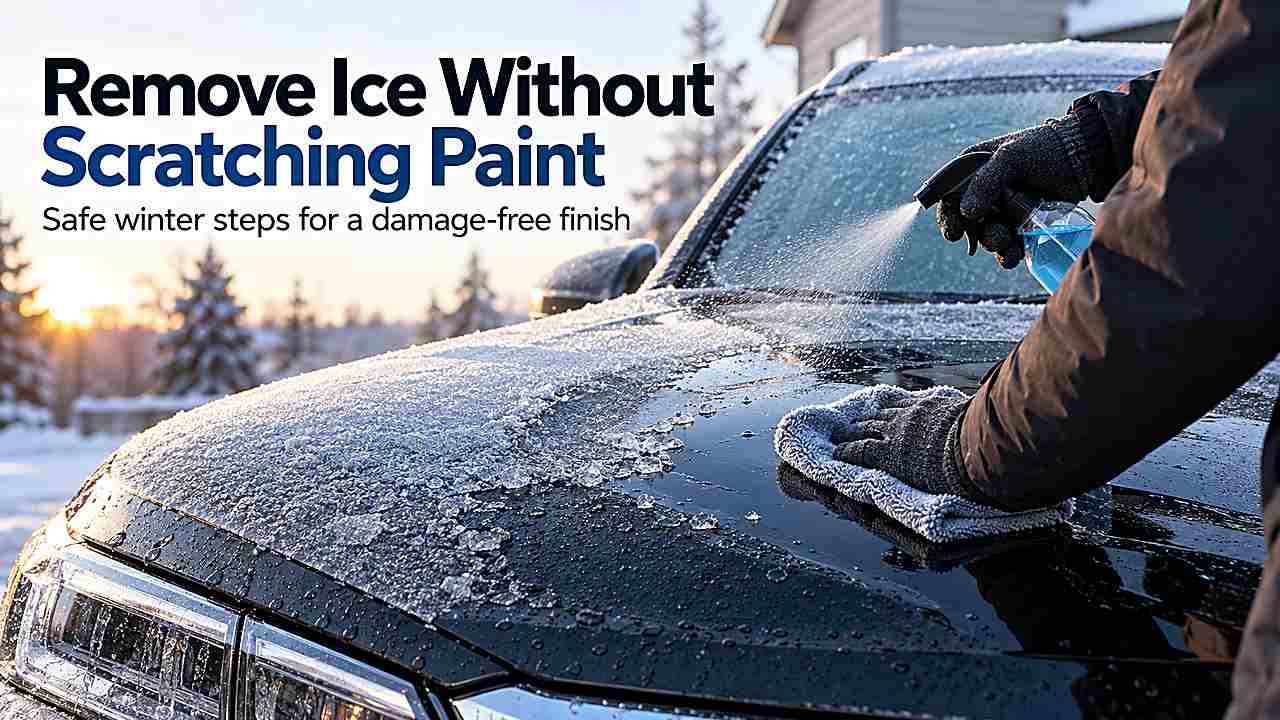
Start the defroster, brush loose snow away with a clean soft snow brush, let bonded ice soften, and use a plastic scraper only on glass. Never use metal tools, shovels, or hot water on painted panels or windows.
Warm the vehicle before attacking bonded ice
Start the vehicle in a safe, ventilated location and use the front and rear defrosters. The goal is to weaken the ice bond from the glass side so less scraping force is required.
Do not idle in a closed garage. If the doors are frozen, avoid hot water and excessive pulling on handles.
Remove loose snow without grinding grit into paint
Use a clean, soft snow brush or foam snow broom designed for vehicles. Push light snow off in straight passes and stop if you feel gritty resistance.
Do not use a household shovel, stiff shop broom, or improvised metal edge. Consumer Reports has warned that rough tools can scratch paint.
Treat glass and paint differently
A strong plastic ice scraper is intended for automotive glass, not painted body panels. Keep the scraper away from roof paint, pillars, trim, headlamp lenses, and plastic mirror housings.
For thick windshield ice, give the defroster more time and use de-icer compatible with automotive glass. Avoid hacking with the scraper tip because concentrated force can damage wiper edges and trim.
What to do with ice bonded to painted panels
If a thin sheet is frozen to the roof or hood, the safest option is often patience. Move the vehicle into sun or a warmer garage and allow the ice to release instead of prying at it.
Do not peel large chunks if they are still firmly bonded. Ice can trap grit and can pull against fragile trim, emblems, paint chips, or protective film edges.
Prevent the next hard freeze
Wash road grit off before major freezes when conditions permit, keep a protective wax or sealant on the paint, and park under cover if available. Clean paint gives abrasive debris fewer chances to become trapped under ice.
Keep the snow brush itself clean. A brush stored on a dirty garage floor can pick up grit that scratches paint the next morning.
Tools worth keeping in the car for snow and ice
When conditions are marginal, solve the highest-risk problem first. Clearing glass and lights for visibility, flushing heavy salt from the underside, or drying door seals can be more important than achieving a perfect cosmetic finish.
Winter maintenance is successful when the vehicle remains usable, visible, and protected without creating new damage. Cosmetic perfection can wait for a safer temperature window.
Why hot water, metal tools, and brute force are risky
Start by checking temperature, wind, surface condition, and the amount of salt or ice on the vehicle. Winter cleaning changes quickly when water can freeze before it drains, so the same method that works at 35°F may be a poor choice during a deep freeze.
Choose a heated bay or the warmest practical part of the day when possible. If water is freezing on the ground or on the vehicle immediately, postponing the job can be safer than creating frozen doors, mirrors, wipers, or walkways.
Quick check before the next step
Confirm that water is draining rather than freezing, visibility equipment is working, and no seal, trim, coating, or component is reacting badly. If conditions are deteriorating, finish the essential task and stop.
Work from the least aggressive method toward stronger intervention only when the surface or condition actually requires it Keep paint-contact tools clean because winter grit and road film can create scratches when rubbed across the finish If runoff is freezing or footing is unsafe, end the job rather than trying to perfect a cosmetic result.
Work from the least aggressive method toward stronger intervention only when the surface or condition actually requires it Keep paint-contact tools clean because winter grit and road film can create scratches when rubbed across the finish.
Work from the least aggressive method toward stronger intervention only when the surface or condition actually requires it.
Clear roof snow, lights, cameras, and mirrors before driving
Rinse before making physical contact with winter grime. Salt crystals, sand, and road grit can scratch paint when trapped under a towel, mitt, snow brush, or scraper. Water should remove as much loose contamination as possible before anything touches the surface.
Use automotive products rather than household cleaners. Strong degreasers and dish detergents can strip protection or leave residues, and they are rarely necessary for routine salt and winter-film removal.
Inspect the paint after the ice is gone, not while it is hidden
Once the ice is gone, inspect the glass, paint, lights, mirrors, wipers, cameras, and sensors for remaining chunks that could break loose or block visibility. Brush away loose ice with a clean, soft tool rather than dragging gritty fragments across paint. Make sure wiper blades are fully released from the windshield before turning them on, because frozen blades can tear or overload the wiper mechanism.
If you find a scratch or chip after de-icing, clean the area gently and address exposed paint when conditions allow instead of repeatedly scraping the same spot. Do not rush the final inspection because a clear roof and hood are not enough if side glass, lights, or cameras are still obstructed. Safe de-icing ends when the vehicle is visible, functional, and free of loose ice that could become a hazard on the road.
Begin by separating loose snow from bonded ice. A soft snow broom or clean brush can move powder and lightly packed snow, but stop when you reach ice that is firmly attached to paint. Pushing harder at that point turns the tool into an abrasive against any grit trapped underneath.
Use the vehicle’s heating systems to do as much work as possible. Start the defroster according to the owner’s manual, allow the windshield and cabin to warm gradually, and use heated mirrors or a heated windshield if the vehicle has them. Mechanical scraping becomes much easier once the bond between ice and glass begins to weaken.
On glass, use a scraper designed for automotive windows and keep the blade clean. Work with controlled overlapping strokes rather than hammering at one frozen spot. Dirt trapped on the scraper edge can scratch glass, so wipe the blade when it picks up grit.
Painted surfaces need a gentler strategy. Do not use a windshield scraper, metal tool, credit card, or shovel edge on the hood, roof, trunk, or painted mirror caps. Once the ice loosens, lift it away or let it slide off with minimal contact instead of dragging it across the finish.
Be careful around wipers and washer nozzles. Free the blades completely before turning the wipers on, clear packed ice from the cowl, and avoid forcing a frozen washer system. A torn blade or overloaded wiper motor creates a visibility problem that is more serious than the remaining ice.
Roof ice needs attention because large sheets can break loose while driving. Warm and loosen it before departure, then remove what can be lifted safely without climbing on unstable surfaces or using hard tools on paint. Never rely on highway airflow to clear a frozen roof.
After de-icing, wash the car when conditions permit. Ice often traps road salt and gritty film against the finish, so a careful rinse removes abrasive residue that could otherwise be rubbed into the paint later. Keeping the car cleaner through winter also makes future snow and ice removal less risky.
Use extra care around badges, roof rails, rubber trim, and panel edges because ice can lock into small gaps. Do not pry frozen trim away from the body to speed the process. Warm the area gradually and remove loosened pieces by hand only when they release without force. Decorative and plastic parts can crack more easily in deep cold than they do at normal temperatures.
Keep the de-icing tools themselves clean. A snow brush or scraper stored loose on a salty floor can pick up sand and grit that then scratches the next surface it touches. Shake or rinse tools as needed, dry them before storage, and keep paint-contact brushes separate from tools used near wheels or the ground. Clean tools reduce damage without changing the basic removal technique.
If freezing rain is still falling, de-ice only what you need to maintain visibility and safe vehicle operation, then reassess before departure. Repeatedly scraping the same surface while new ice forms increases unnecessary contact. Waiting for the weather or defroster to improve conditions can be safer than fighting a rapidly rebuilding layer.
After the car is clear, store scrapers and brushes where they will stay clean for the next storm. Do not toss them onto a gritty cargo floor or against wet road-salt residue. A clean tool on the next use is part of scratch prevention, not merely a storage preference.
The safest ice-removal method depends on how firmly the ice is bonded and what surface lies underneath it. Thin frost can often be cleared with gentle warming and a soft snow brush, while a thick frozen layer may need more time before it will release without force. Painted panels are especially vulnerable when grit is trapped beneath the ice because scraping can drag that contamination across the clear coat. Glass is more tolerant of proper ice scrapers, but even there the tool should be clean and in good condition. Treating paint, trim, and glass as different surfaces helps prevent damage that comes from using one aggressive method everywhere.
Frequently Asked Questions
Can I use an ice scraper on painted body panels?
No, a hard windshield scraper can scratch clear coat and should be kept on glass unless the tool manufacturer explicitly states another safe use. For painted panels, let the vehicle warm gradually and use a soft snow brush to remove only loose snow and ice. Do not chip at bonded ice with metal, plastic cards, or sharp edges.
Once melting begins, lift or rinse away loosened pieces rather than dragging them across paint. Protecting the finish requires patience more than force.
Is hot water safe for melting ice on a car?
Very hot water is a poor choice because rapid temperature change can stress cold glass and the water can quickly refreeze on the vehicle or ground. Use the vehicle defroster and gradual warming instead. Automotive de-icing products can be useful when used on the surfaces listed on their labels.
Keep runoff in mind because melted water can create slick ice around the car. A slower controlled thaw is safer than a sudden thermal shock.
Can I turn on the wipers to break ice loose?
Do not operate the wipers until you know the blades are free from the windshield and the sweep path is clear. Frozen blades can tear, and the wiper motor or linkage can be overloaded by heavy ice. Warm the glass and release the blades gently by hand when it is safe to do so.
Clear packed ice from the cowl area as well. Then test the wipers at low speed before driving.
How do I remove ice from mirrors and cameras?
Use gradual warming and a soft cloth or brush once the ice has loosened. Avoid scraping camera lenses, painted mirror caps, or delicate sensor surfaces with a hard tool. If the vehicle has mirror heaters or camera-cleaning features, use them according to the owner’s manual.
Do not pour hot water into mirror housings because it can refreeze inside. Make sure cameras and mirrors are clear enough for safe driving before leaving.
How can I prevent thick ice from bonding to the car overnight?
Park under cover when possible and remove wet snow before it compacts and refreezes. A windshield cover can reduce ice on the glass if it is secured correctly and removed without dragging grit across paint. Keep the vehicle clean because road film and debris can make mechanical removal more abrasive.
Use winter-safe glass treatments only when compatible with the vehicle and follow the product directions. Prevention will not eliminate every freeze, but it can reduce how much scraping is required.
Conclusion
Scratch-free ice removal is mostly about restraint. Warm first, remove loose snow gently, keep scrapers on glass, and wait for bonded ice on painted panels to release rather than forcing it.