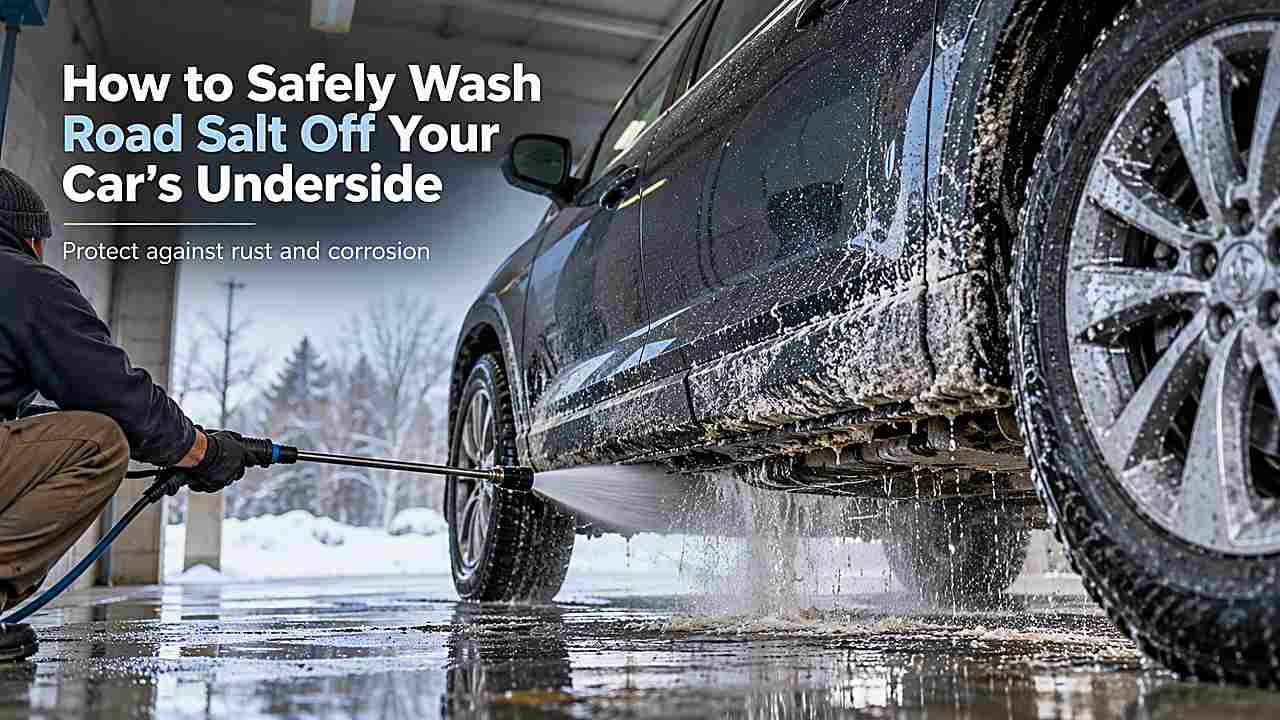
Road salt and liquid de-icers collect on suspension parts, subframes, wheel wells, splash shields, and seams where ordinary body washing does not reach. AAA recommends regular undercarriage cleaning because salt and brine can accelerate corrosion.
The safest approach is generous fresh-water flushing, sensible nozzle distance, and attention to components that should not be blasted at point-blank range.
Rinse loose salt first, use a dedicated undercarriage wash or broad low-angle spray, keep high pressure away from seals, wiring, connectors, and damaged coatings, then rinse wheel wells and lower body. Wash soon after heavily salted driving when conditions allow.
Why the underside deserves separate cleaning
Salt works with moisture to accelerate corrosion, and modern de-icing brines can cling to hidden areas. The underside also warms and cools repeatedly, so salty slush can dry into concentrated deposits.
Cleaning is especially important around wheel wells, rocker areas, suspension mounting points, brake and fuel line routes, and exposed fasteners. You do not need to make the underside cosmetically spotless; the goal is to dilute and flush away contamination.
Choose conditions that will not turn rinse water into ice
Use a heated wash or wait for a milder part of the day when possible. If temperatures are deeply below freezing and the vehicle will immediately sit outdoors, trapped water can freeze in doors, locks, parking-brake mechanisms, and trim.
If you have access to a warm garage, wash and let the vehicle drip and dry before parking outside again.
Use a safe undercarriage rinsing method
1. Start with the wheel wells
Flush packed slush and salt from liners and behind mud flaps. Keep the nozzle moving and avoid forcing water directly into damaged electrical connectors or wheel-bearing seals.
Work from the least aggressive method toward stronger intervention only when the surface or condition actually requires it Keep paint-contact tools clean because winter grit and road film can create scratches when rubbed across the finish If runoff is freezing or footing is unsafe, end the job rather than trying to perfect a cosmetic result.
Work from the least aggressive method toward stronger intervention only when the surface or condition actually requires it Keep paint-contact tools clean because winter grit and road film can create scratches when rubbed across the finish.
Work from the least aggressive method toward stronger intervention only when the surface or condition actually requires it.
2. Rinse the center underside with volume, not point-blank force
A dedicated underbody spray or angled wand is ideal. Water volume and coverage matter more than holding a pressure washer inches from components.
Work from the least aggressive method toward stronger intervention only when the surface or condition actually requires it Keep paint-contact tools clean because winter grit and road film can create scratches when rubbed across the finish If runoff is freezing or footing is unsafe, end the job rather than trying to perfect a cosmetic result.
Work from the least aggressive method toward stronger intervention only when the surface or condition actually requires it Keep paint-contact tools clean because winter grit and road film can create scratches when rubbed across the finish.
Work from the least aggressive method toward stronger intervention only when the surface or condition actually requires it.
3. Rinse lower body seams and rocker panels
Salt migrates onto pinch welds, lower doors, and rocker edges. Rinse those areas from top to bottom after the undercarriage flush.
Work from the least aggressive method toward stronger intervention only when the surface or condition actually requires it Keep paint-contact tools clean because winter grit and road film can create scratches when rubbed across the finish If runoff is freezing or footing is unsafe, end the job rather than trying to perfect a cosmetic result.
Work from the least aggressive method toward stronger intervention only when the surface or condition actually requires it Keep paint-contact tools clean because winter grit and road film can create scratches when rubbed across the finish.
Work from the least aggressive method toward stronger intervention only when the surface or condition actually requires it.
Areas that need extra caution
Do not direct concentrated high pressure into exhaust openings, exposed electrical connectors, torn boots, open body plugs, or areas with peeling undercoating. Be conservative around aftermarket electronics and modifications whose water sealing is unknown.
On EVs and hybrids, follow the manufacturer’s washing instructions. High-voltage systems are designed for road exposure, but damaged shields, charging components, and aftermarket wiring deserve extra care.
How often to rinse salt away
Frequency depends on road treatment and mileage. AAA has advised regular winter washing and prioritizing the undercarriage, with more frequent cleaning after heavily salted roads.
A practical rule is to wash when the vehicle has a visible salt film or after repeated driving on treated roads, then give the underside a thorough final cleaning when winter de-icing season ends.
Common winter mistakes that create new problems
Keep pressure-washer nozzles at a sensible distance and keep the stream moving. Point-blank pressure can lift loose paint, damage aging seals, force water into vulnerable connectors, or worsen already damaged undercoating.
Be especially conservative around cameras, parking sensors, charge ports, aftermarket wiring, loose trim, paint-protection-film edges, and damaged bodywork. The owner’s manual should override general advice for specialized equipment.
Quick check before the next step
Confirm that water is draining rather than freezing, visibility equipment is working, and no seal, trim, coating, or component is reacting badly. If conditions are deteriorating, finish the essential task and stop.
Work from the least aggressive method toward stronger intervention only when the surface or condition actually requires it Keep paint-contact tools clean because winter grit and road film can create scratches when rubbed across the finish If runoff is freezing or footing is unsafe, end the job rather than trying to perfect a cosmetic result.
Work from the least aggressive method toward stronger intervention only when the surface or condition actually requires it Keep paint-contact tools clean because winter grit and road film can create scratches when rubbed across the finish.
Work from the least aggressive method toward stronger intervention only when the surface or condition actually requires it.
Aftercare that prevents repeat freezing or corrosion
Dry the areas that trap water rather than focusing only on the large body panels. Door seals, jambs, handles, mirror housings, window edges, fuel or charge doors, wiper areas, and trunk seals can hold enough water to freeze later.
A short drive after drying can help move water out of body gaps, but it is not a substitute for wiping seals before a severe temperature drop. If you have a warm garage, allowing the vehicle to drip dry there can reduce freeze-up further.
Protect vulnerable underbody areas after the salt is gone
Inspect the vehicle after the job. Look for salt still packed in wheel wells, water dripping from trim, frozen wiper blades, fogged lamps, or areas where a protective coating or paint appears damaged. Small problems are easier to address before the next storm.
If the vehicle has fresh paint, cracked clear coat, exposed metal, torn boots, or other damaged components, reduce mechanical and chemical aggression. Winter contamination is important to remove, but damaged materials may need repair rather than harder cleaning.
Quick check before the next step
Confirm that water is draining rather than freezing, visibility equipment is working, and no seal, trim, coating, or component is reacting badly. If conditions are deteriorating, finish the essential task and stop.
Work from the least aggressive method toward stronger intervention only when the surface or condition actually requires it Keep paint-contact tools clean because winter grit and road film can create scratches when rubbed across the finish If runoff is freezing or footing is unsafe, end the job rather than trying to perfect a cosmetic result.
Work from the least aggressive method toward stronger intervention only when the surface or condition actually requires it Keep paint-contact tools clean because winter grit and road film can create scratches when rubbed across the finish.
Work from the least aggressive method toward stronger intervention only when the surface or condition actually requires it.
Rinse sooner after heavy brine exposure instead of waiting for spring
Prevention reduces the amount of force needed later. Maintain weather seals, touch up paint chips, keep winter washer fluid in the reservoir, and use a compatible wax, sealant, or coating when appropriate for the finish.
A regular light-cleaning schedule is usually easier on paint and components than waiting until a thick crust of salt, ice, and road film has built up. Consistency lets water and mild chemistry do more of the work.
Inspect wheel wells, brakes, and drainage points before driving away
After the main rinse, look along the rocker panels, wheel-arch lips, mud flaps, suspension areas you can see safely, and the rear underside for remaining white or gray salt film. Do not crawl underneath a vehicle in a wet self-serve bay or place any part of your body where a slipping vehicle could trap you. Use the wand from a stable standing position and rely on angle, water volume, and repeated passes instead of reaching under the car.
Finish by rinsing the lower body once more from front to back so loosened brine is carried away rather than left in seams. If temperatures are below freezing, dry door seals and other freeze-prone areas before driving away. Regular low-risk rinsing during salt season is more useful than one aggressive underbody cleaning after months of buildup.
Frequently Asked Questions
How often should I rinse road salt from the underside?
Rinse often enough that heavy salt and brine do not remain for long periods during winter. The ideal interval depends on how frequently you drive on treated roads, whether temperatures allow safe washing, and how much contamination is visible. A rinse after major salt exposure is more useful than waiting for a perfect detailing day.
Focus on the wheel wells, rocker areas, and accessible underside without crawling under the vehicle. Regular moderate cleaning is safer than rare aggressive cleaning.
Can high pressure damage the underside of a car?
Yes, point-blank pressure can damage loose undercoating, aging seals, electrical connectors, or already weakened components. Keep the nozzle at a sensible distance and use sweeping passes instead of concentrating on one spot. Avoid directly blasting exposed connectors, vents, or fragile aftermarket parts.
The goal is to move salt and grit with water volume, not to strip coatings. If the underbody has rust, damage, or loose material, use extra caution.
Should I use soap under the car?
Water alone removes a large amount of loose salt and brine, especially when used regularly. A compatible automotive cleaner can help with greasy winter film, but it should not be treated as a substitute for thorough rinsing. Avoid harsh household degreasers that may attack coatings, rubber, or finishes.
Follow the product directions and the car wash rules if you use a chemical. Complete rinsing matters more than creating heavy foam underneath the vehicle.
Is an underbody wash enough to prevent rust?
No single wash method can guarantee that corrosion will not occur. Removing salt reduces one important contributor, but rust protection also depends on paint condition, factory coatings, drainage, trapped debris, and existing damage. Repair chips and damaged coatings when practical.
Keep drain paths clear according to the vehicle manufacturer’s guidance. Think of underbody rinsing as one part of a broader winter-maintenance routine.
Can I rinse the underside when temperatures are below freezing?
You can wash in cold weather only when the bay and surrounding surfaces are safe and you can manage freeze-prone areas afterward. Runoff can turn floors and access roads into ice, which may be a greater immediate hazard than the salt itself. Avoid getting water where it can freeze in locks, seals, or mechanisms without a plan to dry them.
If conditions are extremely cold or windy, postponing the wash may be safer. Choose a warmer part of the day when possible.
Conclusion
Safe salt removal is mainly a flushing job. Use plenty of fresh water, reasonable pressure, broad coverage, and winter conditions that allow water to drain rather than freeze around the vehicle.