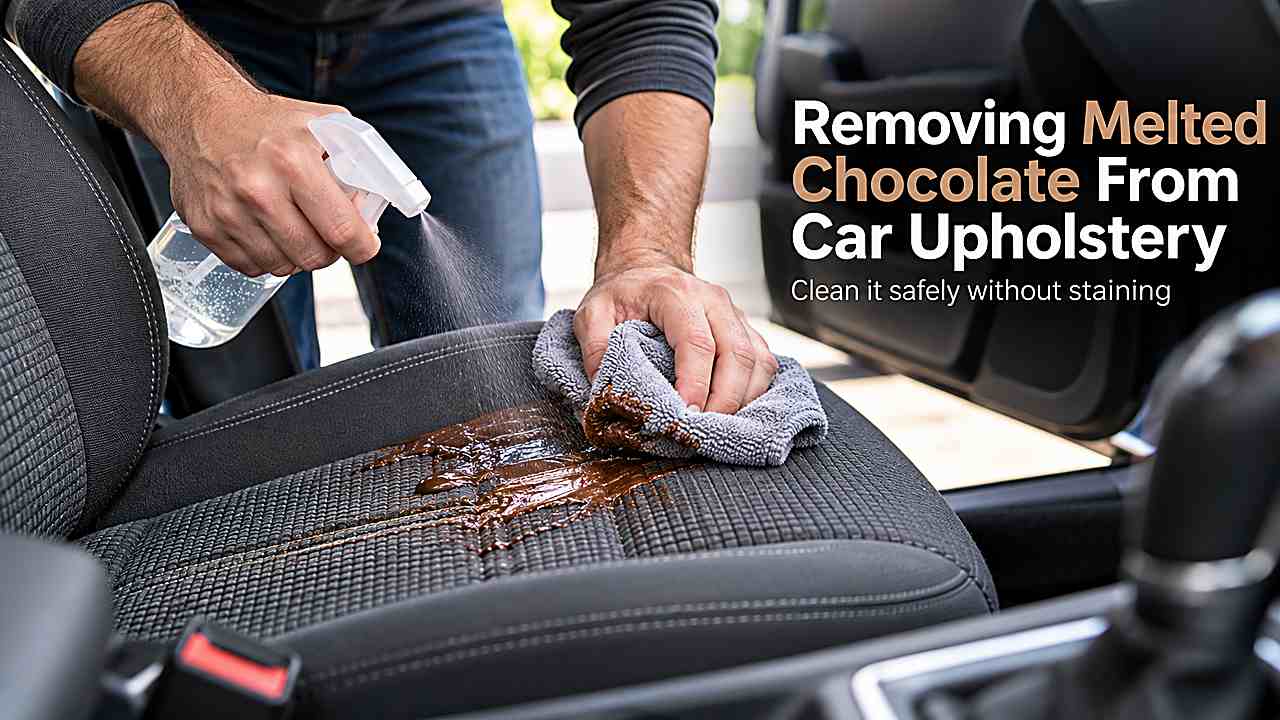
Melted chocolate is awkward because it is both a solid food and an oily stain. Cocoa butter resists plain water, sugar becomes sticky as it dries, and milk solids in some chocolate can add protein residue and odor if the mess is pushed into seat fabric or carpet.
The cleanup is easier when the chocolate is first turned back into something that can be lifted. Cooling and scraping remove the bulk, then controlled upholstery cleaning handles the oily and colored residue left in the fibers.
Cool soft chocolate so it firms up, lift off as much solid material as possible, then treat the residue with a fabric-safe upholstery cleaner. Blot or extract instead of rubbing, and avoid soaking the padding.
Why melted chocolate should not be wiped while warm
Warm chocolate smears easily because the fat is soft and the sugar mixture is tacky. A towel can turn one concentrated spot into a much wider translucent stain that reaches deeper into the weave. Pressure also forces chocolate into seams, perforations, and foam where it becomes harder to remove.
Cooling changes the physical problem. An ice pack sealed in a plastic bag can firm the chocolate without adding water directly to the upholstery. Once the mass becomes brittle enough to lift, much of the contamination can be removed before any cleaner is introduced.
Remove the bulk with a dull edge
A spoon, plastic card, or dull plastic scraper can lift hardened chocolate from durable fabric without cutting the fibers. The tool should move under the deposit rather than grind it downward. Working from the outer edge toward the center keeps loose crumbs from being spread over clean upholstery.
Vacuuming the dry crumbs after scraping prevents them from melting again under hand pressure. Leather, vinyl, and delicate fabrics need even more care because a rigid edge can leave a mark. The less chocolate left on the surface, the less chemical work is required afterward.
Match the cleaner to the upholstery material
Chocolate combines fat, colored cocoa solids, sugar, and sometimes milk protein, so plain water often leaves a shadow. A fabric-safe automotive upholstery cleaner with good surfactant action is appropriate for many cloth seats and carpets, provided the material allows water-based cleaning. The label and vehicle guidance should be checked before treatment.
Leather and coated vinyl need a different process because excess water and fabric stain removers may affect the finish. Perforated leather is especially vulnerable to chocolate being pushed into holes. Material identification comes before cleaning strength because a perfect stain-removal chemistry is useless if it damages the surface.
Treat residue with minimal moisture
Cleaner should be applied in a controlled amount, allowed to dwell as directed, and worked gently rather than scrubbed aggressively. A white microfiber or cloth makes color transfer easy to monitor. The stain is gradually lifted from the outer edge inward so the boundary does not keep expanding.
An extractor can remove dissolved chocolate from cloth upholstery efficiently, but several light wet passes with more dry extraction are safer than flooding the cushion. Towels can accomplish the same basic task on a smaller stain by repeated pressing and lifting. The goal is to carry contamination out of the material, not dilute it deeper into the foam.
Heat is useful for drying, not for setting the stain
Very hot cleaning water can make some protein-containing residues harder to remove and may soften chocolate enough to spread again. Cool to lukewarm solution within the product instructions is easier to control during the stain-removal stage. Steam should be used only when the upholstery and cleaning system are designed for it.
After the chocolate is gone, gentle airflow helps the seat or carpet dry. Direct intense heat is unnecessary and can affect adhesives, foam, or trim. A fully dry surface reveals whether a faint oily halo remains and whether another cleaning cycle is justified.
Watch for hidden residue in seams and perforations
Chocolate can disappear from the main panel while remaining packed along piping, seat seams, child-seat anchor gaps, or carpet edges. A soft brush and narrow vacuum nozzle can remove crumbs from those areas before they warm and smear again. Cotton swabs or small microfiber tools provide better control than forcing a large wet towel into a seam.
Perforated seating surfaces need very little liquid because cleaner can carry chocolate deeper into the holes. Residue that has entered foam through perforations may require professional extraction or partial disassembly. Surface appearance alone does not guarantee the contamination is gone.
Old stains need repeated light cleaning
Dried chocolate may have oxidized and bonded more strongly to fibers, especially after warm cabin temperatures. Rehydrating the residue gently and extracting it in stages is safer than immediately reaching for a very strong solvent. Abrasive scrubbing can permanently roughen fabric and still fail to remove the oily component.
A professional detailer becomes worthwhile when the stain covers a large area, sits on a delicate material, or keeps returning after the upholstery dries. Deep cleaning equipment can recover more liquid from the cushion than towels alone. The decision is especially sensible when the seat contains heaters, ventilation, airbags, or complex sensors.
How to adapt the method to seats, carpet, and leather
Cloth seats and carpet both hold chocolate in fibers, but carpet usually tolerates more mechanical agitation. A seat has foam directly underneath and may contain heating elements, sensors, or airbags, so moisture control is more critical there. Carpet in a removable floor mat can often be rinsed or extracted more aggressively outside the vehicle. The same brown stain therefore deserves different treatment depending on where it landed.
Leather introduces a protective finish that should not be attacked with carpet cleaner. Chocolate sitting on coated leather can often be chilled, lifted, and followed with a leather-safe cleaner applied sparingly. The challenge is greater when chocolate enters perforations, stitching, or natural creases. Soft tools and low moisture reduce the chance of leaving a dark wet ring or removing color from the leather finish.
Vinyl and synthetic upholstery are generally less absorbent, but seams can still trap melted chocolate. A plastic-safe interior cleaner may remove the oily film easily from the face of the material while residue remains hidden in stitching. A soft brush can work along the seam as a towel collects the loosened material. Flooding the seam is unnecessary and can move the food deeper into the cushion.
Carpeted cargo areas often combine durable fibers with large surface area, which makes a wet-dry extractor useful after the bulk chocolate is removed. The operator should still vacuum crumbs first so they do not dissolve into a larger sticky solution. More dry extraction passes than wet passes help prevent odor and speed drying. The surface should not be closed under a cargo mat until fully dry.
Avoiding the most common cleanup mistakes
The first mistake is rubbing soft chocolate because the motion distributes fat and pigment over a wider area. The second is flooding the stain with cleaner before the bulk has been lifted, which carries chocolate deeper into the material. The third is using strong heat too early, which can soften the residue again and complicate protein-based components in milk chocolate. A slower remove-then-clean sequence avoids all three problems.
Another common mistake is switching through several household chemicals in quick succession. Different products can leave residues, alter fabric color, or interact unpredictably, and the owner loses track of what is actually working. One compatible cleaner used according to its directions is easier to rinse and evaluate. If it does not improve the stain after a controlled attempt, a professional product or detailer is the safer next step than a chemistry experiment.
Scraping tools also need restraint. A sharp knife can cut cloth fibers or leather, while a stiff card used at a steep angle can burnish soft plastic. Dull, rounded tools and shallow lifting motions are safer. Cooling the chocolate first means the tool needs far less force to separate the bulk from the upholstery.
Finally, closing the car while the cleaned area is still damp can create odor even when the chocolate itself is gone. Windows or doors should remain open in a secure dry location, or fans can be used to move air through the cabin. A dry result is part of stain removal. Moisture left in foam can turn a food spill into a mildew-like odor problem.
Preventing a second stain after the first cleanup
Chocolate residue can become nearly invisible while the upholstery is damp and then reappear once the fabric dries. A faint greasy halo indicates that cocoa butter remains, while a stiff or tacky feel points to sugar or cleaner residue. Another light treatment focused on extraction is more useful than adding fragrance or dressing. The material should be allowed to dry fully between attempts so each cycle is judged on the true finished surface.
Seat protectors and washable covers are worthwhile when food is regularly eaten in the vehicle, especially in hot weather where chocolate softens quickly. Prevention sounds obvious, but a removable cover changes a difficult upholstery stain into a simple laundry job. Keeping a few clean microfiber towels and a small plastic scraper in the trunk also makes the first response much faster. Early bulk removal is what prevents most chocolate spills from becoming deep stains.
Frequently Asked Questions
These questions cover the practical details that commonly come up after the main process is understood.
Should I use ice on melted chocolate in a car seat?
Yes, cooling is often helpful when the chocolate is still soft enough to smear. An ice pack or sealed bag of ice can firm the chocolate without introducing loose water into the upholstery. Once hardened, much of the material can be lifted with a dull edge. The ice should not be left long enough to soak the fabric with condensation. Cooling is a preparation step, not the entire stain-removal process.
Can dish soap remove chocolate from car upholstery?
A tiny amount of mild dish detergent can emulsify fat on some washable fabrics, but it is easy to use too much and leave sticky surfactant residue. Automotive upholstery cleaners are usually easier to rinse and are designed around vehicle materials. Any cleaner should be spot-tested first. The area needs extraction or careful rinsing so soap does not remain in the fibers. Upholstery material and care guidance matter more than the popularity of a household remedy.
Why does chocolate leave a greasy shadow after the brown color is gone?
Cocoa butter and other fats can remain in the fabric after the colored cocoa solids have been removed. That oil changes the way the material reflects light and attracts dust, which makes the area look darker. A cleaner with suitable surfactants and controlled extraction is needed to remove the oily fraction. Repeated water-only wiping often spreads the fat rather than lifting it. The seat should be evaluated after drying because damp fabric can mimic a grease shadow.
Can a steam cleaner remove chocolate from a car seat?
Steam can help on some compatible fabrics, but heat is not automatically the best first step for chocolate because the stain can contain fat and milk protein. Excess heat may soften residue and spread it before extraction catches up. A portable upholstery extractor with appropriate cleaning solution gives more control for many car seats. If steam is used, the seat manufacturer and machine instructions should allow it. Minimal moisture remains important around foam, heaters, and electronics.
What if melted chocolate got into perforated leather?
Perforations make the cleanup more delicate because pressure and liquid can push chocolate deeper into the seat. The bulk should be lifted from the surface without scraping the leather finish. A cleaner specifically approved for automotive leather can then be used sparingly with a soft cloth or brush. Heavy flooding should be avoided. Persistent residue inside the perforations may require professional cleaning so the seat is not saturated or damaged.
Conclusion
Melted chocolate is easiest to remove when the solid portion is handled before the stain portion. Cooling, gentle lifting, controlled cleaner, and repeated extraction keep the oily residue from spreading through the fabric or into the foam.
The finish line is a dry surface with no dark halo, stickiness, or food odor. If the stain keeps returning after drying, the remaining contamination is probably deeper than surface wiping can reach.