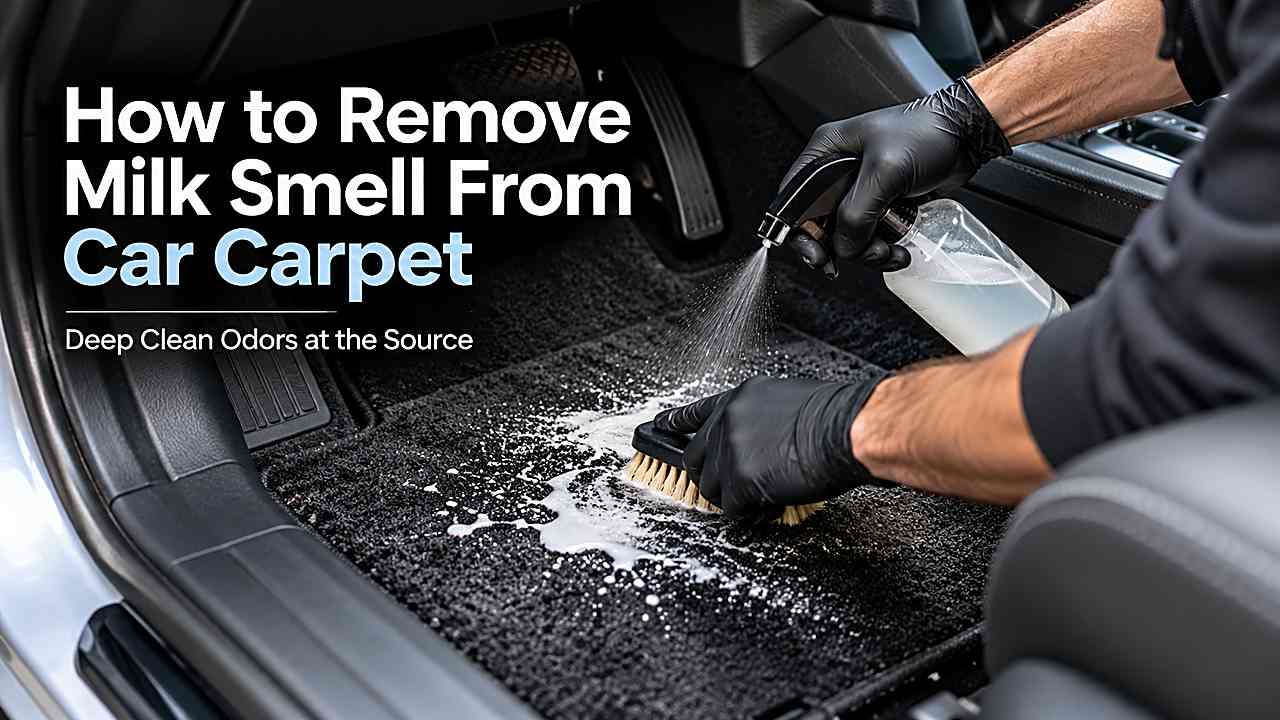
Removing milk smell from car carpet sounds straightforward until the material, contamination, or time limit starts working against you. The fastest safe method is usually the one that controls moisture, friction, and access instead of simply adding more force or cleaner.
A good result comes from identifying what is actually holding the dirt, odor, hair, or residue in place and then using the least aggressive method that releases it. The process below focuses on repeatable technique, realistic limits, and the small details that keep a cleanup from creating a second problem.
Milk odor persists because proteins and fats remain in carpet, padding, or insulation after the visible spill is gone. The fix is controlled extraction, enzyme-compatible cleaning, complete drying, and checking underneath if odor returns.
Why spilled milk becomes such a stubborn interior odor
Fresh milk can look harmless once it is blotted, yet the residue left behind contains proteins, sugars, and fats that support bacterial growth. Warm vehicle interiors accelerate the process, especially when liquid reaches carpet padding. Air freshener may cover the odor briefly, but heat usually brings it back because the source remains. Successful cleanup depends on removing as much residue as possible rather than adding a stronger fragrance.
The spill path is often wider than the visible stain. Liquid can run along carpet backing, under plastic trim, or into a seat-rail recess before the owner notices it. If odor is strongest after the car sits in the sun, hidden contamination is likely. Mapping where the milk traveled saves time because repeated surface shampooing will not fix a soaked underlay.
Respond differently to a fresh spill and an old odor
A fresh spill is easier because most of the liquid can still be absorbed or extracted before it bonds with soil. Blot firmly with clean towels, then use a wet vacuum to recover moisture without scrubbing it farther outward. A small amount of suitable upholstery or enzyme cleaner can then break down residue. The cleaning liquid should be recovered rather than left to dry in place.
An old spill requires a slower diagnostic approach. First vacuum dry debris, then smell around seams, seat mounts, and the carpet edge to locate the strongest area. If the carpet lifts safely, inspecting beneath it can reveal whether the padding is contaminated. Old milk in foam or jute padding may require deeper extraction or replacement when repeated cleaning no longer changes the odor.
Use low-moisture extraction and enzyme chemistry carefully
Enzyme cleaners are useful because they are designed to break down organic residues rather than merely perfume them. They need contact time to work, so follow the label rather than immediately vacuuming them away. At the same time, flooding the carpet can drive the contamination deeper. A controlled application followed by extraction gives the chemistry time to work without creating a new moisture problem.
After the treatment, recover as much liquid as possible with a wet/dry vacuum or extractor. Several slow passes are usually more effective than pressing hard with the nozzle. A clean-water rinse may be appropriate if the product label calls for it, but that rinse should also be minimal and thoroughly extracted. The carpet should end the process damp at most, not saturated.
Dry the carpet completely before judging the result
Odor can temporarily disappear while the carpet is wet because evaporating moisture changes what you smell. The real test comes after the interior is fully dry and warmed again. Open doors or windows in a secure area, run fans, and use a dehumidifier if practical. Avoid trapping a damp carpet in a closed vehicle overnight because that can replace sour-milk odor with mildew.
Once dry, inspect the area for a return of smell rather than immediately adding deodorizer. If the odor is faint, a second targeted enzyme treatment may finish the job. If it returns strongly, contamination probably remains beneath the carpet or inside padding. At that point, lifting trim and accessing the underlay is more productive than repeating surface cleaning.
When replacement or professional cleaning makes sense
Some spills reach thick felt or foam that holds organic residue beyond the reach of normal suction. If the padding has stayed contaminated for days in warm weather, replacing a small section can be faster and more reliable than repeated chemical treatments. A detailer with a strong extractor can also evaluate whether the material can be salvaged. This is especially useful when the odor source is close to wiring or modules where flooding would be risky.
The decision should be based on where the smell remains after drying. A clean carpet surface with a strong recurring odor points toward the layers below. Removing the source protects both comfort and resale value, while masking products simply postpone the same problem. Once the underlying material is clean and dry, a mild interior deodorizer can be used as a finishing step rather than the main treatment.
Common mistakes and what to do instead
Most disappointing results come from using the right general idea in the wrong way. These mistakes are common because they feel faster in the moment, but they usually create extra work or push contamination into a harder-to-reach place.
Trying to perfume the odor away
Fragrance can make a sour milk spill easier to tolerate for a day, but it does not remove the proteins causing the smell. Heat usually exposes the problem again. The useful sequence is source removal, extraction, drying, and only then a mild deodorizing finish if desired. A neutral-smelling cabin is a better sign of success than one that smells strongly of perfume.
Flooding the carpet with rinse water
More water can seem like the answer when a spill feels sticky, yet a large volume can carry dissolved milk deeper into padding. Controlled rinsing works better because the vacuum can actually recover what you add. Several small cycles are safer than one saturated wash. Stop adding moisture once the extracted liquid is nearly clear and the odor source has been reduced.
Forgetting to inspect under trim
Milk often travels farther than the visible wet spot, especially on sloped floors. Seat rails, sill trim, and carpet edges can conceal a secondary source. If odor persists in one corner after the main carpet is clean, follow the strongest smell rather than treating the same central patch again. Accessing the hidden area can solve in minutes what surface shampooing could not solve in hours.
Judging the result while everything is still wet
Wet carpet temporarily suppresses some odor, so immediate sniff tests can be misleading. Dry the vehicle fully, let it warm naturally, and check again the next day. A returning smell indicates that residue remains somewhere. This delayed test is one of the most useful ways to decide whether a second treatment or deeper access is necessary.
How to know the job is actually finished
The final check should happen after the surface is dry and under good light, because moisture can hide residue, stains, or odor. Look from more than one angle and touch the cleaned area with a clean hand or towel to check for tackiness. A neutral smell and even appearance are better indicators than heavy fragrance or temporary shine.
If the same problem reappears quickly, reassess the source rather than repeating the entire process with more force. Hidden contamination, trapped moisture, or the wrong tool is usually more likely than a need for stronger chemistry. A second pass should be more targeted than the first.
Practical notes for consistent results
Real-world results improve when the process is repeated consistently instead of changed every time something looks difficult. Work in good light, keep tools clean, and inspect the surface or material between passes so you can see whether the method is actually improving the problem. If progress stops, changing the tool or chemistry is usually more useful than adding pressure. This approach also makes future maintenance faster because you learn which part of the routine produces the biggest improvement.
Frequently Asked Questions
These questions cover the practical decisions that usually come up once the basic method is clear.
Will baking soda remove milk smell from car carpet?
Baking soda can absorb some odor near the surface, but it does not remove milk proteins or fats trapped in padding. It works better as a finishing aid after the spill has been cleaned and dried. Vacuum it thoroughly so powder does not remain in carpet fibers or vents. If the smell returns in heat, deeper contamination still needs to be addressed.
Is vinegar safe for sour milk odor in a car?
A diluted vinegar solution can reduce some odors, but it is not a complete substitute for extracting the organic residue. Strong mixtures can leave their own smell and may not suit every carpet backing or trim material. Enzyme cleaners made for organic spills are usually more targeted. Always test any solution on a hidden area first.
Can I use a shop vac to remove spoiled milk?
A wet/dry shop vac is useful for recovering liquid and rinse water, provided it is configured for wet pickup. It works best when paired with conservative cleaner application and slow extraction passes. The vacuum cannot reach contamination that has spread under carpet unless you access that layer. Deep or recurring odor may therefore need partial disassembly.
Why does the milk smell come back when the car gets hot?
Heat increases evaporation and releases odor compounds from residue hidden in fibers and padding. A cool cabin can make the problem seem solved even when contamination remains. If the odor returns after the car sits in the sun, inspect beneath the carpet or around seat mounts. That pattern is a useful clue that surface cleaning was incomplete.
Should I use an ozone machine for milk odor?
Ozone can alter odors in enclosed spaces, but it does not physically remove spoiled milk from carpet or padding. Source removal should come first. Ozone also requires careful handling because people, pets, and plants should not be exposed during treatment. For most DIY spills, extraction, enzyme cleaning, and thorough drying are the safer priorities.
Conclusion
Removing milk smell from car carpet is much easier when the process matches the material and the actual source of the problem. Preparation, controlled cleaning, and complete drying or inspection matter more than aggressive products or repeated scrubbing.
Use the first attempt to remove the bulk of the contamination safely, then reassess what remains before escalating. That approach produces a cleaner result while protecting the interior materials, equipment, and safety systems you are trying to preserve.