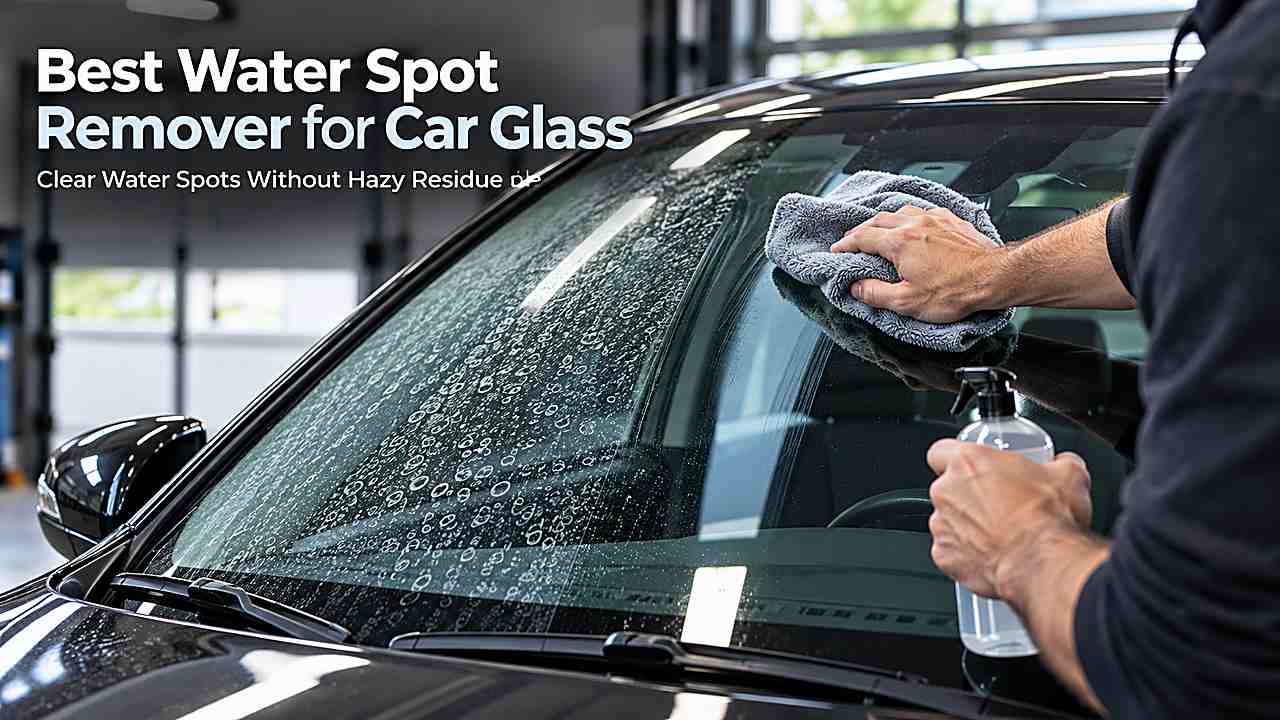
Best water spot remover for car glass is not a useful shopping question until the job is defined clearly. A product can look excellent in a rating table and still be the wrong choice for the surface, vehicle, pet, garage, or workflow that will actually use it.
This guide compares current options by the details that change real-world performance, then explains where each pick fits and where its trade-offs become important. The aim is to make the shortlist useful after the first week of ownership, not just persuasive on purchase day.
Griot’s Garage Water Spot Remover is the easiest first choice for ordinary mineral deposits on automotive glass because it allows a chemical first step before abrasive polishing. Chemical Guys’ gel is useful on vertical glass, while a polish-based remover belongs later in the escalation ladder.
What matters before you buy
The most important specifications are the ones that control the real task. Marketing claims are easier to evaluate once the surface, workload, compatibility limits, and maintenance burden are clear.
First decide whether the mark is a deposit or actual etching
Fresh mineral spots sit on the surface and can often be dissolved chemically. Older spots may bond more strongly, while true etching means the glass surface itself has been altered and no spray can simply dissolve the defect away. This distinction prevents endless chemical applications on damage that needs polishing. That distinction matters in everyday use because the wrong setup can make a capable product feel disappointing. A small compatibility test also reduces the chance of creating a bigger problem while trying to solve the original one.
Cling matters on vertical glass
Windshields and side windows do not hold thin liquids for long. Gel or slightly viscous formulas can keep chemistry in contact with mineral deposits instead of running immediately into seals and trim. Longer contact is useful only within the manufacturer’s dwell-time limits. That distinction matters in everyday use because the wrong setup can make a capable product feel disappointing. A small compatibility test also reduces the chance of creating a bigger problem while trying to solve the original one.
Coatings and tint change the compatibility question
Exterior glass coatings can be weakened by strong acidic or abrasive products, and interior tint film should not be exposed to exterior water-spot chemistry unless explicitly allowed. Most water spots form outside, so treatment should stay on the exterior surface. Check coating-maker guidance before aggressive treatment. That distinction matters in everyday use because the wrong setup can make a capable product feel disappointing. A small compatibility test also reduces the chance of creating a bigger problem while trying to solve the original one.
Abrasive products should be a second-stage option
Polish-based water-spot removers can improve bonded deposits and shallow etching that chemistry leaves behind. The trade-off is that abrasion permanently changes the surface or removes coating material. Chemical removal first and polishing second is the safer escalation path. That distinction matters in everyday use because the wrong setup can make a capable product feel disappointing. A small compatibility test also reduces the chance of creating a bigger problem while trying to solve the original one.
Quick comparison of the strongest options
Each product below wins for a different type of buyer. The table narrows the field quickly, while the detailed notes explain the practical trade-offs that a star rating cannot show.
| Product | Best for | Why it stands out |
| Griot’s Garage Water Spot Remover | Best overall first step | Griot’s formula is designed for water spots across glass and other exterior surfaces, making it a low-anxiety starting point for mineral deposits. |
| Adam’s Water Spot Remover | Best targeted mineral remover | Adam’s offers a dedicated water-spot chemical aimed at mineral contamination rather than ordinary glass dirt. |
| Chemical Guys Heavy Duty Water Spot Remover | Best gel for vertical glass | The gel format helps the product stay on side glass and windshields long enough to work on stubborn mineral rings. |
| Mothers California Gold Water Spot Remover for Glass | Best dedicated glass-focused option | Mothers offers a water-spot product aimed specifically at automotive glass, reducing guesswork about using a paint product on a windshield. |
| Meguiar’s Water Spot Remover / Multi-Surface Polish | Best when chemistry is not enough | A polish-based remover can address bonded spots and light etched appearance that survives ordinary chemical treatment. |
The best choices in detail
1. Griot’s Garage Water Spot Remover: Best overall first step
Griot’s Garage Water Spot Remover earns the best overall first step position because griot’s formula is designed for water spots across glass and other exterior surfaces, making it a low-anxiety starting point for mineral deposits. It lets the user attempt chemical removal before turning to abrasive glass polishing. Very old bonded spots or true etching may remain after chemical treatment. It suits owners who want to begin with chemistry and reassess before escalating. Before buying, confirm the current package contents, compatibility, warranty, and any revised manufacturer directions because bundles and specifications can change over time.
2. Adam’s Water Spot Remover: Best targeted mineral remover
Adam’s Water Spot Remover earns the best targeted mineral remover position because adam’s offers a dedicated water-spot chemical aimed at mineral contamination rather than ordinary glass dirt. A targeted formula can work more efficiently than repeatedly washing or wiping with general glass cleaner. Strong spot removers still require short dwell times, cool glass, and careful rinsing around trim. It fits detailers who want a dedicated chemical step before polishing. Before buying, confirm the current package contents, compatibility, warranty, and any revised manufacturer directions because bundles and specifications can change over time.
3. Chemical Guys Heavy Duty Water Spot Remover: Best gel for vertical glass
Chemical Guys Heavy Duty Water Spot Remover earns the best gel for vertical glass position because the gel format helps the product stay on side glass and windshields long enough to work on stubborn mineral rings. Extra cling gives the chemistry contact time without immediate runoff. Acidic chemistry deserves careful testing and should never be allowed to dry. It is useful when runny sprays disappear too quickly from vertical panels. Before buying, confirm the current package contents, compatibility, warranty, and any revised manufacturer directions because bundles and specifications can change over time.
4. Mothers California Gold Water Spot Remover for Glass: Best dedicated glass-focused option
Mothers California Gold Water Spot Remover for Glass earns the best dedicated glass-focused option position because mothers offers a water-spot product aimed specifically at automotive glass, reducing guesswork about using a paint product on a windshield. Glass-specific positioning makes it a sensible choice for drivers whose main concern is visibility. Heavy deposits may require repeated work and careful cleanup around trim. It suits vehicles with spotting concentrated on windows rather than paint. Before buying, confirm the current package contents, compatibility, warranty, and any revised manufacturer directions because bundles and specifications can change over time.
5. Meguiar’s Water Spot Remover / Multi-Surface Polish: Best when chemistry is not enough
Meguiar’s Water Spot Remover / Multi-Surface Polish earns the best when chemistry is not enough position because a polish-based remover can address bonded spots and light etched appearance that survives ordinary chemical treatment. Mild abrasion can improve defects that no longer respond to simple mineral dissolution. Because it works abrasively, it can also reduce or remove an existing glass or paint coating. It belongs later in the process when deposits have resisted a safer chemical pass. Before buying, confirm the current package contents, compatibility, warranty, and any revised manufacturer directions because bundles and specifications can change over time.
A simple escalation ladder prevents over-treatment
A normal wash should come first because road film can make mineral spots look worse than they are. If the rings remain, a dedicated chemical water-spot remover is the next step, followed by reassessment after rinsing and drying. Only then does abrasive polishing make sense.
This order keeps aggressive work focused on defects that genuinely need it. It also reveals whether the remaining mark is contamination or damage to the surface itself.
Windshield clarity matters more than cosmetic perfection
Any product used on the windshield must finish without oily residue, haze, or distorted wiper behavior. After spot removal, the glass should be cleaned with a proper automotive glass cleaner and inspected in low-angle light. Wipers should also be cleaned because old mineral and road film on the rubber can immediately re-streak the surface.
A perfectly polished windshield is not useful if residue makes night visibility worse. The final test should include clear view through the glass in sun, shade, and artificial light.
Common buying and use mistakes
Most disappointing purchases in this category are not completely useless products. They are capable products matched to the wrong job, or good products used in a way that defeats the feature that made them worth buying.
Letting acidic remover dry on the windshield
Water-spot chemistry needs controlled contact, not unlimited dwell. Drying concentrates the product and can create haze or staining around trim. Work on cool glass in manageable sections and rinse or wipe within the label time. That distinction matters in everyday use because the wrong setup can make a capable product feel disappointing. A small compatibility test also reduces the chance of creating a bigger problem while trying to solve the original one.
Polishing before removing surface minerals
Abrasive polishing can grind contamination across the glass when the deposit could have been dissolved first. Chemical removal reduces the amount of abrasion needed. The surface should be washed and decontaminated before polishing begins. That distinction matters in everyday use because the wrong setup can make a capable product feel disappointing. A small compatibility test also reduces the chance of creating a bigger problem while trying to solve the original one.
Using steel wool without understanding the glass
Some detailers use very fine steel wool on ordinary exterior glass, but that practice can damage coated, tinted, or specialty surfaces and can trap metal particles. It is not a universal water-spot solution. Purpose-made chemistry and glass polish are more predictable. That distinction matters in everyday use because the wrong setup can make a capable product feel disappointing. A small compatibility test also reduces the chance of creating a bigger problem while trying to solve the original one.
Prevention is cheaper than repeated mineral removal
Drying glass before hard water evaporates is the simplest long-term defense. Spot-free rinse water, a clean glass towel, and a compatible hydrophobic glass protectant all reduce the severity of future deposits. Sprinkler overspray should be removed quickly because repeated wet-dry cycles make minerals harder to dissolve.
Keep water-spot towels separate from paint drying towels because strong mineral chemistry can remain in the fibers. Containers should also stay sealed and out of heat so sprayers and caps do not degrade.
Frequently Asked Questions
These questions cover the decisions that usually remain after the shortlist has been narrowed down and the basic trade-offs are clear.
Can vinegar remove hard water spots from car glass?
Diluted vinegar can dissolve some fresh mineral deposits, but it is less predictable than a purpose-made automotive product around trim, coatings, and surrounding paint. Household mixtures also vary in concentration. A dedicated water-spot remover gives clearer dwell and compatibility instructions. That distinction matters in everyday use because the wrong setup can make a capable product feel disappointing. A small compatibility test also reduces the chance of creating a bigger problem while trying to solve the original one.
How do I know if a water spot is etched into the glass?
If the mark remains after the surface is chemically clean and you can still see a ring under changing light, etching becomes more likely. A fingernail usually will not provide a reliable diagnosis because the defect can be extremely shallow. Mild glass polishing can improve etched appearance, but deep damage may remain. That distinction matters in everyday use because the wrong setup can make a capable product feel disappointing. A small compatibility test also reduces the chance of creating a bigger problem while trying to solve the original one.
Will a water spot remover damage a ceramic glass coating?
Some strong chemical and abrasive removers can weaken or remove hydrophobic glass coatings. Compatibility varies by product and coating, so both manufacturers’ instructions matter. If aggressive treatment is required, plan on checking whether the coating needs to be reapplied afterward. That distinction matters in everyday use because the wrong setup can make a capable product feel disappointing. A small compatibility test also reduces the chance of creating a bigger problem while trying to solve the original one.
Can I use paint water spot remover on a windshield?
Only if the product explicitly allows automotive glass. Some formulas are safe across multiple exterior surfaces, while others contain abrasives or solvents intended for paint. Glass-specific products reduce uncertainty around visibility-critical surfaces. That distinction matters in everyday use because the wrong setup can make a capable product feel disappointing. A small compatibility test also reduces the chance of creating a bigger problem while trying to solve the original one.
Should I clay bar glass before using a water spot remover?
Clay can remove bonded contamination such as overspray or rough particulate, but it does not reliably dissolve mineral scale. If the glass feels gritty in addition to showing mineral rings, claying may be useful after a normal wash. Mineral chemistry should still address the actual deposit. That distinction matters in everyday use because the wrong setup can make a capable product feel disappointing. A small compatibility test also reduces the chance of creating a bigger problem while trying to solve the original one.
Conclusion
The strongest choice for best water spot remover for car glass depends on the exact job and the conditions in which the product will be used. The best overall pick is the safest starting point, but another option may be better when portability, compatibility, finish, capacity, or maintenance matters more.
Check the current manufacturer specifications before buying, then use the product within its stated limits from the first session. A well-matched product maintained properly will usually outperform a more expensive option that was chosen for features the job never needed.