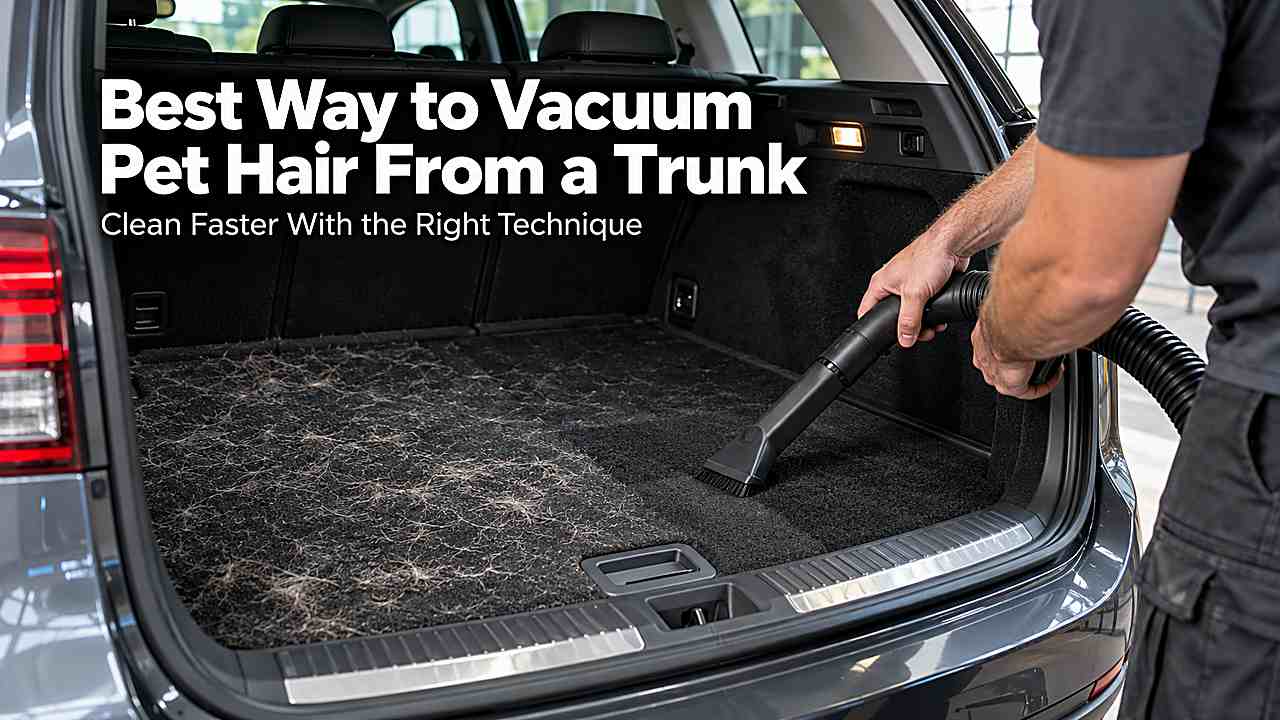
Best way to vacuum pet hair from a trunk sounds straightforward until the material, contamination, or time limit starts working against you. The fastest safe method is usually the one that controls moisture, friction, and access instead of simply adding more force or cleaner.
A good result comes from identifying what is actually holding the dirt, odor, hair, or residue in place and then using the least aggressive method that releases it. The process below focuses on repeatable technique, realistic limits, and the small details that keep a cleanup from creating a second problem.
A vacuum works best after you loosen embedded fur mechanically. Rubber or silicone tools, short directional strokes, and repeated vacuum passes pull hair from trunk carpet far more effectively than suction alone.
Why trunk carpet holds pet hair so stubbornly
The pile in many cargo areas is short, dense, and slightly grabby, so loose fur wedges between fibers instead of sitting on top. Dog hair also develops static and bends around carpet strands, which is why a powerful vacuum can pass over it without lifting much. The most efficient approach changes the problem before suction starts: break the hair’s grip, gather it into small rows, then vacuum those rows. That sequence saves time and reduces the temptation to grind a nozzle against the carpet.
A trunk also contains seams, tie-down points, seatback hinges, spare-tire covers, and side trim that trap fur in different ways. One tool rarely handles all of them well. A broad rubber brush is useful on flat cargo carpet, while a narrow crevice tool and a small detailing brush reach edges. Thinking in zones makes the work faster because you are not switching tools every few seconds.
Set up the trunk so the vacuum can actually reach the hair
Remove cargo organizers, floor panels, loose mats, blankets, and anything stored against the seatbacks before starting. Pet hair migrates under these pieces, and cleaning around them leaves a surprising amount behind. Shake removable fabric pieces outside and vacuum them separately so dislodged hair does not fall back into the trunk. Good lighting also matters because pale hair disappears on light carpet and dark hair disappears on black trim.
If the carpet is damp from wet paws or a recent spill, let it dry first. Dry hair releases more predictably than wet clumps, and most ordinary shop vacs move dry debris more efficiently than sticky, matted fur. A slightly humid day can increase static, so a lightly dampened rubber glove may help gather hair, but the carpet itself should not be soaked. The goal is controlled friction, not adding moisture.
Use a three-pass removal method
Start with a slow vacuum pass to collect sand, crumbs, and loose fur. This first pass prevents hard grit from being dragged around while you brush the carpet. Next, work a rubber pet-hair brush, silicone squeegee, or textured glove in short strokes toward one collection point. The fibers pull hair into visible ropes that the vacuum can remove quickly.
The final pass should be slower and more deliberate than the first. Move the nozzle in overlapping lines, then change direction by roughly ninety degrees to catch strands that lie with the carpet grain. Around seams, compress the carpet slightly with your fingers while using the crevice tool nearby rather than scraping the plastic nozzle hard against trim. A flashlight held low across the surface makes leftover hair cast small shadows that are easy to spot.
Handle seatbacks, side panels, and tight corners differently
Vertical seatbacks often respond better to a rubber brush than to a vacuum nozzle because gravity is already helping the loosened hair fall. Brush from top to bottom, then vacuum the lower edge where the hair collects. Felt-like side panels need a gentler touch because aggressive scraping can roughen the surface and make future hair cling even more. A soft rubber edge or clean nitrile glove is usually enough.
Corners beside the hatch seal and under cargo hooks collect both fur and abrasive grit. A small interior brush can flick debris outward while the vacuum nozzle stays close to capture it. This is one of the few places where working slowly pays off more than stronger suction. Once the crevices are clear, a final broad pass makes the trunk look uniformly clean instead of patchy.
Keep pet hair from becoming a full reset every week
A washable cargo liner or fitted trunk mat changes maintenance dramatically because smooth rubber or coated fabric releases fur more easily than factory carpet. A dedicated pet blanket can help too, provided it is removed and washed often instead of becoming a reservoir that redistributes hair. Regularly brushing the dog before long drives reduces shedding inside the vehicle, especially during seasonal coat changes.
For weekly upkeep, a two-minute rubber-brush pass followed by a quick vacuum is usually easier than waiting until the carpet is visibly packed with fur. Hair becomes harder to remove once it combines with moisture, skin oils, and road dust. Keeping a compact pet-hair tool in the trunk makes small cleanups realistic rather than something postponed until a full detail.
Common mistakes and what to do instead
Most disappointing results come from using the right general idea in the wrong way. These mistakes are common because they feel faster in the moment, but they usually create extra work or push contamination into a harder-to-reach place.
Relying on suction before loosening the fibers
A common frustration comes from making five or six vacuum passes over the same patch and seeing almost no improvement. The issue is not always weak suction; it is the direction and stiffness of the embedded hair. A rubber tool changes that geometry and brings the fur to the surface. Once the hair is gathered, the vacuum becomes a collection tool rather than the only removal method.
Scraping too aggressively on felt-like trim
Cargo side panels can look like carpet but may have a thin decorative surface that pills when attacked with hard plastic or metal edges. That damage can make the panel look permanently fuzzy and can actually catch more hair later. Use softer rubber or silicone on delicate trim and reserve rigid tools for durable carpet after a hidden-area test. Slow pressure is more controllable than sharp scraping.
Ignoring the hair under removable trunk pieces
A clean-looking cargo floor can still smell like a dog if fur and dander remain under the false floor, spare-tire panel, or cargo organizer. These areas collect hair every time items slide around. Removing the panels once during a deep clean helps reset the whole trunk. Future maintenance then becomes much faster because there is less hidden material to migrate back out.
Using the same brush on dirty wheel-area carpet and clean seatbacks
Cross-contamination matters inside a vehicle too. A brush that has picked up grit from a muddy cargo edge can carry abrasive particles to cleaner textile surfaces. Keeping one rubber tool for general pet hair and a second dirtier tool for floor-level areas is a simple way to reduce that risk. Clean the tools after each session so dried hair and grit do not harden in the working edge.
How to know the job is actually finished
The final check should happen after the surface is dry and under good light, because moisture can hide residue, stains, or odor. Look from more than one angle and touch the cleaned area with a clean hand or towel to check for tackiness. A neutral smell and even appearance are better indicators than heavy fragrance or temporary shine.
If the same problem reappears quickly, reassess the source rather than repeating the entire process with more force. Hidden contamination, trapped moisture, or the wrong tool is usually more likely than a need for stronger chemistry. A second pass should be more targeted than the first.
Practical notes for consistent results
Real-world results improve when the process is repeated consistently instead of changed every time something looks difficult. Work in good light, keep tools clean, and inspect the surface or material between passes so you can see whether the method is actually improving the problem. If progress stops, changing the tool or chemistry is usually more useful than adding pressure. This approach also makes future maintenance faster because you learn which part of the routine produces the biggest improvement.
Frequently Asked Questions
These questions cover the practical decisions that usually come up once the basic method is clear.
Can a shop vac remove pet hair without a brush?
It can remove loose fur, but embedded hair often stays trapped because suction alone does not break the fibers’ grip. A rubber or silicone tool changes the direction of the hair and gathers it into clumps. That makes even a modest vacuum much more effective. On lightly contaminated carpet, however, a slow pass with a good upholstery nozzle may be enough.
Does fabric softener help release pet hair from car carpet?
It is better to avoid fabric-softener mixtures inside a vehicle because they can leave residue and alter the feel of carpet or trim. Mechanical agitation is more predictable and does not introduce fragrance or chemicals. If static is severe, a barely damp rubber glove can reduce it without saturating the surface. Always test any cleaner on a hidden area before using it broadly.
What vacuum attachment works best for trunk carpet?
A wide upholstery nozzle is efficient on open cargo floors, while a crevice tool handles seams and trim edges. A motorized household brush can be effective, but only if it is clean and safe for automotive carpet. Many detailers get better control by combining a simple nozzle with a separate rubber hair brush. The best setup is the one that lets you agitate and extract without damaging trim.
How do I remove very short dog hair that seems woven into the carpet?
Short, stiff hair often needs repeated brushing across the carpet grain rather than one long stroke. Work a small section, change direction, and vacuum the pile before moving on. A silicone squeegee or rubber-bristled brush usually grabs this type of hair better than a soft fabric brush. Strong lighting helps because the remaining strands can be difficult to see from above.
Should I use compressed air to blow pet hair out of the trunk?
Compressed air can help in seams, but it can also scatter fur deeper into the cabin if you do not control where it goes. If you use air, pair it with a vacuum nozzle positioned close to the work area. Keep pressure moderate around electronics, vents, and fragile trim. For most trunk carpet, rubber agitation is cleaner and easier to control.
Conclusion
Best way to vacuum pet hair from a trunk is much easier when the process matches the material and the actual source of the problem. Preparation, controlled cleaning, and complete drying or inspection matter more than aggressive products or repeated scrubbing.
Use the first attempt to remove the bulk of the contamination safely, then reassess what remains before escalating. That approach produces a cleaner result while protecting the interior materials, equipment, and safety systems you are trying to preserve.