Wet dog odor lingers in a car because moisture, skin oils, dander, saliva, and hair spread into absorbent materials. Carpet, cloth seats, pet blankets, cargo liners, and even cabin-air components can hold the smell after the dog is gone.
Fragrance can cover the odor for a short time, but it does not remove the material producing it. A lasting fix comes from drying the cabin, removing hair and organic residue, cleaning the affected fabrics, and checking hidden moisture if the smell returns.
Wet dog smell disappears most reliably when the source is removed: dry the cabin, extract dog hair, wash pet fabrics, clean contaminated upholstery and carpet, and ventilate until every damp layer is fully dry.
Why wet dog smell becomes stronger inside a car
A dog’s coat carries natural oils, microorganisms, dander, and outdoor contamination. When the coat becomes wet, moisture releases and redistributes odor compounds that may be subtle when the fur is dry. A closed vehicle concentrates those smells in a small space and gives them access to porous carpet and upholstery.
Humidity makes the problem last longer because damp fabric releases odor and dries slowly. A dog that repeatedly enters the car wet can create a cycle where the top surface dries but the seat cover, carpet backing, or padding underneath remains slightly damp. That hidden moisture can make the cabin smell bad again on the next warm day.
Start with everything that can leave the car
Pet blankets, hammock covers, crate pads, towels, toys, and removable cargo liners often hold more odor than the vehicle itself. Taking them out prevents cleaned interior surfaces from being re-contaminated immediately. Washable items should be cleaned according to their care labels and dried completely before returning to the car.
Floor mats deserve the same treatment. Rubber mats can be scrubbed and rinsed outside, while carpet mats may need vacuuming and controlled extraction. Drying them outside the car also prevents trapped moisture from sitting against the vehicle carpet.
Remove hair before wet cleaning
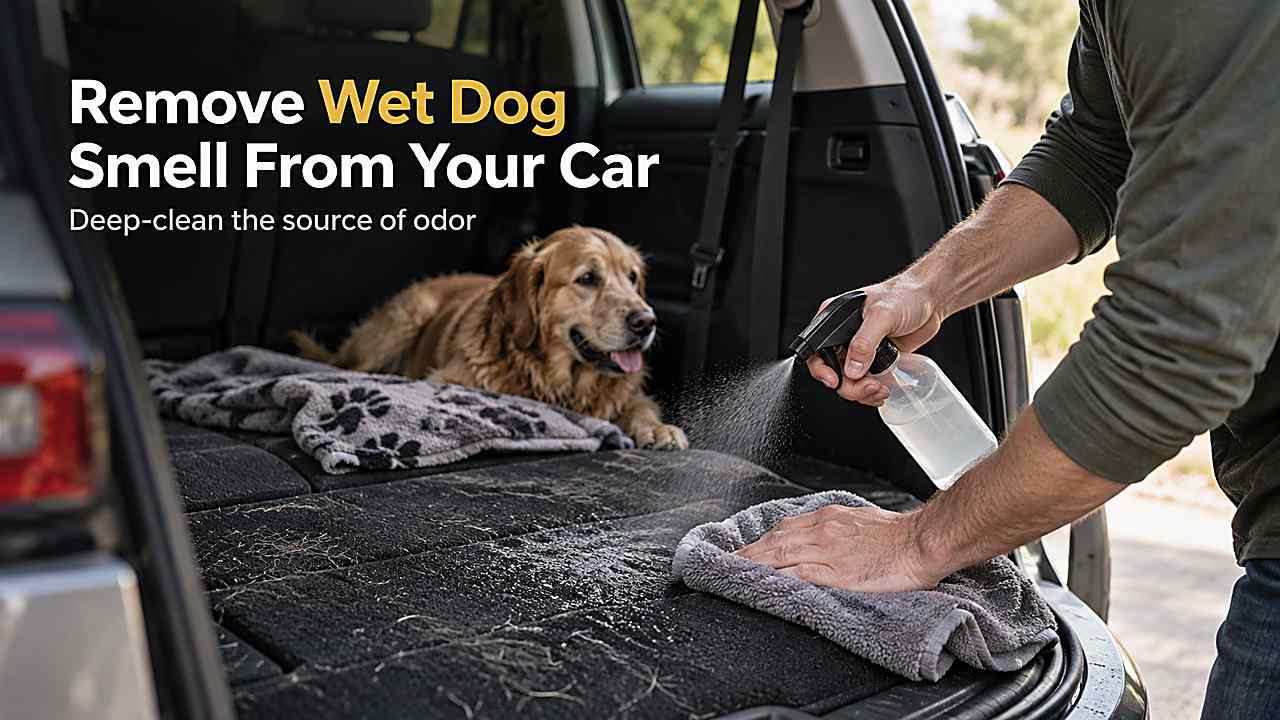
Dog hair carries oils and dander, and heavy hair buildup interferes with upholstery extraction. A first vacuum removes loose coat, followed by a rubber tool or brush on carpet where hair is embedded. The loosened strands can then be vacuumed again before any liquid cleaner enters the job.
This sequence matters because wet pet hair becomes harder to collect and can clog extractor tools. Hair around seat tracks, cargo hooks, seatbelt anchors, and between cushions should be removed as well. The cabin is ready for deodorizing only after the physical contamination has been reduced.
Clean the fabrics that actually absorbed the odor
Cloth seats and carpet can be treated with an automotive upholstery cleaner appropriate for organic soil, followed by extraction or careful blotting. The cleaner should reach the contaminated fibers without saturating the padding. Several moderate passes are safer than one soaking treatment.
Leather and vinyl need their own compatible cleaners because they should not be shampooed like carpet. Perforated leather also traps moisture easily, so product quantity needs close control. The objective is to remove residue from each material rather than coat the cabin in a powerful perfume.
Drying is part of odor removal, not an afterthought
A freshly shampooed interior can smell worse if it remains damp. Fans, open doors in a secure dry area, and the vehicle ventilation system can move moisture out of carpet and seat fabric. The car should not be closed up overnight while the materials are still wet.
Odor assessment should happen after everything is fully dry. Damp cleaning solution, wet carpet, and dog residue can all smell different while the cabin is drying, so judging too early often leads to unnecessary fragrance products. A clean dry interior should smell neutral rather than artificially scented.
Check the cabin air system if odor comes through the vents
A dog odor that becomes noticeable mainly when the fan starts may be associated with hair or moisture near the cabin-air intake, floor area, or filter. Replacing a dirty cabin air filter according to the vehicle maintenance schedule can improve airflow and remove trapped debris. The filter alone will not solve odor absorbed into carpet and seats, but it can be one part of a complete cleanup.
The HVAC evaporator can also develop its own musty odor from moisture, which is different from wet dog smell. If the odor persists with a clean dry interior and fresh filter, professional HVAC cleaning or diagnosis may be appropriate. Distinguishing the odor source prevents endless shampooing of materials that are already clean.
Enzyme products and odor treatments have specific roles
Enzyme cleaners can be valuable for certain biological residues, particularly urine or saliva contamination, when the product is labeled for the vehicle material. They need proper dwell time and should not be mixed casually with other cleaners. The label determines where and how the chemistry should be used.
Ozone and other professional odor treatments may help with stubborn cabin odor, but they are not substitutes for source removal and require careful safety procedures. A car full of wet hair and dirty padding will still smell after a temporary deodorizing treatment. Physical cleaning and complete drying remain the foundation.
Keep the smell from returning after rainy walks
A washable pet hammock or cargo liner limits how much damp fur contacts factory upholstery. Keeping an absorbent dog towel in the vehicle lets the coat and paws be dried before the dog settles into the seat. Regular brushing also reduces the amount of hair and dander entering the cabin.
After a wet trip, leaving the car ventilated in a safe dry place for a short period can prevent moisture from being trapped. Rubber mats and pet covers should be removed if they are wet underneath. Small habits after each trip are far easier than deep-cleaning a saturated interior several times a year.
Finding the hidden source when cleaning does not work
A persistent odor after the visible upholstery has been cleaned often points to a hidden material rather than a failure of the cleaner. Carpet padding, the underside of a cargo liner, seatbelt webbing, child-seat fabric, and the foam beneath a dog hammock can all store damp organic residue. Smelling individual removable items outside the car can help isolate the source faster than repeatedly shampooing the entire cabin.
Water intrusion from the vehicle itself can complicate the diagnosis. A leaking door membrane, hatch seal, sunroof drain, or wet spare-tire well can create a musty odor that becomes associated with the dog simply because both appear after rainy trips. Lifting removable cargo panels and checking carpet backing for moisture separates pet contamination from a vehicle leak. A wet-carpet problem will return until the leak is repaired.
Seatbelts can be an overlooked odor reservoir because dogs lean against them and damp fur transfers oils onto the webbing. The belt can be extended and cleaned only with methods approved by the vehicle manufacturer, because harsh chemicals can weaken safety fibers. It also needs to dry fully before retracting. Safety components should never be deodorized with unverified solvents or saturated with cleaner.
The final test should happen after the car has sat closed and then warmed up. A neutral cabin after several hours in warmth indicates that the source has likely been removed, while odor that returns strongly points to deeper contamination. This delayed test is more useful than judging the car immediately after shampooing, when cleaner fragrance and cool damp fabric can hide the true result.
A maintenance routine for people who travel with dogs often
Frequent dog passengers do not require a full interior detail after every wet walk. A removable hammock or cargo cover can take most of the contamination and be washed separately, while a dedicated towel handles paws and the outer coat before the dog settles in. Keeping the mess on removable materials is the single most effective way to reduce deep odor in factory upholstery.
A small cordless vacuum or quick self-serve vacuum visit once a week prevents hair from becoming woven into carpet. This is particularly helpful for double-coated breeds that shed heavily during seasonal coat changes. Hair removed while it is still loose carries dander and dirt out of the car before moisture bonds it to the fabric. Maintenance takes minutes compared with the hours required for a deeply contaminated cargo area.
After rainy trips, the pet cover and rubber floor mats should be checked underneath rather than only from above. Moisture can sit between a waterproof liner and the vehicle carpet, creating odor even though the visible cover dries quickly. Lifting the liner for airflow after a wet outing prevents that hidden damp layer. The same check is useful around the spare-tire well if wet gear is stored in the cargo area.
Grooming habits outside the vehicle also help. Regular brushing removes loose undercoat, and drying the dog more thoroughly before travel reduces both hair and moisture inside the car. The cabin does not have to be kept sterile to stay pleasant. It only needs the amount of wet organic material entering the vehicle to stay below what routine cleaning and ventilation can easily handle.
Frequently Asked Questions
These questions cover the practical details that commonly come up after the main process is understood.
Will baking soda remove wet dog smell from a car?
Baking soda can absorb some odor and moisture, but it does not remove hair, oils, dander, or contaminated liquid from upholstery. Fine powder can also be difficult to vacuum completely from dense automotive carpet and seat seams. Source removal and thorough drying should come first. If baking soda is used on a compatible removable carpet surface, it should be removed completely before the area becomes damp again. It is a supporting tactic, not a replacement for cleaning.
Why does the dog smell come back when the car gets warm?
Heat increases the release of odor compounds from fabric, carpet padding, pet hair, and old organic residue. A cabin that smelled acceptable on a cool morning may therefore smell much stronger after sitting in the sun. That pattern often means contamination remains below the surface or in a removable pet item. Complete drying may also not have occurred after the last cleaning. The returning odor is evidence that the source was masked or partially cleaned rather than eliminated.
Can an air freshener get rid of wet dog odor?
An air freshener can change what the cabin smells like, but it does not remove the material causing the odor. Mixing fragrance with wet-dog smell can make the interior more unpleasant rather than cleaner. Hair, oils, dander, damp fabrics, and any urine or saliva contamination need physical cleaning. Fragrance is best reserved for a clean dry cabin if the owner still wants a scent. Neutral is a better target during the cleanup process.
Should I shampoo the entire car interior for wet dog smell?
Not necessarily. Cleaning should focus first on the areas the dog actually contacts and on materials that remain damp. Pet covers, cargo carpet, cloth seats, and floor mats often account for most of the odor. Unnecessary wet cleaning of the headliner, dashboard, or unaffected seats adds drying time and risk without solving the source. A targeted process is easier to dry completely. Wider extraction makes sense only when contamination is widespread.
When is professional odor removal worth it?
Professional help is useful when odor persists after hair removal, upholstery cleaning, and complete drying. Deep contamination in seat foam, carpet padding, cargo trim, or HVAC components can be difficult to reach with household tools. Urine, repeated wet-dog exposure, and long-term dampness may require extraction, partial disassembly, or specialty treatment. A professional can also identify mold or water intrusion that should not be treated as a simple pet odor. Persistent smell is often a diagnosis problem as much as a cleaning problem.
Conclusion
Wet dog smell leaves a car when the material causing the odor leaves with it. Removing hair, washing pet gear, cleaning the contacted fabrics, and drying every layer thoroughly is far more effective than adding stronger fragrance.
Once the cabin is neutral again, a washable cover, dog towel, and quick ventilation after wet trips can keep the problem from rebuilding. Prevention is especially valuable because repeated dampness is what turns an occasional dog smell into a persistent interior odor.