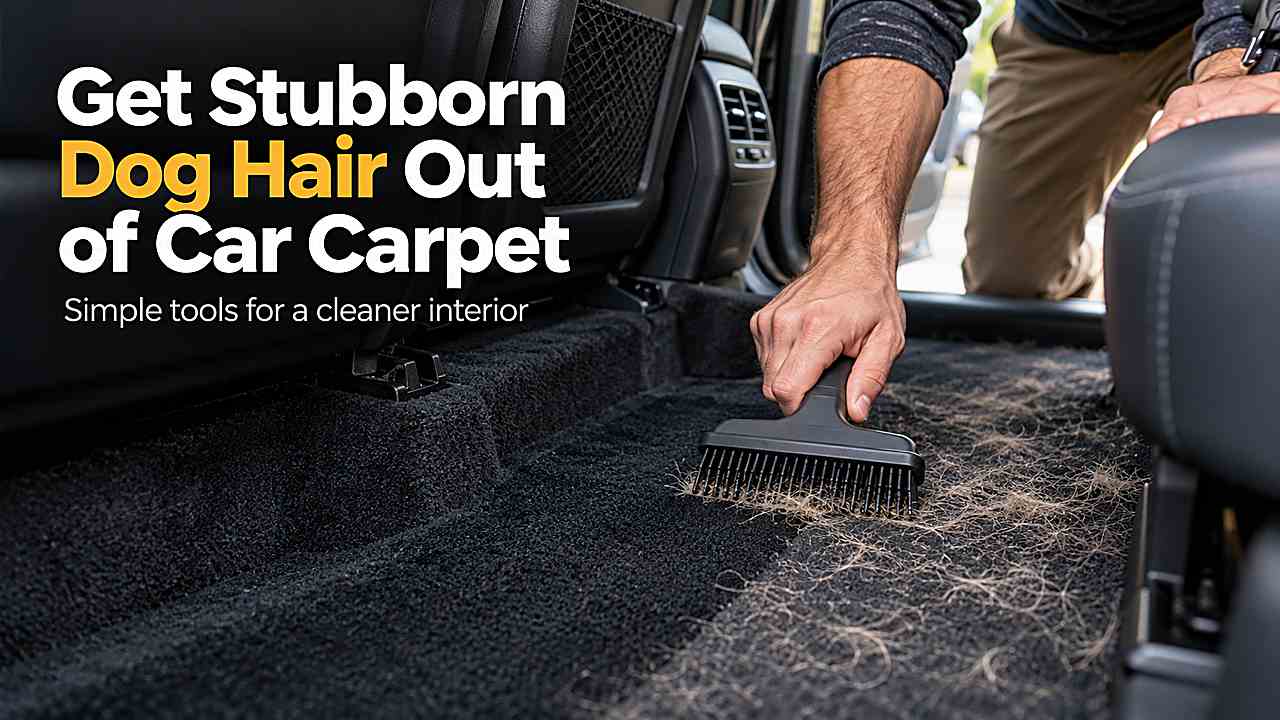
Dog hair can survive repeated vacuuming because it does not simply rest on automotive carpet. Short, stiff hairs work into the pile like tiny needles, while longer coat can wrap around fibers and hold itself in place through friction and static electricity.
The fastest solution is usually not a stronger vacuum. Hair releases much more easily after it has been mechanically lifted with rubber, a suitable brush, or controlled agitation, and the vacuum then becomes the cleanup tool rather than the only tool.
Embedded dog hair comes out fastest when you loosen it before vacuuming. Rubber tools, light agitation, and work in small sections lift the hair so suction can remove it instead of skimming over it.
Why car carpet holds dog hair so tightly
Automotive carpet is built to resist wear, which means its fibers are dense and relatively stiff. Dog hair can wedge between those fibers, especially in cargo areas and footwells where paws and movement press it deeper. Dry cabin air adds static attraction that keeps fine hair lying flat instead of standing up for the vacuum nozzle.
Different coats behave differently. Short hairs from Labradors, Boxers, and similar breeds can spear into fabric, while long undercoat tends to form mats or wispy clumps. A method that works on a flat seat may be slow on coarse trunk carpet, so the surface should guide the tool choice.
Clear the interior before attacking the hair
Crates, blankets, child seats, floor mats, toys, and loose cargo should come out first because they hide the heaviest concentrations. Removable fabrics can often be cleaned outside the vehicle according to their care instructions, which prevents the vacuum from chasing loose hair from one item to another. A quick first vacuum collects sand, leaves, and the hair that was never deeply embedded.
This initial pass also protects the carpet during later agitation. Sand is more abrasive than dog hair, and rubbing a rubber tool through a gritty carpet can grind that debris into the fibers. Once loose soil is gone, the remaining hair is easier to see and the mechanical work becomes much more targeted.
Rubber friction is the most useful low-cost trick
A slightly damp rubber glove, rubber pet-hair brush, or rubber squeegee creates enough friction to pull embedded hair toward the surface. Short strokes in one direction tend to roll the hair into lines or clumps that can be picked up or vacuumed. The tool works because it changes the mechanical grip between the hair and carpet rather than relying on suction alone.
Only a light mist of moisture is needed when static is severe. Wet carpet is harder to vacuum and slow to dry, so soaking the area creates a new problem. Rubber tools should also be tested in an inconspicuous place because very aggressive edges can fuzz delicate upholstery even though they are excellent on durable floor carpet.
Vacuum after lifting, then change direction
Once hair is standing proud of the carpet, a crevice nozzle or narrow upholstery tool can remove it efficiently. Slow passes are more effective than racing the nozzle back and forth because suction has time to pull material from the pile. Working across the carpet grain and then in the opposite direction exposes hairs that were lying flat during the first pass.
Seams, seat tracks, cargo hooks, and the edges of molded carpet require separate attention. A small brush can move hair out of those corners toward an open area where the vacuum has better airflow. Trying to seal a large floor nozzle over every crevice wastes time and often leaves the edge line untouched.
Use specialty tools carefully on stubborn areas
Pet-hair stones and stiff detail brushes can be extremely effective on durable trunk and floor carpet, but they are not universal. Pumice-style tools can abrade leather, plastic, delicate cloth, or soft looped fabric if used carelessly. The tool should stay on the surface it was designed for, with light pressure and frequent inspection.
A carpet extractor or steam system may help with dander and odor after most hair has been removed, but wet cleaning is not a substitute for mechanical hair removal. Hair can clog recovery paths and remain woven into the pile even after shampooing. Dry extraction first, wet cleaning second, is usually the more efficient sequence.
Seats, headliners, and trim need gentler methods
A rubber glove or lint roller is often enough for cloth seats because the weave is finer than floor carpet. Headliners deserve much less agitation because the fabric is bonded to foam and can sag if it becomes wet or is scrubbed aggressively. Leather and vinyl should not be attacked with carpet stones or stiff brushes at all.
Hard trim can simply be vacuumed and wiped with an appropriate interior cleaner. Dog hair collects in door pockets, console seams, vents, and seatbelt anchors even when the pet never sits there because cabin airflow redistributes it. Finishing those areas after the carpet keeps loose hair from falling back onto the freshly cleaned floor.
Prevent the next deep buildup
A washable seat cover, cargo liner, or fitted hammock contains much of the hair before it reaches the carpet. Brushing a heavy-shedding dog before long trips also reduces the amount that becomes embedded during the drive. Small maintenance cleanups are far easier than waiting until the carpet has collected an entire shedding season.
A quick rubber-glove pass followed by vacuuming every week or two can keep hair near the surface. The routine also reveals dampness or pet odor before it becomes established in the padding. Prevention is not about keeping the car hair-free at all times; it is about preventing loose coat from being repeatedly walked and pressed into the carpet pile.
A surface-by-surface strategy saves the most time
Cargo carpet is often the toughest material in the vehicle and can tolerate rubber brushes or pet-hair stones better than seat fabric. Floor carpet is similarly durable but contains seat mounts, plastic trim, and wiring that limit aggressive tool movement near edges. Cloth seats have finer weaves and benefit from softer rubber or lint tools. Treating all three surfaces with the same technique usually produces either slow results or unnecessary wear.
Short hair deserves a slightly different approach from long undercoat. Stiff short hairs often lodge individually and respond well to firm rubber friction, while long hair tends to gather into ropes or mats that can be lifted in larger clumps. A vacuum with a motorized upholstery tool may help on some fabrics, but it can wrap long strands around the brush roll. Clearing the tool frequently keeps airflow strong and prevents the job from slowing down.
Humidity affects the work more than many owners expect. Very dry winter air increases static, making fine hair cling to seat fabric and plastic trim. A barely damp glove or a light mist on durable carpet can reduce that charge, but the surface should never become wet enough to darken deeply. Moisture is a tool for static control, not a substitute for mechanical agitation.
Final inspection should happen from several lighting angles. Fine light-colored hair can disappear against gray carpet from one direction and become obvious when the light moves across the pile. Brushing the carpet into a uniform direction after vacuuming also reveals stray hairs and gives the interior a cleaner finished appearance. The last ten percent is usually detail work around edges rather than another whole-floor vacuum pass.
When the interior is too contaminated for a quick vacuum stop
A self-serve vacuum is excellent for maintenance, but heavy pet hair can consume far more time than the timer suggests because the real work is agitation. If the carpet is visibly gray with embedded coat, removing the mats and working at home with rubber tools may be more efficient. The vacuum can then be used for the final extraction pass instead of paying for repeated attempts that never release the hair.
Odor is another clue that the job has moved beyond simple vacuuming. Hair itself carries dander and oils, but wet-dog smell usually means the upholstery or carpet has absorbed moisture and organic residue. Once most hair is out, controlled fabric cleaning and thorough drying may be needed. Vacuuming harder will not remove contamination that has soaked into the material.
Vehicle resale preparation is also a situation where the last traces matter. Pet hair around cargo trim, under seat rails, and in seatbelt anchors may be obvious to a buyer even after the open carpet looks clean. A detailing brush and crevice tool are useful for those hidden zones. Spending time on edges often improves the perceived cleanliness more than another broad pass across the center of the floor.
Professional detailing becomes cost-effective when the interior contains several difficult surfaces at once, such as heavy cargo hair, cloth seats, odor, and dried mud. A detailer already has the rubber tools, compressed air, extraction equipment, and lighting needed to work efficiently. DIY remains practical for most cars, but knowing when the job has become a multi-hour restoration prevents frustration and accidental damage.
Frequently Asked Questions
These questions cover the practical details that commonly come up after the main process is understood.
Why will my car wash vacuum not remove dog hair?
Suction works best on material that is already loose. Dog hair often hooks into carpet fibers or lies flat because of static electricity, so the nozzle passes over it without enough mechanical force to release it. Rubber friction or brushing lifts the hair first and changes the problem from extraction to collection. Once the strands are on the surface, even an ordinary strong vacuum performs much better. More vacuum power alone often produces disappointing returns.
Is a pumice stone safe on car carpet?
A pet-hair stone can be effective on tough, durable automotive carpet, but it should be used cautiously and tested first. Its abrasive texture can fuzz soft fabrics and can permanently mark leather, vinyl, plastic trim, or delicate upholstery. Light strokes are safer than heavy scrubbing. The stone should be kept away from seat edges and headliners where the material changes. Rubber tools are a gentler first option when surface durability is uncertain.
Does fabric softener help release dog hair?
Some people use diluted fabric softener to reduce static, but automotive interiors contain dyes, coatings, adhesives, and fabrics that may not react well to household laundry products. Residue can also attract soil or leave fragrance that is difficult to remove. A very light water mist, rubber tool, and proper interior cleaner are easier to control. Any moisture should be minimal so the carpet dries quickly. Product compatibility is more important than trying every popular household trick.
Can steam remove dog hair from car carpet?
Steam can help with soil and odor, and moisture can reduce static, but steam alone does not reliably extract deeply woven hair. Mechanical lifting is still needed for the strands that are physically hooked around the carpet pile. Removing most hair before wet or steam cleaning also reduces clogging and makes extraction more efficient. Delicate materials require caution with heat. Steam is best viewed as a later cleaning step rather than the primary hair-removal method.
How do professional detailers remove heavy pet hair?
Professional detailers usually combine methods instead of relying on one machine. Loose debris is vacuumed first, embedded hair is agitated with rubber or specialty tools, and the loosened material is vacuumed again in sections. Compressed air, brushes, and extraction may be added around seams or heavily contaminated carpet. The exact tools change with the material because aggressive techniques that are safe on trunk carpet can damage seats or trim. Efficiency comes from loosening hair before asking suction to remove it.
Conclusion
Stubborn dog hair becomes manageable once the job is treated as a mechanical release problem rather than a vacuum-power contest. Rubber friction, careful agitation, and small working sections bring embedded strands to the surface, where suction can finally do its job.
The same method also protects the interior because each surface gets only the level of aggression it can tolerate. Durable floor carpet can handle more agitation, while seats, headliners, leather, and trim need gentler tools and more controlled cleaning.