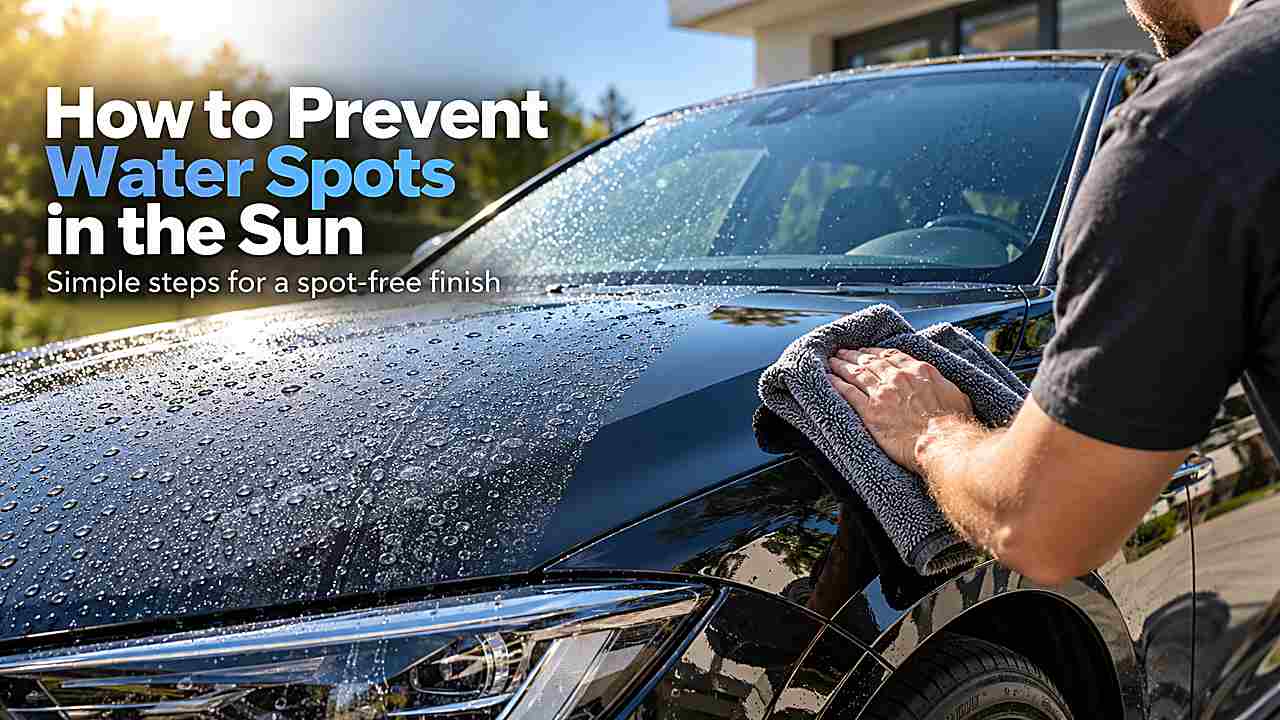
Direct sun makes car washing harder because water and shampoo evaporate faster on hot panels. When ordinary rinse water dries before you remove it, dissolved minerals can remain as rings, streaks, or chalky deposits that are especially obvious on dark paint and glass.
The safest solution is to avoid hot panels when you can, but sometimes shade is not available. In that case, change the way you work: cool the surface, wash smaller sections, rinse more often, and dry each area before evaporation gets ahead of you.
To prevent water spots in direct sun, cool the panels first, work in small sections, never let soap dry, keep already-washed areas wet, use a low-mineral final rinse when available, and dry promptly with clean microfiber before droplets evaporate.
Why direct sun creates water spots so quickly
Water spots are often mineral deposits left behind after droplets evaporate. Calcium, magnesium, silica, and other dissolved material stay on the surface after the water itself disappears. Heat does not create those minerals, but it dramatically shortens the time you have to rinse and dry before they concentrate on the panel.
A dark hood or roof can become much hotter than the surrounding air, so the same water that stays workable on a shaded door may flash-dry on a horizontal panel. Shampoo residue can also dry into streaks, making the finish look spotted even when mineral content is not the only cause.
Detailing guidance from major car-care brands consistently recommends washing on cool paint and in shade when possible. If you cannot do that, your process has to compensate for the heat rather than pretending the conditions are normal.
Set up before the first drop of water hits the paint
Preparation matters more in the sun because every pause costs drying time. Put your wash mitt, buckets, towels, wheel tools, hose or pressure wand, drying aid, and payment within reach before you start. If you are at a self-serve bay, read the dial and payment instructions before activating the timer.
Use more clean drying towels than you think you will need. A saturated towel moves water rather than removing it, and stopping midway to find another towel gives droplets time to bake onto the roof, hood, glass, and trunk lid.
Useful sun-wash kit
- At least one clean wash mitt or paint-safe microfiber pad
- Several high-absorbency microfiber drying towels
- A smaller towel for mirrors, trim, and door openings
- A paint-safe drying aid if you normally use one
- Access to spot-free or low-mineral water when available
Wash the car in smaller sections
1. Cool the panel before washing it
Rinse the roof, glass, hood, and other hot surfaces with cool or lukewarm water before applying soap. The goal is to bring the panel temperature down, not to shock extremely hot glass or paint with ice-cold water.
2. Clean one manageable area at a time
Instead of soaping the entire vehicle, work a roof section, one side, or a few panels at a time. Small sections keep your rinse close behind your wash mitt and reduce the chance that shampoo dries on the surface.
3. Rinse immediately after agitation
Do not finish the whole car before rinsing. Once a section is clean, flush the soap away completely, paying attention to mirrors, badges, trim, fuel doors, and panel gaps where suds can hide.
4. Re-wet adjacent panels as needed
If a clean area starts drying while you are working elsewhere, give it a light rinse to keep droplets from concentrating. This uses more water, but it can prevent the need for later mineral-spot removal.
5. Dry before the surface gets hot again
Move from washing to drying quickly. Start with horizontal panels because they hold droplets and receive the strongest sun, then finish vertical sides and detail areas.
Use the final rinse strategically
If a self-service wash offers a properly maintained spot-free rinse, use it as the final water stage after all soap is gone. Reverse-osmosis or deionized water normally contains far fewer dissolved minerals than ordinary supply water, so any droplets that escape your towel leave less residue behind.
A spot-free rinse is not a substitute for cleaning and it cannot remove water spots that already exist. It also cannot compensate for detergent residue, dirty runoff from mirrors, or dust landing on wet paint. Think of it as reducing the mineral load in the final droplets, not making drying optional in harsh sun.
Use regular rinse water to remove the bulk of soap, then switch to the low-mineral setting for a complete top-to-bottom pass. This prevents you from wasting expensive spot-free time chasing foam out of crevices.
Dry without creating scratches
Water-spot prevention should not turn into aggressive towel wiping. Make sure the paint is genuinely clean before touching it, then use a clean, soft microfiber drying towel with minimal pressure. Blotting or gently pulling a large towel across a clean panel is safer than scrubbing at partially dried marks.
A compatible drying aid can add lubrication and help the towel move smoothly, but choose one that suits your wax, sealant, coating, wrap, or matte finish. If you are unsure about compatibility, plain clean microfiber is the safer default.
Use separate towels for lower panels, wheels, exhaust areas, and other dirty zones. Once a towel touches the ground or picks up grit, remove it from paint duty.
What to do if a panel starts spotting during the wash
Fresh rings that appear while you are still washing are easier to handle than spots that have baked for hours. Re-wet the area with clean water, wash it again if necessary, rinse thoroughly, and dry it immediately. Do not dry-rub the ring because any remaining grit can scratch the paint.
If the mark remains after normal washing, stop escalating pressure. A dedicated water-spot remover or light polishing may be needed later, depending on whether the deposit is sitting on top of the paint or has etched the clear coat.
Work from the least aggressive correction to the most aggressive. Chemical mineral removal should generally come before abrasive polishing when the defect is primarily a deposit.
Adapt the routine for black paint, glass, and coated cars
Black and other dark colors do not necessarily collect more minerals, but pale residue is easier to see against them. Give dark horizontal panels priority during rinsing and drying, and inspect from several angles before leaving the wash area.
Glass can show both mineral rings and detergent film. Dry windows with a dedicated clean towel so product from paint protectants or tire dressings does not create smears. If your side mirrors drip after you finish, return with a small towel rather than letting the runoff dry down the door.
Ceramic coatings can improve water behavior, but they do not prevent mineral deposits when droplets evaporate. Coated paint still benefits from cool panels, complete rinsing, and prompt drying.
When you should postpone the wash
Sometimes the conditions are simply too severe. If the panels are painfully hot to touch, water is evaporating almost instantly, and you cannot keep the car wet long enough to rinse safely, postponing the wash is the lower-risk choice.
Early morning, late afternoon, an overcast period, or a shaded self-service bay gives you more working time and usually uses less water. You also reduce the temptation to rush contact washing or drag a towel over a panel that is not fully clean.
If the car is covered in corrosive road salt, bird droppings, or other material that should not wait, perform a thorough rinse now and save the full contact wash for cooler conditions. Removing the harmful contamination is more important than achieving a perfect finish in bad conditions.
How to adapt the method when conditions are not ideal
Real wash bays rarely give you perfect conditions, so how to prevent water spots when washing a car in the sun sometimes requires changing the plan rather than forcing the normal sequence. Hot panels, weak water pressure, a crowded facility, unknown chemicals, wind, or unusually heavy contamination all affect what is safe and efficient.
If a product begins drying before you can rinse it, stop adding more product and rinse the affected area first. If pressure feels unusually strong, increase nozzle distance and keep the fan moving. If pressure is weak, use more dwell time and repeated passes instead of moving the nozzle dangerously close to paint, seals, graphics, trim, or accessories.
When the bay is busy, do preparation before entering and move to the designated drying or vacuum area as soon as the spray work is finished. That lets you work carefully without blocking the stall for tasks that do not require the bay’s water system.
If you are unsure whether a chemical, brush, or pressure setting is compatible with a specialty surface, choose the lower-risk option and finish that detail later with a known product. Leaving one stubborn mark for another day is safer than creating permanent damage while a timer is running.
A final inspection before you leave
Walk around the vehicle or equipment in good light before packing up. Look for soap trapped below mirrors or trim, dirty runoff from seams, missed contamination on lower areas, fresh water spots, and any streak that is easier to correct while the surface is still wet.
Keep clean and dirty tools separated as you pack. Anything used on wheels, tires, floor mats, muddy lower areas, trailer parts, or the bay floor should stay away from paint-safe microfiber until it has been thoroughly washed.
Make a mental note of how that particular bay performed. Water pressure, chemical strength, timer length, spot-free quality, hose reach, and drainage vary between facilities. A consistent process gets easier when you know which settings at a reliable local wash actually work for your vehicle.
Practical details that improve the result
Pay special attention to panel temperature rather than air temperature. A mild day can still produce very hot paint if the car has been sitting in direct sun, particularly on black roofs, hoods, and trunks. Before applying soap, place the back of your hand near the surface and use a cooling rinse if the panel feels noticeably hot. A cooler panel buys time for safe washing and reduces the chance of shampoo flashing dry.
If your water is known to be hard, change the workflow even more. Use smaller wash sections, rinse more frequently, and keep a clean drying towel ready instead of waiting until the full car is finished. Hard water is not automatically harmful while it is wet; the visible residue appears when the water evaporates and leaves minerals behind. Shortening the time between rinse and drying directly reduces that opportunity.
Wind can be as troublesome as heat. It accelerates evaporation and carries dust onto wet paint, so a windy sunny day can create both spotting and scratch risk. Park with the vehicle positioned to use any available building shade, and avoid drying a panel that has visibly collected airborne dirt. If dust settles, rinse that section again before towel contact.
Do not chase a perfectly dry car if the rest of the vehicle is still covered in soap. Rinsing detergent before it dries takes priority over drying one panel to perfection. Once the full car is free of soap, you can move systematically through drying, starting with the hottest horizontal areas and glass.
If you routinely have to wash in direct sun, consider learning which local bay has the best shade, strongest spot-free rinse, and longest timer. Small differences in bay design can make more practical difference than buying another detailing product because they give you time to work without fighting immediate evaporation.
Finally, inspect the paint after the car cools. Some marks that look severe on a hot wet panel disappear after a proper rinse and dry, while true mineral deposits remain. Treat only the marks that are actually present rather than polishing every faint ring you notice during the wash.
Frequently Asked Questions
Can spot-free rinse prevent all water spots in the sun?
No. It reduces the dissolved minerals in the final water, which lowers spotting risk, but soap residue, dirty drips, airborne dust, or a poorly maintained treatment system can still leave marks.
Should I wash one panel at a time in hot weather?
Yes. Smaller sections are easier to wash, rinse, and dry before evaporation occurs. The hotter and darker the paint, the smaller your working area should be.
Can I use a leaf blower to dry the car?
A clean, filtered or dedicated car dryer can reduce towel contact and remove water from gaps. Avoid blowing dust from the ground onto wet paint, and still inspect for remaining droplets.
Does wax stop water spots?
Wax or sealant can make water easier to remove, but it does not remove minerals from the water. Prompt drying and a low-mineral final rinse are more direct controls.
What if water spots are already etched into the paint?
Washing may not remove etched defects. After the surface is clean and decontaminated, light machine polishing may be required to level the affected clear coat.
Conclusion
Direct sun makes a normal wash less forgiving, but water spots are not inevitable. Cool the surface, work in small sections, rinse before soap can dry, use low-mineral final water when available, and dry clean paint promptly. If conditions are so hot that you cannot stay ahead of evaporation, do a protective rinse and schedule the full wash for a cooler time.