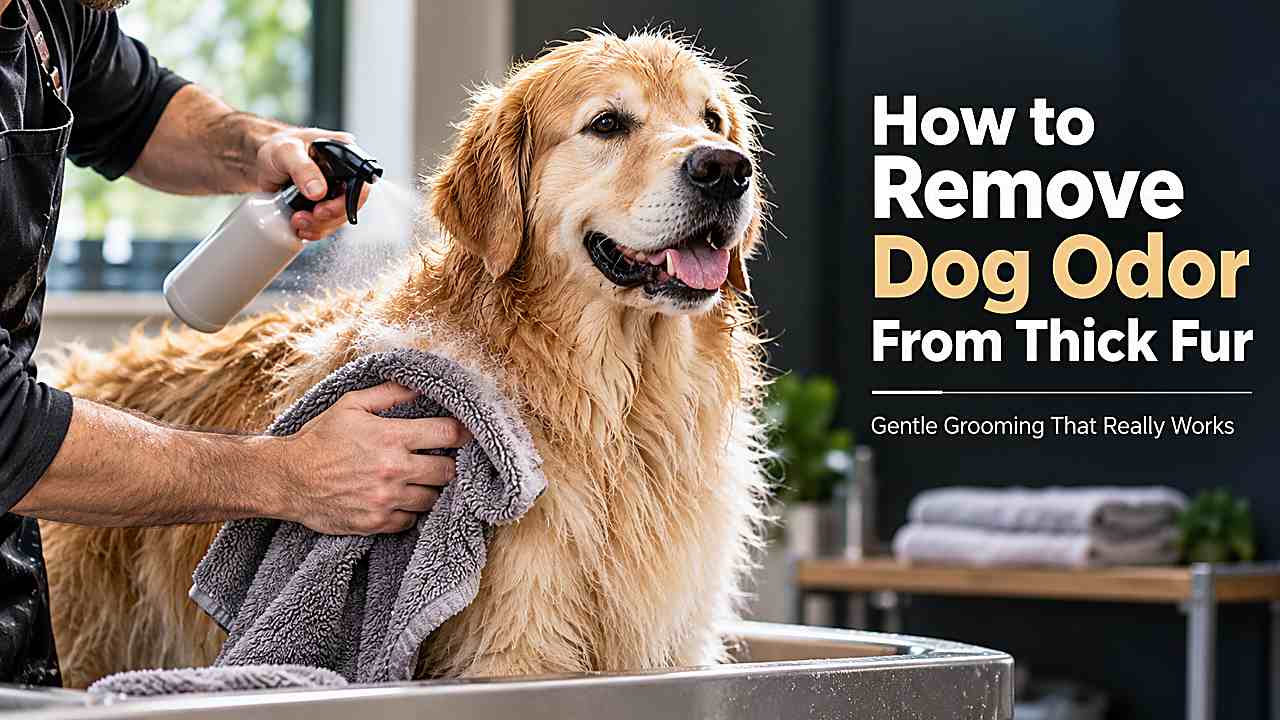
Thick fur can hold moisture, skin oils, mud, saliva, and environmental odors close to the skin long after the surface looks clean. The smell often returns when the coat was washed on top but not cleaned and dried through the undercoat.
A lasting result comes from reaching the skin, using the right dog shampoo, rinsing completely, and drying dense areas all the way through.
Brush out the coat, soak it to the skin, use dog shampoo in small sections, rinse until no product remains, then dry the undercoat completely. Recurring strong odor, redness, grease, or itching can signal a skin or ear problem that needs veterinary attention.
Figure out where the odor is coming from
Smell the coat in different areas rather than assuming the whole dog is dirty. Ears, skin folds, feet, collar area, tail base, and damp undercoat can have very different causes.
A sour, yeasty, greasy, or unusually strong odor that returns soon after bathing may be associated with skin disease. Washing repeatedly can mask the symptom without correcting the cause.
Prepare a dense coat before shampoo
Brush out loose undercoat and open compacted areas so water can reach the skin. Tight mats and packed coat block shampoo and trap moisture after the bath.
If matting is severe or close to the skin, a professional groomer may be safer than aggressive brushing. Wet mats can tighten and become harder to remove.
Wash all the way to the skin
Saturate in sections
Use your fingers to part the coat and make sure the chest, neck, rump, tail base, and thighs are actually wet underneath.
Keep the dog on secure footing and watch body language while you work Use only products and settings that are appropriate for that dog’s skin, coat, age, and health If the dog becomes painful, panicked, weak, or unable to stand safely, stop and simplify the session Complete rinsing and calm handling are more important than finishing quickly.
Keep the dog on secure footing and watch body language while you work Use only products and settings that are appropriate for that dog’s skin, coat, age, and health If the dog becomes painful, panicked, weak, or unable to stand safely, stop and simplify the session.
Keep the dog on secure footing and watch body language while you work Use only products and settings that are appropriate for that dog’s skin, coat, age, and health.
Keep the dog on secure footing and watch body language while you work.
Use enough shampoo to clean, not enough to create endless foam
Dog-specific shampoo should be distributed through the coat rather than poured heavily in one place. Follow the label for dilution and contact time.
Keep the dog on secure footing and watch body language while you work Use only products and settings that are appropriate for that dog’s skin, coat, age, and health If the dog becomes painful, panicked, weak, or unable to stand safely, stop and simplify the session.
Keep the dog on secure footing and watch body language while you work Use only products and settings that are appropriate for that dog’s skin, coat, age, and health.
Keep the dog on secure footing and watch body language while you work.
Rinse longer than you lather
Work from the spine downward and part the coat as you rinse. Residue in the undercoat can contribute to itching and stale odor.
Keep the dog on secure footing and watch body language while you work Use only products and settings that are appropriate for that dog’s skin, coat, age, and health If the dog becomes painful, panicked, weak, or unable to stand safely, stop and simplify the session.
Keep the dog on secure footing and watch body language while you work Use only products and settings that are appropriate for that dog’s skin, coat, age, and health.
Keep the dog on secure footing and watch body language while you work.
Dry the undercoat completely
Towel-blot first, then use a dog-safe dryer if the dog tolerates it. Move air through the coat in sections until the skin and dense undercoat no longer feel cool or damp.
Pay special attention behind the ears, under the collar area, armpits, groin, rump, and tail. These areas can stay damp after the outer coat looks dry.
Clean the items that put odor back on the dog
Wash collars, harnesses, bedding, crate pads, and favorite blankets. A freshly bathed dog can pick up old odor within minutes from damp or oily fabric.
Dry all textiles completely before reuse. Repeatedly placing a dense-coated dog on damp bedding keeps moisture and odor close to the skin.
When odor needs a veterinarian
Persistent odor plus itching, redness, hair loss, greasy scaling, ear discharge, painful skin, or sores should be examined. Bacterial and yeast infections, allergies, ear disease, and other problems often smell different from ordinary dirty fur.
If a medical shampoo is prescribed, use it exactly as directed. Therapeutic shampoos often have specific contact times and bathing schedules.
Set up the wash around your dog, not the equipment
Start with the dog’s current condition rather than a fixed routine. A coat that is clean but dense, a dog that is elderly, a dog that is frightened by noise, and a dog with irritated skin all need different pacing even when the basic bathing equipment is the same.
Before adding more shampoo, brushing pressure, restraint, heat, or airflow, watch the dog for a few seconds. Relaxed breathing, stable footing, normal posture, and willingness to take familiar rewards are useful signs that the session is still manageable.
Quick check before moving on
Make sure the dog still has secure footing, normal breathing, and enough emotional control to continue. If those basics are slipping, reduce intensity, take a break, or end the session after rinsing safely.
Keep the dog on secure footing and watch body language while you work Use only products and settings that are appropriate for that dog’s skin, coat, age, and health If the dog becomes painful, panicked, weak, or unable to stand safely, stop and simplify the session.
Keep the dog on secure footing and watch body language while you work Use only products and settings that are appropriate for that dog’s skin, coat, age, and health.
Keep the dog on secure footing and watch body language while you work.
Common mistakes that make the job harder
Organize tools so one hand can stay available for the dog. Put shampoo, towels, brushes, and treats within reach, keep the floor clear, and separate clean equipment from wet or dirty items. This reduces the moments when owners accidentally turn away from a dog that is standing in a slippery tub.
Use product labels as the final authority for dilution, contact time, age restrictions, and rinsing. More product rarely compensates for poor saturation or incomplete rinsing, and using extra cleanser can make dense coats harder to rinse completely.
Aftercare that protects skin, coat, and comfort
Move slowly around sensitive areas such as the face, ears, groin, paws, and any sore skin. A cloth or controlled stream is often easier to manage than spraying directly at the head. If the dog repeatedly flinches at one location, inspect rather than forcing the same handling again.
Keep water and dryers at comfortable settings. Very hot water, very cold water, or intense air can make a routine bath feel threatening. Comfort usually improves cooperation, which in turn makes the cleaning more thorough.
Quick check before moving on
Make sure the dog still has secure footing, normal breathing, and enough emotional control to continue. If those basics are slipping, reduce intensity, take a break, or end the session after rinsing safely.
Keep the dog on secure footing and watch body language while you work Use only products and settings that are appropriate for that dog’s skin, coat, age, and health If the dog becomes painful, panicked, weak, or unable to stand safely, stop and simplify the session.
Keep the dog on secure footing and watch body language while you work Use only products and settings that are appropriate for that dog’s skin, coat, age, and health.
Keep the dog on secure footing and watch body language while you work.
Reduce the odor load between baths
Rinsing should be systematic. Start at the neck and shoulders, move down the body, and part thick hair with your fingers so clean water reaches the skin. Check the armpits, belly, groin, tail base, and paws because these areas often hold residue after the back looks finished.
When the coat feels slick long after the visible foam is gone, keep rinsing. Residual cleanser can contribute to itching and can attract dirt once the coat dries, so complete rinsing is one of the easiest ways to improve the final result.
Use sectional rinsing to reach the dense undercoat
Dry according to coat type and tolerance. Short coats may need only thorough towel blotting and warm indoor air, while dense coats often need more time. If a dryer is used, keep the nozzle moving and avoid concentrating heat or high-velocity air on the face, ears, genitals, or irritated skin.
A dog that becomes frantic around the dryer does not need to be forced through it. Use towels, lower airflow, greater distance, or a warmer place to finish drying. The safest method is the one the dog can tolerate without struggling or overheating.
Quick check before moving on
Make sure the dog still has secure footing, normal breathing, and enough emotional control to continue. If those basics are slipping, reduce intensity, take a break, or end the session after rinsing safely.
Keep the dog on secure footing and watch body language while you work Use only products and settings that are appropriate for that dog’s skin, coat, age, and health If the dog becomes painful, panicked, weak, or unable to stand safely, stop and simplify the session.
Keep the dog on secure footing and watch body language while you work Use only products and settings that are appropriate for that dog’s skin, coat, age, and health.
Keep the dog on secure footing and watch body language while you work.
Check the skin and undercoat before calling the bath finished
Thick fur can smell clean on the surface while moisture and odor remain trapped closer to the skin. After rinsing, part the coat at the neck, shoulders, armpits, chest, tail base, and hindquarters and smell near the skin rather than only the outer hair. Continue drying until dense areas no longer feel cool or damp when you press your fingers into the coat.
If odor returns quickly after a thorough wash and complete dry, stop assuming the problem is just dirty fur. Ear infections, skin infections, anal gland problems, dental disease, and other health issues can create persistent odor that shampoo will not fix. A clean, dry coat should stay reasonably fresh without heavy fragrance, so recurring smell is a useful reason to look for an underlying source.
Frequently Asked Questions
Why does a thick-coated dog still smell after a bath?
Odor often remains when shampoo does not reach the skin, rinse water leaves residue, or the undercoat stays damp for too long. Thick fur can hide oily areas and moisture even after the surface looks clean. Part the coat during washing and drying so you can check the skin-level hair.
Clean bedding, collars, and harnesses as well so they do not transfer odor back to the coat. Persistent odor despite good bathing may indicate a medical problem rather than a grooming issue.
Should I use more shampoo on a smelly dog?
More shampoo is not always better and can make a dense coat much harder to rinse. Thorough saturation, correct dilution, adequate contact time, and complete rinsing are usually more important than using a large amount of product. Follow the shampoo label rather than guessing at concentration.
If the dog is greasy or extremely dirty, a second proper wash may be more effective than one overloaded lather. Stop if the skin becomes red or irritated.
Can conditioner trap odor in thick fur?
A properly rinsed dog conditioner should not create bad odor on its own, but heavy residue can make a coat feel greasy and may hold dirt. Use a dog-specific product that suits the coat and apply only the recommended amount. Rinse according to the label and check dense areas carefully.
If odor worsens after a particular product, discontinue it and reassess the routine. Fragrance should not be used to cover an underlying skin or ear problem.
How dry does a thick coat need to be?
The outer coat can feel dry while the undercoat is still damp, so check down to the skin with your fingers. Areas behind the ears, under the collar, in the armpits, and around the tail can hold moisture for a long time. Damp undercoat can contribute to musty odor and skin irritation.
Use towels first and then controlled airflow if the dog tolerates it. In cool weather, do not send a densely coated dog outside while the coat is still wet at the skin.
When should dog odor be checked by a veterinarian?
Seek veterinary advice when odor returns quickly despite a thorough wash and complete dry, or when it is accompanied by itching, redness, sores, discharge, pain, or hair loss. Strong odor from the ears, mouth, or rear end can come from sources that shampoo cannot correct. Repeated bathing can sometimes worsen irritated skin.
Note where the smell is strongest and whether other symptoms are present. That information can help a veterinarian identify the underlying cause.
Conclusion
Thick fur stays fresh when water, shampoo, rinse water, and drying air all reach the skin. Focus on coat penetration and complete drying rather than adding perfume or repeating shampoo cycles.