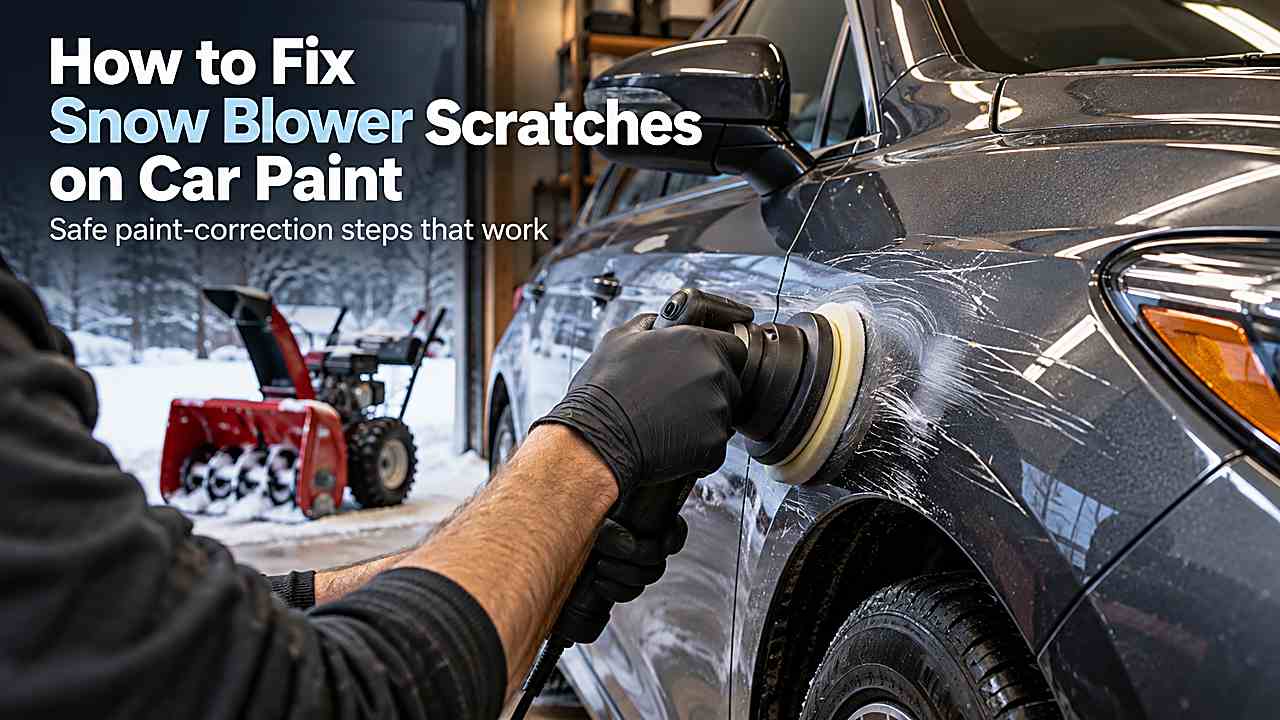
A snow blower can scratch a parked car in several ways. A handle, chute, housing edge, or debris thrown from the machine can leave anything from light paint transfer to a cut that reaches primer or bare metal, and those defects do not all respond to the same repair.
The safest repair starts with diagnosis rather than polishing immediately. What looks like a deep scratch may be transferred paint sitting on top of the clear coat, while a thin line that catches a fingernail may be too deep for polishing alone.
Snow blower scratches should be cleaned and inspected first, then treated according to depth. Paint transfer and light clear-coat marks may polish out, while deeper cuts need touch-up or professional repair.
First separate transferred material from an actual scratch
Snow equipment is often painted or powder-coated, so contact can leave colored material on the car without removing much of the vehicle’s own finish. After a proper wash, the mark may feel raised or smeared rather than cut into the surface. That kind of transfer can sometimes be removed with a paint-safe cleaner, clay product, or light polishing process.
A true scratch removes or deforms part of the vehicle’s paint system. Under bright light, it may appear as a sharp line rather than a broad scuff, and the color can change if the damage has reached primer or metal. Cleaning the area before judging depth prevents dirt from hiding the edges and keeps abrasive grit out of the correction process.
Use the fingernail test as a clue, not a verdict
A scratch that does not catch a clean fingernail is often limited to the upper clear coat and may respond well to polishing. If the nail catches distinctly, the defect is likely deeper, but that does not automatically tell you whether it has passed through color coat. Lighting, paint color, and the shape of the scratch can make visual judgment difficult.
White or gray material in the line may be primer, while shiny metal indicates a much deeper cut. A scratch on a plastic bumper can expose a dark or light plastic substrate instead. The repair goal changes once the color layer is missing because polishing cannot recreate paint that is no longer there.
Light scuffs can often be corrected with measured polishing
Clear-coat scratches are reduced by leveling a very small amount of surrounding clear coat until the defect becomes less visible. That is why the least aggressive polish and pad combination that produces improvement is the best starting point. Heavy compound on a small winter scuff can remove far more clear coat than the defect justifies.
Hand polishing can work on localized marks, while a dual-action polisher makes larger scuffed areas more consistent in experienced hands. The surface should be clean, dry, and above the product’s recommended working temperature. Cold paint, frozen residue, or an outdoor snowstorm are poor conditions for controlled correction.
Paint transfer needs a gentler strategy than sanding
Transferred material often responds to cleaning before any abrasive correction is needed. A paint-safe tar or adhesive remover, detailing clay, or mild polish may lift the foreign material, depending on what the snow blower left behind. The product should be tested on a small area and used according to its label because strong solvents can affect trim, fresh paint, or specialty finishes.
The important point is to avoid assuming every dark or bright streak is missing vehicle paint. Once the transfer is removed, the clear coat underneath may show only a faint scuff that needs minimal polishing. Starting with wet sanding would turn a superficial problem into a much larger repair.
Deep scratches need paint, not more polishing
If primer, metal, or plastic is exposed, polishing can improve the edges but cannot fill the missing layers. Touch-up paint is suitable for many narrow chips and scratches where perfect cosmetic blending is less important than sealing the surface. Wider gouges, creases, or damage across a highly visible panel are better candidates for professional refinishing.
Bare steel deserves prompt attention in winter because road salt and moisture can begin corrosion at the exposed spot. The area should be cleaned and dried before touch-up, and the paint system should match the vehicle manufacturer’s requirements as closely as possible. Rushing a repair onto salty or damp metal can trap contamination underneath.
When professional correction makes more sense
A body shop or experienced detailer is useful when the scratch crosses multiple panels, reaches an edge, sits on thin factory paint, or includes a dent. Professionals can measure paint thickness, identify whether the clear coat has enough material for correction, and blend touch-up or refinishing more predictably. Dark colors and metallic finishes can make imperfect repairs especially obvious.
Insurance may also become relevant if a snow blower caused extensive accidental damage. Photographs taken before correction help document the condition and preserve options if another person or contractor caused the damage. Once aggressive sanding or polishing begins, it becomes harder to show what the original defect looked like.
Preventing repeat damage during snow clearing
Snow equipment needs more clearance around parked vehicles than it appears to need when the driveway is clean. Handles can swing, chutes rotate, and hidden gravel or ice chunks can be thrown toward paint. Leaving a wider buffer zone around the vehicle reduces both contact scratches and impact chips.
A soft snow brush made for automotive paint is safer for clearing the car itself than using snow-removal equipment nearby. Even then, loose grit should be considered because any tool can scratch paint when sand is trapped between the surface and the contact material. Gentle snow removal and regular winter washing reduce the amount of abrasive debris on the paint.
How paint depth and scratch location affect the repair decision
A scratch on the center of a broad hood panel is easier to polish consistently than the same defect on a sharp body crease or panel edge. Factory clear coat is often thinner at edges because paint flow during manufacturing is different there, and machine polishing can remove material quickly from a narrow high point. Caution increases around creases, door edges, and raised styling lines even when the scratch itself appears minor. A professional may tape or hand-polish those zones rather than treating them like flat paint.
The age and history of the vehicle matter as well. A repainted panel may have more or less clear coat than the factory finish and can react differently to compounds. Previous heavy polishing can also leave less material available for future correction. Paint-thickness measurement does not tell every part of the story, but it gives an experienced detailer useful context before deciding how aggressively to chase a defect.
Winter contamination should be removed from the entire work area, not only from the visible scratch. Salt and grit can sit several inches away and then be picked up by an applicator or polishing pad. A thorough wash and decontamination therefore protects the finish from secondary scratches during correction. The repair environment should be dry enough that polishing residue and touch-up paint can behave normally rather than mixing with melting snow.
Perfection is not always the best target. A light scratch can sometimes be reduced by eighty or ninety percent with minimal clear-coat removal, while chasing the final faint line would require disproportionately aggressive polishing. On a daily driver, preserving paint thickness may be the wiser long-term choice. Good correction is a balance between appearance and the amount of original finish sacrificed to achieve it.
Choosing between DIY correction and body-shop refinishing
DIY correction makes the most sense when the defect is localized, the clear coat is intact, and the owner can work in a clean controlled environment. A mild polish, hand applicator, and quality microfiber are inexpensive compared with refinishing, and they preserve the factory paint when used conservatively. The process becomes less attractive as soon as primer, bare metal, or a dent appears because the repair now involves rebuilding material rather than merely refining the surface.
Touch-up paint occupies the middle ground. It can seal a narrow deep scratch and make the line less visible without repainting an entire panel, but the result depends heavily on color match, application control, and expectations. Metallic flakes rarely lie exactly like factory spray, so close inspection may still reveal the repair. For many daily drivers, stopping corrosion is more important than making the mark disappear from six inches away.
Body-shop refinishing becomes reasonable when the scratch is wide, crosses a panel edge, includes deformation, or sits in a highly visible area where touch-up would be distracting. Professional paintwork also has a role when the car is leased, collectible, or being prepared for sale. A shop can blend color into adjacent areas when necessary and restore the clear coat as a complete system. That is fundamentally different from trying to polish away missing paint.
The owner should decide on the desired outcome before beginning. If the goal is simply to protect the metal until spring, temporary touch-up may be enough. If the goal is a near-invisible cosmetic repair, aggressive DIY experimentation can make professional refinishing harder. The smartest repair is the one that matches the defect depth, vehicle value, and acceptable final appearance.
Frequently Asked Questions
These questions cover the practical details that commonly come up after the main process is understood.
Can toothpaste remove a snow blower scratch?
Toothpaste is not a controlled automotive polishing product and is a poor choice for modern clear coat. Its abrasiveness varies, it may contain additives that leave residue, and there is no reliable way to match its cutting action to the defect. A purpose-made automotive polish gives much better control. The scratch should also be diagnosed before any abrasive is used. Deep damage will not disappear because a household product is rubbed harder.
How do I know if the scratch is through the clear coat?
A light mark that disappears temporarily when wet and does not catch a fingernail is often confined largely to the clear coat. A line that remains a different color, catches strongly, or reveals primer, metal, or plastic is deeper. Bright inspection lighting helps reveal the edge of the defect. Paint thickness varies by vehicle and panel, so visual clues are not perfect. A professional can measure the finish when the repair decision matters.
Can I polish car paint when it is freezing outside?
Cold conditions are not ideal for polishing because compounds, pads, towels, and paint all behave less predictably. Residue can become difficult to wipe, water can freeze in panel gaps, and the operator’s control is reduced. Most products specify a temperature range for proper use. A heated garage or mild day provides more consistent results. Winter urgency applies mainly to exposed bare metal, which should be protected rather than left salty and wet.
Will touch-up paint make a deep scratch invisible?
Touch-up paint can protect exposed material and make a narrow scratch much less noticeable, but it rarely becomes completely invisible without more advanced leveling and finishing. Metallic and pearl colors are especially difficult to match perfectly in a small repair. The shape and location of the scratch also affect how the repair reflects light. For a daily driver, corrosion protection may be the most important goal. A body shop is the better option when a seamless cosmetic result is required.
Should I wet sand a snow blower scratch?
Wet sanding is an advanced correction method that removes clear coat quickly and should not be the first response to an unknown scratch. Many scuffs can be improved with cleaning, clay, or mild polishing alone. Sanding too deeply can strike through the clear coat and create a larger refinishing problem. It is more appropriate when paint thickness, defect depth, and the subsequent polishing steps are understood. Owners without that experience are better served by a detailer or body shop.
Conclusion
Snow blower scratches are easiest to repair when the mark is identified before abrasives come out. Transfer, light clear-coat scuffs, deep scratches, and exposed metal each need a different level of correction, and the least aggressive effective method preserves the most factory finish.
A careful wash and inspection should be the first step. From there, light polishing can handle minor defects, touch-up can protect deeper cuts, and professional refinishing remains the right answer when the damage extends beyond what safe polishing can correct.