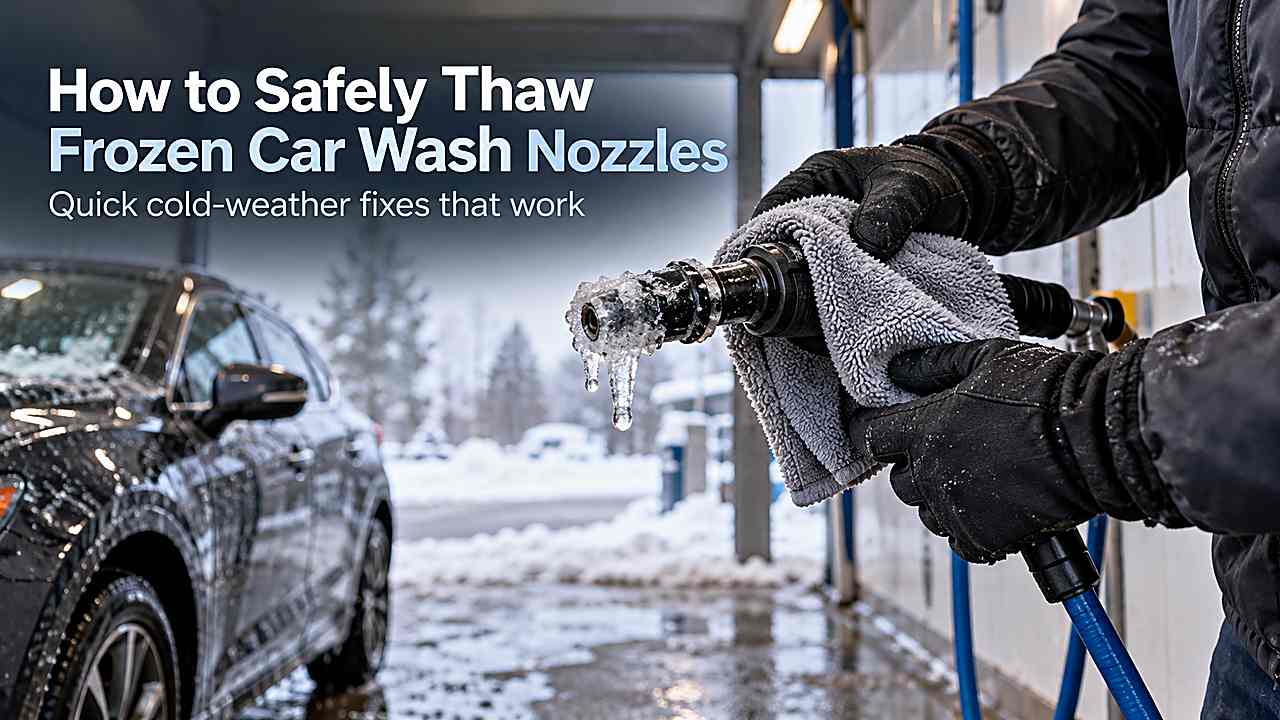
Winter conditions make this topic more complicated than the same job in mild weather. Salt, slush, low temperatures, and repeated freezing can change how cleaners, water, rubber, glass, paint, and hidden metal respond, so the best routine balances cleaning with damage prevention.
The useful question is not simply whether the job can be done, but how it can be done without creating a second problem afterward. A daily driver benefits most from methods that are realistic enough to repeat throughout the season.
A frozen windshield-washer nozzle should be thawed gradually rather than forced with boiling water, sharp tools, or repeated pump operation. Warm surroundings, gentle heat, winter-rated fluid, and patience protect the nozzle, lines, reservoir, and pump.
Confirm what is actually frozen
Confirm what is actually frozen deserves its own attention because this part of the job often determines whether winter maintenance stays simple or becomes harder after the vehicle cools, dries, or returns to salted roads. The details below focus on the reasons behind the method rather than a list of commands.
A frozen nozzle can mimic other faults
A frozen nozzle can mimic other faults matters because ice may be at the nozzle tip, in a hose, in the reservoir, or the problem may be electrical rather than frozen fluid. In winter, the issue becomes more noticeable as low temperatures, road treatment, moisture, and repeated freeze-thaw cycles change how the vehicle behaves. For most drivers, a measured approach works better than trying to solve the problem with extra force, extra heat, or stronger chemicals.
A common mistake is to focus only on the visible surface while ignoring the seams, backing, hidden components, or residual moisture that can keep the problem going. The better result usually comes from matching the method to the material and conditions, then checking the area again after it has dried or returned to normal temperature. That principle keeps how to thaw frozen car wash nozzles practical for a daily driver rather than turning a simple winter-maintenance job into unnecessary correction work.
Pump sound gives a useful clue
Pump sound gives a useful clue matters because brief operation can reveal whether the pump runs, but repeated activation against ice can strain it. In winter, the issue becomes more noticeable as low temperatures, road treatment, moisture, and repeated freeze-thaw cycles change how the vehicle behaves. For most drivers, a measured approach works better than trying to solve the problem with extra force, extra heat, or stronger chemicals.
A common mistake is to focus only on the visible surface while ignoring the seams, backing, hidden components, or residual moisture that can keep the problem going. The better result usually comes from matching the method to the material and conditions, then checking the area again after it has dried or returned to normal temperature. That principle keeps how to thaw frozen car wash nozzles practical for a daily driver rather than turning a simple winter-maintenance job into unnecessary correction work.
Use broad, gentle heat
Use broad, gentle heat deserves its own attention because this part of the job often determines whether winter maintenance stays simple or becomes harder after the vehicle cools, dries, or returns to salted roads. The details below focus on the reasons behind the method rather than a list of commands.
A warm garage is the safest thawing method
A warm garage is the safest thawing method matters because warming the entire vehicle above freezing thaws the reservoir, hoses, and nozzle without concentrating heat on one plastic part. In winter, the issue becomes more noticeable as low temperatures, road treatment, moisture, and repeated freeze-thaw cycles change how the vehicle behaves. For most drivers, a measured approach works better than trying to solve the problem with extra force, extra heat, or stronger chemicals.
A common mistake is to focus only on the visible surface while ignoring the seams, backing, hidden components, or residual moisture that can keep the problem going. The better result usually comes from matching the method to the material and conditions, then checking the area again after it has dried or returned to normal temperature. That principle keeps how to thaw frozen car wash nozzles practical for a daily driver rather than turning a simple winter-maintenance job into unnecessary correction work.
Localized heat should remain mild
Localized heat should remain mild matters because a warm cloth or cautious hair dryer is safer than boiling water, open flame, or a high-output heat gun. In winter, the issue becomes more noticeable as low temperatures, road treatment, moisture, and repeated freeze-thaw cycles change how the vehicle behaves. For most drivers, a measured approach works better than trying to solve the problem with extra force, extra heat, or stronger chemicals.
A common mistake is to focus only on the visible surface while ignoring the seams, backing, hidden components, or residual moisture that can keep the problem going. The better result usually comes from matching the method to the material and conditions, then checking the area again after it has dried or returned to normal temperature. That principle keeps how to thaw frozen car wash nozzles practical for a daily driver rather than turning a simple winter-maintenance job into unnecessary correction work.
Replace weak fluid after thawing
Replace weak fluid after thawing deserves its own attention because this part of the job often determines whether winter maintenance stays simple or becomes harder after the vehicle cools, dries, or returns to salted roads. The details below focus on the reasons behind the method rather than a list of commands.
Winter fluid needs a rating below expected temperatures
Winter fluid needs a rating below expected temperatures matters because summer blends and diluted winter fluid can freeze in severe cold. In winter, the issue becomes more noticeable as low temperatures, road treatment, moisture, and repeated freeze-thaw cycles change how the vehicle behaves. For most drivers, a measured approach works better than trying to solve the problem with extra force, extra heat, or stronger chemicals.
A common mistake is to focus only on the visible surface while ignoring the seams, backing, hidden components, or residual moisture that can keep the problem going. The better result usually comes from matching the method to the material and conditions, then checking the area again after it has dried or returned to normal temperature. That principle keeps how to thaw frozen car wash nozzles practical for a daily driver rather than turning a simple winter-maintenance job into unnecessary correction work.
The lines need to be purged as well as the reservoir
The lines need to be purged as well as the reservoir matters because running the proper winter fluid through the system replaces weak fluid still trapped in hoses and nozzles. In winter, the issue becomes more noticeable as low temperatures, road treatment, moisture, and repeated freeze-thaw cycles change how the vehicle behaves. For most drivers, a measured approach works better than trying to solve the problem with extra force, extra heat, or stronger chemicals.
A common mistake is to focus only on the visible surface while ignoring the seams, backing, hidden components, or residual moisture that can keep the problem going. The better result usually comes from matching the method to the material and conditions, then checking the area again after it has dried or returned to normal temperature. That principle keeps how to thaw frozen car wash nozzles practical for a daily driver rather than turning a simple winter-maintenance job into unnecessary correction work.
Prevent the next freeze
Prevent the next freeze deserves its own attention because this part of the job often determines whether winter maintenance stays simple or becomes harder after the vehicle cools, dries, or returns to salted roads. The details below focus on the reasons behind the method rather than a list of commands.
Snow should be cleared before the washers are used
Snow should be cleared before the washers are used matters because packed snow and ice can block nozzles even when the fluid itself is liquid. In winter, the issue becomes more noticeable as low temperatures, road treatment, moisture, and repeated freeze-thaw cycles change how the vehicle behaves. For most drivers, a measured approach works better than trying to solve the problem with extra force, extra heat, or stronger chemicals.
A common mistake is to focus only on the visible surface while ignoring the seams, backing, hidden components, or residual moisture that can keep the problem going. The better result usually comes from matching the method to the material and conditions, then checking the area again after it has dried or returned to normal temperature. That principle keeps how to thaw frozen car wash nozzles practical for a daily driver rather than turning a simple winter-maintenance job into unnecessary correction work.
Seasonal fluid change is easier than emergency thawing
Seasonal fluid change is easier than emergency thawing matters because switching before the first hard freeze gives time to flush the warmer-weather blend. In winter, the issue becomes more noticeable as low temperatures, road treatment, moisture, and repeated freeze-thaw cycles change how the vehicle behaves. For most drivers, a measured approach works better than trying to solve the problem with extra force, extra heat, or stronger chemicals.
A common mistake is to focus only on the visible surface while ignoring the seams, backing, hidden components, or residual moisture that can keep the problem going. The better result usually comes from matching the method to the material and conditions, then checking the area again after it has dried or returned to normal temperature. That principle keeps how to thaw frozen car wash nozzles practical for a daily driver rather than turning a simple winter-maintenance job into unnecessary correction work.
When thawing does not restore spray
When thawing does not restore spray deserves its own attention because this part of the job often determines whether winter maintenance stays simple or becomes harder after the vehicle cools, dries, or returns to salted roads. The details below focus on the reasons behind the method rather than a list of commands.
Mechanical or electrical faults become more likely
Mechanical or electrical faults become more likely matters because a cracked hose, failed pump, blocked filter, fuse issue, or heated-nozzle fault may remain after the entire system is warm. In winter, the issue becomes more noticeable as low temperatures, road treatment, moisture, and repeated freeze-thaw cycles change how the vehicle behaves. For most drivers, a measured approach works better than trying to solve the problem with extra force, extra heat, or stronger chemicals.
A common mistake is to focus only on the visible surface while ignoring the seams, backing, hidden components, or residual moisture that can keep the problem going. The better result usually comes from matching the method to the material and conditions, then checking the area again after it has dried or returned to normal temperature. That principle keeps how to thaw frozen car wash nozzles practical for a daily driver rather than turning a simple winter-maintenance job into unnecessary correction work.
Frequently Asked Questions
Winter car care rarely has one rule that fits every vehicle and every climate. These questions address the practical variables that most often change the answer, including temperature, salt exposure, product compatibility, and drying conditions.
What is the safest starting point for how to thaw frozen car wash nozzles?
The safest starting point is to assess temperature, contamination, material condition, and whether the vehicle can be dried or inspected afterward. A frozen windshield-washer nozzle should be thawed gradually rather than forced with boiling water, sharp tools, or repeated pump operation. Warm surroundings, gentle heat, winter-rated fluid, and patience protect the nozzle, lines, reservoir, and pump.
A gentle first step gives useful feedback before stronger chemistry, pressure, or heat is considered. Vehicle and product instructions should take priority where they are more specific. The goal is controlled maintenance rather than a one-step shortcut.
What is the most common mistake with how to thaw frozen car wash nozzles?
The most common mistake is treating a winter problem as if temperature and salt exposure do not change the normal process. Rushing often leads to trapped moisture, scratching, frozen seals, or residue that reappears after drying. A slower sequence that removes loose contamination first is usually safer.
Stronger force is rarely the first answer. The condition of the surface should guide the next step.
Does very cold weather change the best approach?
Yes. Cold affects drying time, product behavior, rubber flexibility, water freezing, and how quickly a safe working window disappears. A heated bay or garage can make the same task far easier, although warm storage of a heavily salted wet vehicle has its own corrosion concerns.
Very hot water on cold glass should be avoided. Wind can make borderline conditions much harder. A safer weather window is sometimes the best tool available.
How often should this be part of a winter routine?
Frequency should follow exposure rather than a rigid calendar. A daily driver on heavily treated roads needs more attention than a vehicle that stays parked during storms. AAA and Consumer Reports both emphasize regular winter cleaning when salt buildup is present.
Quick maintenance can be more valuable than waiting for a perfect detailing day. The visible condition of the car and recent road treatment are practical triggers.
When is professional help the better choice?
Professional help makes sense when the problem involves damaged paint, active rust, electrical components, persistent leaks, failed washer or wiper hardware, or interior moisture that has reached padding and modules. It is also reasonable when the required work would put the vehicle or the person in an unsafe position. A specialist can often diagnose whether the visible symptom is only surface contamination or evidence of a deeper fault.
Early help is usually simpler than correcting secondary damage. Routine cleaning can then continue with a clearer plan.
Conclusion
A frozen windshield-washer nozzle should be thawed gradually rather than forced with boiling water, sharp tools, or repeated pump operation. Warm surroundings, gentle heat, winter-rated fluid, and patience protect the nozzle, lines, reservoir, and pump.
A sensible next step is to look at the vehicle’s current condition and the next few days of weather, then choose the simplest action that can be completed safely from start to finish. Small, repeatable winter-maintenance habits usually protect a daily driver better than waiting for one perfect day after months of salt, moisture, and neglect.