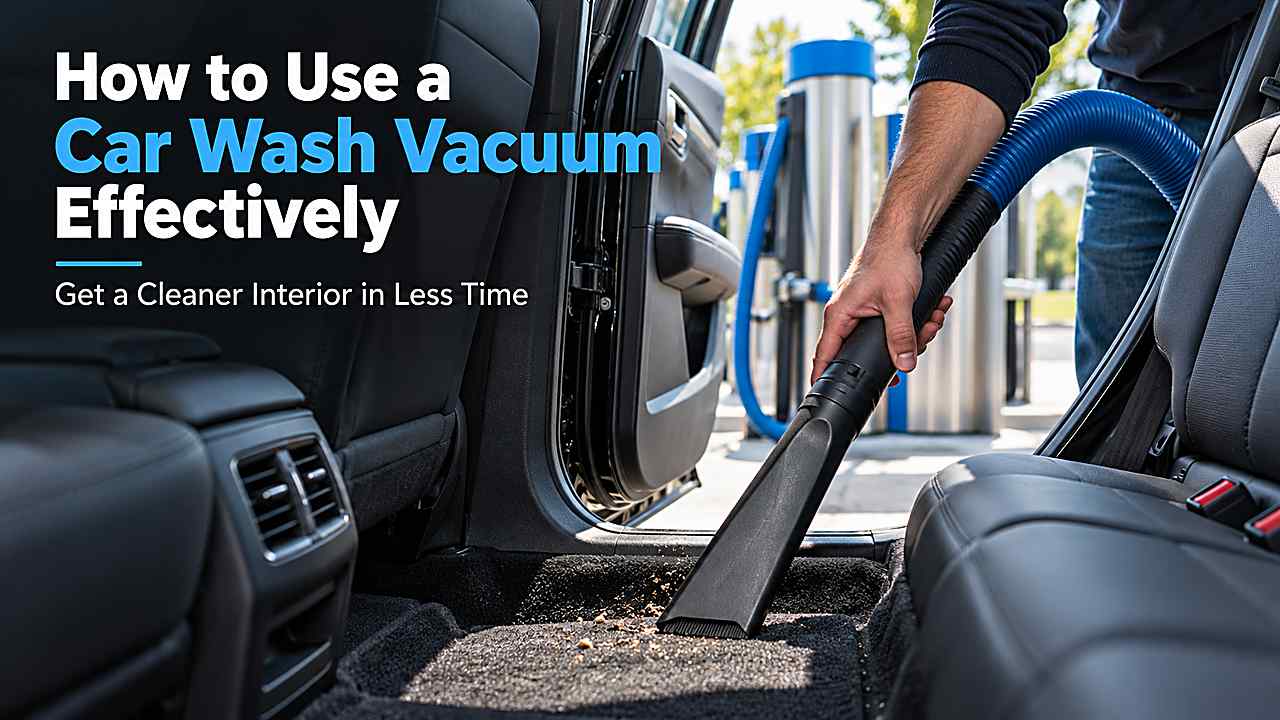
A car-wash vacuum can remove a lot of dirt in a few minutes, but only if the interior is prepared before the meter starts. Most wasted time comes from moving clutter, fighting the wrong nozzle angle, or repeatedly vacuuming the same patch of carpet without first loosening the debris.
Efficiency comes from sequence. Loose items leave first, mats come out, dirt is pushed toward accessible areas, and the vacuum follows a planned route through seats, seams, floors, and cargo space instead of bouncing randomly around the cabin.
Use a car wash vacuum efficiently by clearing the cabin first, removing mats, loosening packed debris, working top to bottom, using slow overlapping passes, and saving crevices and seat tracks for the narrow nozzle.
Prepare the cabin before paying for vacuum time
Trash, charging cables, child toys, jackets, and loose cargo should be removed before the vacuum turns on. Floor mats can be pulled out and placed where they can be cleaned separately, which opens the footwells and exposes the dirt hiding around the seat rails. Coins and small valuables should be collected because a strong commercial vacuum can remove them instantly.
Seats can be moved to create access before the timer starts as well. Sliding the front seats fully backward exposes the front rail area, then moving them forward later reveals the rear sections. This simple preparation converts paid vacuum time into actual cleaning time rather than interior organization.
Work from higher surfaces toward the floor
Crumbs and dust on seats, consoles, door pockets, and seat seams often fall downward during cleaning. Vacuuming the carpet first means some of that debris lands on an area that has already been finished. Starting higher and ending with the floor reduces rework.
The headliner usually does not need routine vacuum contact, especially because its fabric can be delicate. Seats, cargo shelves, fabric door inserts, and console gaps are safer early targets. Hard surfaces can be brushed or wiped later without spending vacuum minutes on areas that are better handled by microfiber.
Slow passes beat frantic movement
A vacuum needs airflow and time to lift debris from carpet. Racing the nozzle across the floor can make the job look active while leaving sand at the base of the pile. Slower overlapping passes give suction time to work and reveal which areas need agitation.
The nozzle angle matters too. A crevice tool works best when its opening remains close enough to the surface to maintain airflow without sealing so tightly that movement becomes difficult. Changing direction can lift debris that was hidden behind carpet fibers during the first pass.
Loosen stubborn debris before repeating the same pass
Sand, dried mud, and pet hair often need mechanical help. A stiff but carpet-safe brush can bring buried grit to the surface, while rubber pet-hair tools can roll embedded hair into clumps that the vacuum removes easily. Repeating the same suction pass ten times is less efficient than spending thirty seconds loosening the material.
The approach changes on upholstery because aggressive carpet brushes can damage seat fabric. A softer brush or rubber glove is more appropriate there, and leather needs even gentler handling. The vacuum is only one part of the cleaning system; the surface determines how debris should be released.
Use the crevice tool where it actually saves time
Seat rails, console edges, seatbelt anchors, door pockets, and the gap between seat cushions are ideal for a narrow nozzle. Those spaces trap material beyond the reach of a broad floor tool, and the concentrated airflow is useful once larger debris has been moved into view. The nozzle should be kept away from loose electrical connectors or fragile trim under the seats.
A quick brush can move crumbs out of seams while the vacuum is held nearby. This two-handed method is faster than trying to scrape with the plastic nozzle itself. Hard nozzle edges can also mar glossy console trim, so direct contact with delicate surfaces should be avoided.
Treat floor mats as a separate mini-job
Carpet mats respond well to vacuuming from multiple directions, followed by brushing when grit remains. Rubber mats usually benefit more from shaking, rinsing, and scrubbing than from spending several paid minutes vacuuming grooves. Choosing the right cleaning method for the mat material keeps the vacuum available for places where suction adds real value.
Mats should go back only when they are dry enough not to trap moisture underneath. Wet carpet or padding can develop odor and fogging issues, especially in cool weather. Properly secured mats must also return to their factory retention points so they cannot interfere with pedals.
A route that works for most cars
Many people work efficiently by starting at the front passenger area, moving around the rear seats and cargo area, and finishing at the driver’s footwell. The exact route matters less than having one, because a consistent path prevents missed zones and repeated door changes. Keeping all doors on one side open together can make hose routing easier where space allows.
The driver’s area is useful as the final stop because it often contains the most packed dirt and deserves whatever time remains. Pedals should be cleaned separately with appropriate tools rather than polished or dressed. Once the timer is nearly finished, one fast perimeter pass along seat edges and thresholds catches the debris that earlier work pulled out.
Getting better results from different vacuum setups
Self-serve vacuums vary widely. Some use a broad fixed nozzle, some provide a narrow crevice attachment, and others have a hose diameter large enough to swallow coins and small trim caps. Before starting, a quick look at the nozzle condition helps avoid dragging embedded grit across seat fabric or plastic. If the nozzle edge is cracked or dirty, wiping it first can prevent a small cleaning job from becoming a scratch-repair job.
Suction also changes as the facility’s collection system fills or filters load with debris. If airflow feels weak, technique becomes even more important because the nozzle needs a good seal and slower passes. Large pieces of trash should be picked up by hand rather than asking weak suction to carry them through a long hose. Facility staff may be able to address a blocked hose when performance is obviously abnormal.
Wet debris requires caution unless the machine is clearly designed for wet pickup. Ordinary dry vacuums can be damaged or contaminated by standing water, melted snow, and drink spills. Rubber mats should be drained or rinsed separately rather than vacuuming puddles from their channels. Damp carpet is better blotted or extracted with appropriate equipment before a final dry vacuum once the material has recovered.
Noise and hose management matter when children or pets are present. The hose can swing into paint or door edges if it is dragged across the vehicle, and a startled pet should never remain loose in the cabin during vacuuming. Planning the hose route outside the car protects both the finish and the interior. A few seconds spent repositioning safely is more efficient than repairing a scratched door or chasing debris after a pet bolts.
How to decide where your paid minutes are most valuable
The dirtiest-looking area is not always the best first target. Sand packed deep into one rear footwell can absorb half the available time, while loose crumbs across all four seats may be removed quickly. A first pass should collect the easy debris throughout the cabin so the entire car improves before the timer becomes a problem. The remaining time can then go toward the stubborn zones.
Pet hair and dried mud should be recognized as separate tasks before payment begins. Both respond better to agitation than endless suction, so a rubber brush or carpet brush should already be in hand. If the facility allows outside tools, loosening the area before starting the machine dramatically improves value. If tools are not allowed, a second vacuum cycle may be necessary for a heavily contaminated interior.
Crevice work is easiest after the broad surfaces are clean because loose debris no longer keeps falling into the seams. Seat rails, cupholder gaps, door pockets, and cargo corners can then be finished systematically. A small flashlight helps reveal what remains under the seats and reduces the temptation to probe blindly around wiring. Good visibility is an efficiency tool as much as a quality-control tool.
The final minute should be reserved for a quick whole-cabin scan. A visible missed patch on one mat or a line of crumbs at a seat edge is easier to fix immediately than after the hose has been returned. This last pass also catches debris dropped while reinstalling mats. A planned finish creates a cleaner result without requiring a longer vacuum session.
Finishing the job without undoing the work
Cleaned floor mats should be reinstalled only after the floor has been checked for loose debris around the edges. Pushing a mat back into place can sweep a line of sand toward the seat rails and make a freshly vacuumed footwell look unfinished. Factory retention hooks or clips need to be reattached so the driver’s mat cannot move toward the pedals. A clean-looking interior is never worth compromising pedal clearance.
Before closing the doors, a final check of seat position, child-seat anchors, charging cables, and personal items prevents the vacuum session from creating a new inconvenience. Seats moved for rail access should return to the driver’s preferred position, and anything removed from door pockets should be replaced only after the pockets are clean. These small finishing steps turn a fast vacuum stop into a complete interior reset rather than a half-finished cleanup.
Frequently Asked Questions
These questions cover the practical details that commonly come up after the main process is understood.
Should I vacuum the car before or after washing the exterior?
Either order can work, but vacuuming before the exterior wash keeps wet shoes and dripping door jambs away from freshly cleaned carpet. At a self-serve facility, workflow and bay rules may make one order more convenient than the other. Interior vacuuming also gives floor mats time to be shaken or cleaned before they are reinstalled. If mats will be washed with water, the exterior wash can happen while they drain. The main goal is to avoid tracking new dirt into finished areas.
Why does sand stay in carpet after vacuuming?
Sand works down to the base of carpet fibers where suction has difficulty reaching it. Brushing or tapping the carpet can bring those particles upward, making the next vacuum pass much more effective. Working in more than one direction also exposes material that was hidden by the pile. Extremely packed grit may take several agitation-and-vacuum cycles. Stronger suction helps, but release technique often matters more than raw power.
Can a car wash vacuum damage seats or trim?
The suction itself is usually not the main risk; hard plastic nozzles and careless contact cause more damage. Glossy trim, leather, soft screens, and delicate seat materials can be scratched by a dirty nozzle edge. Under-seat wiring and loose connectors should not be yanked or pressed with the tool. A small brush can move debris toward the nozzle without scraping surfaces. Keeping the hose and nozzle clean also prevents grit from being dragged across the cabin.
What is the fastest way to vacuum pet hair?
Pet hair should be loosened before the vacuum is expected to remove it. A rubber glove, pet-hair brush, or suitable rubber squeegee can roll embedded strands into clumps on durable carpet. The vacuum then removes those clumps in a fraction of the time. Seats and delicate fabrics need gentler tools than floor carpet. Vacuuming alone repeatedly is usually the slowest approach for heavy shedding.
How many minutes should a basic interior vacuum take?
A lightly dirty small car can often be improved substantially in ten to fifteen focused minutes, while SUVs, pet vehicles, and neglected interiors may need much longer. Commercial self-serve timers vary, so preparation before payment has a large effect on value. Deep pet-hair removal or stain treatment is separate from a basic vacuum. The useful benchmark is coverage rather than racing the clock. A planned route and proper agitation prevent most wasted time.
Conclusion
Using a car wash vacuum effectively is mostly a matter of preparation and sequence. Clearing the cabin, removing mats, loosening stubborn debris, and working through the interior in a consistent route lets the vacuum spend its time extracting dirt instead of chasing clutter.
Slow, deliberate passes usually outperform frantic motion. When pet hair, sand, or dried mud refuses to move, a brush or rubber tool can release it first and turn the next vacuum pass into real progress.