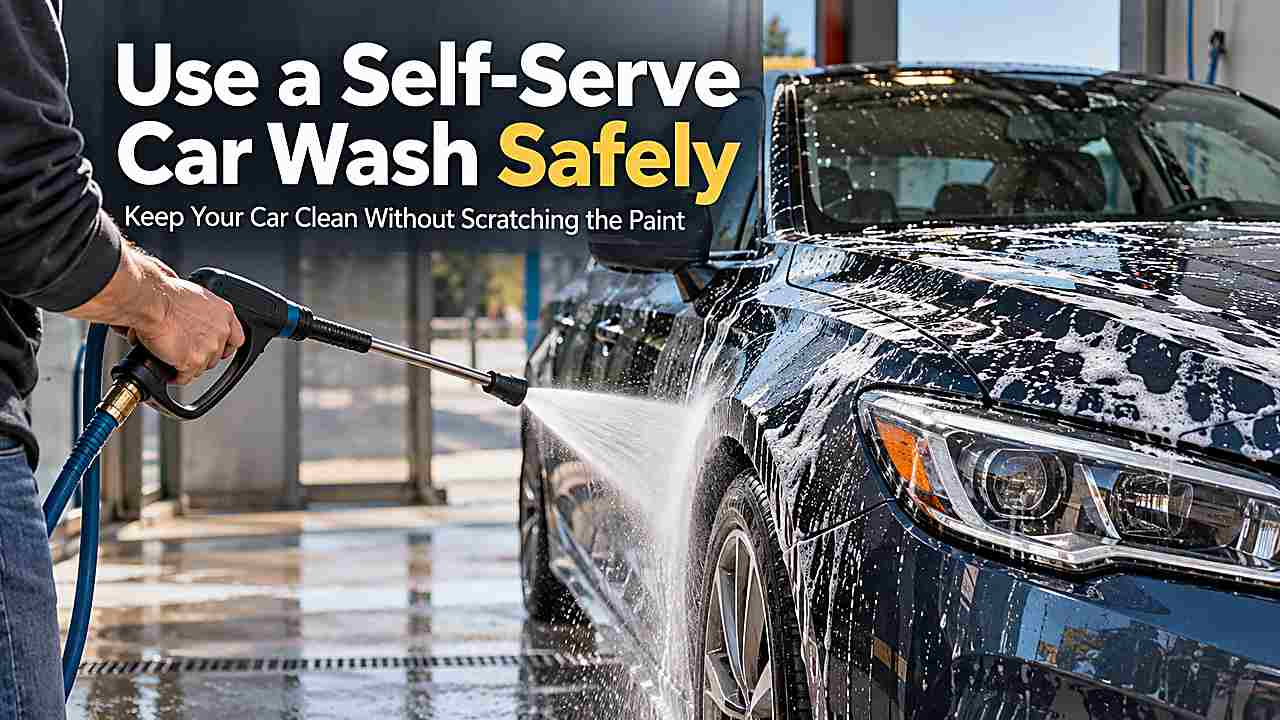
A self-service wash gives you strong water pressure, soap, and a place to work, but the shared tools can also put fine scratches into clear coat when dirt is rubbed across the paint. The safest strategy is to make water and chemistry do most of the cleaning before anything touches the surface.
You do not need to turn the wash bay into a full detailing studio. A careful inspection, a thorough pre-rinse, clean personal wash media when contact is necessary, and disciplined drying remove most of the avoidable scratch risk.
The safest self-serve method is to pre-rinse thoroughly, avoid a dirty communal brush on painted panels, use clean personal contact media only after loose grit is gone, rinse completely, and dry with clean microfiber using as little pressure as possible.
Why self-serve washes can scratch otherwise healthy paint
The pressure wand itself is not usually the main source of swirl marks. Scratches are more often created when sand, road grit, brake dust, or dried mud becomes trapped between paint and a brush, mitt, towel, or sponge. Shared foaming brushes are especially unpredictable because you do not know whether the previous customer used them on muddy rocker panels, truck beds, tires, or wheels.
Clear coat is hard enough to survive normal washing but soft enough to show repeated fine abrasion under direct sun. Dark colors reveal that marring more clearly, although light paint can be scratched in exactly the same way. The goal is therefore not a completely touch-free ritual at any cost; it is controlled contact only after loose contamination has been removed.
Bring a small kit that controls the risky parts of the wash
The bay already supplies most of the expensive equipment, so the useful personal kit is small. Clean microfiber drying towels, a sealed bag for used towels, and a clean wash mitt are the items that most directly reduce paint contact risk. A wheel brush or wheel towel should remain separate from anything that touches body paint because brake dust can contain abrasive particles.
- One clean microfiber or chenille wash mitt reserved for paint
- Two or more clean drying towels so a dropped or dirty towel can be retired immediately
- A separate wheel brush or towel for wheels and lower dirty areas
- A clean storage bag for towels after use
- Optional rinseless or pH-neutral wash product if the facility allows personal soap
Wash the car in a low-contact sequence
Order matters because every early step should reduce the amount of grit left for the next step. Work steadily enough that detergent does not dry on the surface, and move from cleaner upper areas toward the dirtier lower sections whenever possible.
1. Inspect the bay, brush, hose, and paint before paying
A quick inspection can prevent most avoidable problems before the timer starts. Look at the brush head for mud, gravel, oily residue, or damaged bristles, then check the hose and wand so they will not drag across the paint when you move around the car. Note chipped paint, loose trim, aftermarket graphics, PPF edges, or damaged seals that deserve lower pressure. If the brush is visibly contaminated, treat it as a tire or non-paint tool rather than trying to make it safe with a ten-second rinse. The cleanest wash begins with deciding which bay equipment you will not put on the body.
2. Pre-rinse until loose grit is actually gone
Begin at the roof and work down, giving extra time to wheel arches, rocker panels, the rear bumper, and the lower doors where sand and salt collect. Keep the nozzle at a sensible distance and use a broad fan rather than holding a concentrated jet inches from trim or damaged paint. The purpose of this pass is not to make the car look finished; it is to remove the particles most likely to become abrasives during contact. Mud deserves patience because the outer layer can rinse away while a gritty film remains underneath. A second pass over the dirtiest zones is cheaper than polishing swirls later.
3. Let soap soften road film before you touch the paint
Apply the bay soap or foam evenly and give it enough time to wet the surface without allowing it to dry. Detergent reduces surface tension and helps loosen traffic film, insect residue, and oily contamination that water alone leaves behind. On a hot panel, shorter sections are safer because dried soap can create spotting and extra wiping later. Heavy contamination may need a second foam-and-rinse cycle before contact washing makes sense. Chemistry should lower the amount of mechanical pressure required, not become an excuse to scrub faster.
4. Use your own clean mitt if contact washing is necessary and allowed
A clean personal mitt gives you far more control than a shared foaming brush, but it should only touch paint after the pre-rinse has removed loose grit. Work in straight, light passes with plenty of lubrication and rinse the mitt frequently so contamination does not build inside the fibers. Reserve the lowest doors, rocker areas, and bumpers for the end of the body wash, or use separate media on those zones. If the bay prohibits buckets or personal soap, follow the posted rules rather than creating an unsafe setup around moving vehicles. The principle is simple: clean media, low pressure from your hand, and frequent rinsing.
5. Rinse methodically instead of chasing foam at random
Start high and push detergent toward the ground so runoff does not repeatedly cross panels you already finished. Mirrors, grille openings, badges, door handles, fuel doors, and license-plate recesses hold surprising amounts of soap and can drip later. Lower panels also need a final rinse because concentrated grime and detergent collect there as the rest of the vehicle is washed. Keep the wand moving instead of trying to blast a stubborn spot from point-blank range. A complete rinse reduces both chemical residue and the temptation to rub dried streaks with a towel.
6. Use spot-free rinse last if the bay provides it
Spot-free programs normally use lower-mineral water, often produced by reverse osmosis or deionization, so there is less residue left behind when droplets evaporate. The setting does not make dirty water disappear, so it belongs after the normal rinse rather than replacing it. Apply it from the top down and avoid switching back to ordinary rinse water afterward. On black paint, this final water choice can noticeably reduce spotting when immediate drying is difficult. It still does not guarantee a perfect finish if hard-water soap residue remains on the surface.
7. Dry with clean microfiber and almost no pressure
Drying can create as much marring as washing if the towel is dirty or the paint still holds grit. Use a large clean microfiber drying towel and blot or make slow light passes rather than pressing hard. Change towels if one touches the ground, lower dirty trim, or a greasy jamb. Mirrors, handles, badges, and panel seams often release water after the main panels look dry, so a smaller finishing towel is useful for those drips. If the car is still visibly dirty after rinsing, do not try to make it clean by rubbing harder with the drying towel.
When the communal foaming brush is safe enough to use
The shared brush can still be useful on tires, textured running boards, rubber floor mats, or heavily soiled non-paint areas when the bay rules allow it. Painted body panels are different because a single grain of trapped sand can leave a visible trail. Rinsing the brush against the floor or with the pressure wand removes some contamination, but it does not tell you what remains deep in the bristles.
If you absolutely must use the brush on durable paint, rinse it thoroughly, test the bristles with your hand, keep pressure light, and limit it to areas that have already been pre-rinsed well. That is still a compromise rather than the preferred method. Owners who care about swirl control are better served by clean personal wash media.
Drying and water-spot control matter most on dark paint
Black and dark paint does not create more mineral residue than light paint, but every ring is easier to see. Washing in shade or during a cooler part of the day gives you more time before water evaporates, and spot-free rinse reduces the mineral load of the droplets. A clean high-capacity towel lets you finish before runoff from mirrors and trim dries into rings.
If a bay is busy and towel drying is not permitted in the wash stall, move only to an area where the facility allows finishing work. Do not block the exit or create a safety issue to protect the paint. Good technique includes respecting the site and choosing a time when you can work without rushing.
Common mistakes that create swirls at a self-serve wash
Scrubbing before the first rinse has removed sand
The first soap pass can make a muddy car look lubricated while sharp particles still sit on the surface. Rubbing at that stage turns the wash media into a carrier for grit. Give the lower body and wheel arches extra rinsing before any contact. If a panel still feels gritty, another rinse is safer than extra pressure from your hand. Paint correction is much harder than spending another minute on preparation.
Using the same towel on paint, wheels, jambs, and lower trim
One towel can pick up brake dust, grease, or sand from a dirty area and carry it to a clean panel. Dedicated drying media keeps those contamination levels separate. Jambs and wheels should get their own towels, ideally in a different color so the roles are obvious. Once a towel touches the floor, it should be bagged for washing rather than shaken out and returned to paint. Tool separation is one of the simplest scratch-prevention habits.
Trying to remove bonded contamination with the pressure wand at point-blank range
Tree sap, tar, baked bugs, and industrial fallout are not ordinary loose dirt. Holding a pressure nozzle inches away can damage trim, lift film edges, or force water into vulnerable areas without safely removing the contaminant. Those spots are better handled later with a product designed for the specific residue. The self-serve wash should remove loose and normal bonded grime, not become an improvised restoration bay. Knowing when to stop is part of safe washing.
Frequently Asked Questions
These questions address the decisions that usually come up once the main method is clear. The direct answer comes first, followed by the details that change what you should do in practice.
Can a pressure washer scratch car paint?
Water pressure does not normally create swirl marks by itself on healthy factory paint, but it can move grit across the surface and can damage chipped paint, loose trim, vinyl edges, or fragile components when used too close. A broad fan and sensible distance are safer than a concentrated point-blank jet. The greater scratch risk comes when loosened dirt is then rubbed with dirty media. Pre-rinsing and low-contact technique reduce that risk.
Is it safe to use the self-service foaming brush after rinsing it?
Rinsing the brush improves it, but it cannot prove that every abrasive particle has left the bristles. Shared brushes may have been used on muddy tires, truck beds, and lower panels immediately before you arrived. For paint, a clean personal mitt is the more predictable choice. The communal brush is better reserved for durable non-paint areas when the bay permits it.
Should I wash the wheels before or after the body?
Either sequence can work if the tools remain separate, but many careful washers clean wheels first so wheel cleaner and brake-dust runoff do not land on a freshly washed body. The important rule is not to use wheel media on paint. If the timer is short, pre-rinse the entire vehicle, clean wheels, then restart with fresh paint media for the body. Cross-contamination matters more than the exact order.
Can I let the car air-dry after spot-free rinse?
You can, especially when the spot-free system is functioning well and the weather is cool. Air drying still leaves a risk of marks from residual soap, ordinary rinse water trapped in trim, or a poorly maintained spot-free system. Dark paint shows those marks readily. Towel drying with clean microfiber gives the most consistent result when the facility allows it.
Is a touchless self-serve wash always safer than contact washing?
Touchless washing reduces mechanical contact, which lowers one source of marring. It may leave bonded road film behind, however, particularly on winter-driven or heavily contaminated cars. Gentle contact with genuinely clean wash media can remove that film safely after a thorough pre-rinse. The best method balances cleaning power with the condition of the vehicle rather than treating all contact as automatically harmful.
Conclusion
A scratch-conscious self-serve wash is built around removing abrasive dirt before contact, not around buying the strongest setting on the selector. Pre-rinse thoroughly, let soap work, keep shared brushes off delicate paint, and use clean personal media only when the surface is ready for contact.
The next time you pull into a bay, spend the first minute inspecting the equipment and the lower panels instead of immediately grabbing the brush. That small change sets up the rest of the wash and does more for swirl prevention than rushing through another full cycle.