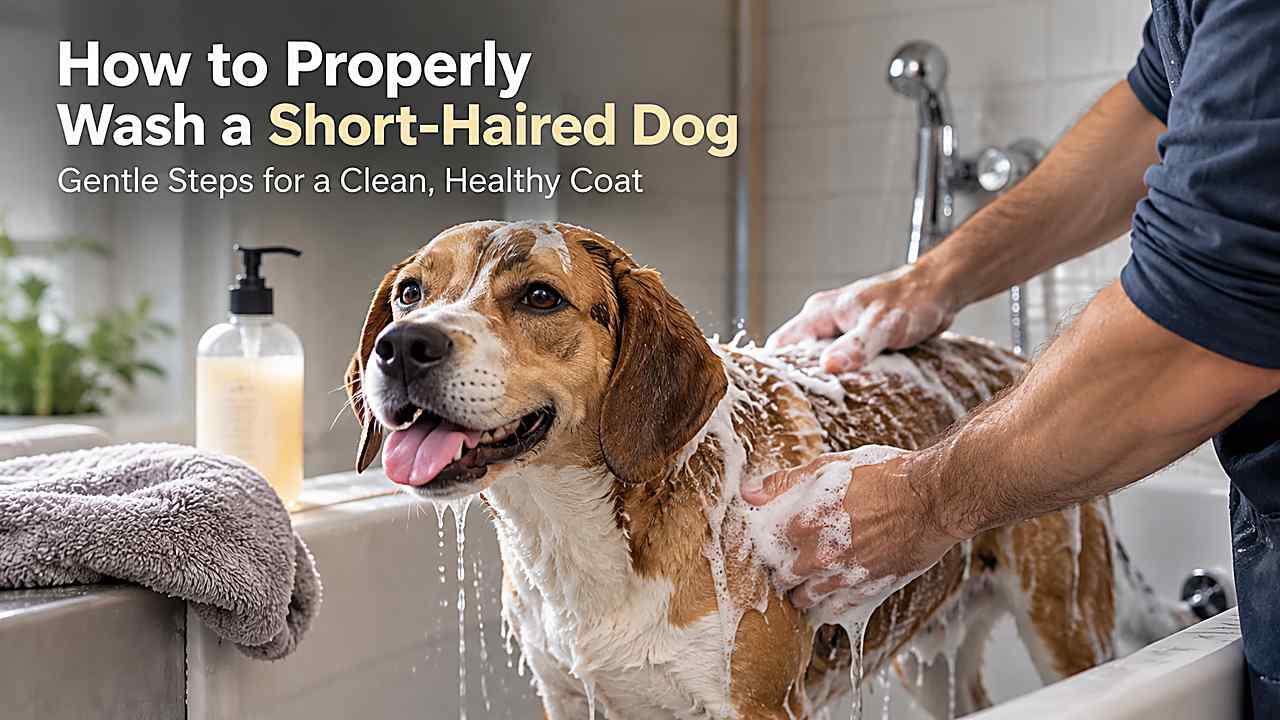
Short-haired dogs are often described as “easy to bathe,” but a close coat creates its own challenges. Dirt sits close to the skin, loose hair can stick everywhere once it gets wet, and over-shampooing can leave a naturally sleek coat dull or itchy.
A good bath is less about scrubbing hard and more about preparation, even saturation, a dog-appropriate cleanser, and a thorough rinse. Because the coat is easy to inspect, short-haired dogs also give you a useful chance to notice skin changes that longer fur can hide.
A short-haired dog usually needs a brief brush before bathing, comfortably warm water, a mild dog shampoo worked gently to the skin, a complete rinse, and efficient drying without harsh scrubbing.
Short coats need less product, not less care
A short coat does not prevent oil, dust, pollen, mud, or odor from collecting at skin level. In fact, grime can be surprisingly noticeable because there is little coat length to disguise it, especially along the belly, chest, neck folds, and lower legs.
The advantage is that shampoo and rinse water can reach the skin quickly. That means large amounts of cleanser are rarely necessary, and using too much often creates a longer rinse and a greater chance of leaving residue behind.
The dog’s skin condition matters more than hair length when choosing products. A dog with normal skin may do well with a basic mild shampoo, while recurrent itching, scaling, odor, redness, or hair loss should be discussed with a veterinarian rather than repeatedly treated with stronger over-the-counter cleansers.
A few minutes of preparation makes the bath cleaner
Loose hair is easier to remove before the dog is wet. A rubber curry brush, grooming mitt, or soft bristle brush can lift shed hair and surface dust without scratching the skin.
This pre-bath pass also gives you a chance to feel for bumps, scabs, sore spots, ticks, or irritated areas. Short coats make visual inspection easy, but running your hands over the body often reveals tenderness or texture changes that are not obvious from above.
The bath area should have non-slip footing and all supplies within reach. A dog that feels secure underfoot is less likely to scramble, which makes the wash calmer for both the animal and the person handling the sprayer.
The actual wash can stay simple
Short-haired dogs rarely need a complicated sequence. What matters is covering the body evenly, cleaning the areas that genuinely collect dirt, and avoiding unnecessary friction on skin that is already wet and softened.
The face, ears, feet, belly, and collar area deserve particular attention because they may hold more residue than the broad surfaces of the back and sides.
1. Saturate the coat all the way to the skin
Comfortably warm water should reach the skin from the shoulders to the tail before shampoo is added. Even on a short coat, simply wetting the top line is not enough when the belly, chest, and lower legs are dirty.
The head is easier to manage with a damp cloth or a very controlled stream rather than spraying directly toward the face. Keeping water out of the eyes and ear canals usually makes the dog much more cooperative for the rest of the bath.
A calm start also reduces the urge to restrain tightly. When the dog can stand securely and the water pressure feels predictable, the entire wash tends to require less physical control.
2. Massage shampoo gently instead of scrubbing
A small amount of dog shampoo can be distributed over the back, sides, chest, belly, and legs, then worked in with the flats of the fingers. Vigorous fingernail scrubbing is unnecessary and can irritate skin, especially when the dog has dandruff, insect bites, or seasonal sensitivity.
The collar line, armpits, groin, feet, and underside often need more attention than the clean-looking top of the back. A soft cloth can help around skin folds or delicate areas where direct spraying would be awkward.
If the shampoo has a labeled contact time, that timing should be followed. Ordinary cleansing shampoo usually does not become more effective simply because it is left on much longer than intended.
3. Rinse until the skin and coat feel clean, not slippery
Short hair rinses quickly, which can create false confidence that the job is finished after one pass. Shampoo can still collect under the chest, between the front legs, along the belly, and around the tail base.
Running clean water from the neck downward while parting the coat with your hand helps reveal remaining suds. The final coat should feel clean and neutral rather than slick, gummy, or heavily perfumed with concentrated product.
Residue is a common cause of post-bath itchiness, so a little extra rinse time is often more useful than adding conditioner or another fragranced product. Simpler is usually better when the skin is already clean.
Drying is fast, but technique still affects the finish
A short-haired dog can often be dried well with one or two absorbent towels. Blotting and gently rubbing in the direction of the coat removes water without creating the tangles that matter on long-haired breeds.
A dryer can speed the process, particularly in cool weather, but extreme heat is unnecessary. Moderate airflow also blows loose hair away from the skin, which can make the coat look cleaner and reduce shedding around the house immediately after the bath.
The dog should be mostly dry before going outside in cold conditions. In warm weather, air drying may be comfortable, but damp skin folds or areas under a harness should not stay wet for hours.
Bath frequency depends on the dog’s life, not the coat label
There is no single schedule that fits every short-haired dog. An indoor dog with healthy skin may need full baths only occasionally, while a dog that swims, rolls in dirt, attends daycare, or has a veterinary skin-treatment plan may be washed more often.
Odor alone can be misleading because persistent strong smell may come from ears, dental disease, skin infection, anal glands, or yeast rather than from “dirty fur.” Bathing more frequently can mask the symptom for a day without addressing the source.
The best schedule keeps the dog comfortable without repeatedly stripping the skin. If the coat becomes dry, flaky, greasy soon after washing, or progressively itchier, the routine or product may need to change.
Use the bath as a quick skin and body check
Short hair makes it unusually easy to inspect the dog while the coat is wet. Red patches, thinning hair, lumps, scratches, insect bites, dandruff, and changes in pigmentation are easier to see when loose hair and surface dirt are gone.
The paws are worth checking for cracked pads, debris between the toes, and irritated nail beds. The ears can be observed from the outside as well, although bathing is not the time to pour water or cleanser deep into the ear canal.
Anything painful, oozing, rapidly growing, or repeatedly returning deserves veterinary attention. A routine bath should help you notice problems earlier, not become the only treatment for something that needs diagnosis.
Common mistakes are usually about doing too much
Short-haired dogs rarely benefit from heavy product layering, rough scrubbing, very hot water, or multiple shampoos in one session. Those habits can make the coat feel temporarily squeaky while leaving the skin dry and reactive afterward.
Another common mistake is skipping the rinse because the coat looks free of foam. Residue can remain where the chest meets the front legs or along the underside even when the back is perfectly clear.
The simplest routine is often the most reliable: remove loose hair, wash with a suitable dog shampoo, rinse completely, dry comfortably, and save specialized treatments for a real reason.
Adjust the routine for weather, activity, and skin changes
Short-haired dogs often show the effects of weather and activity quickly because there is less coat between the environment and the skin. Road dust, pollen, salt, sunscreen, lake water, and fine mud can all change what the dog needs from one bath to the next. A dog that only needs a quick rinse after a dusty walk may not need a full shampoo session at all.
Seasonal shedding can also change how the bath behaves. During a heavy shed, brushing before and after washing helps remove hair that would otherwise stick to the wet coat, towels, tub, and floor. Outside shedding season, a gentler brush may be enough, and too much deshedding pressure can irritate skin that is already exposed by the short coat.
Skin condition should guide the final decision. If the dog suddenly develops flakes, bumps, redness, hair loss, or a greasy feel, changing shampoo repeatedly can make it harder to understand what is happening. A consistent, mild routine gives you a better baseline and makes unusual changes easier to notice and discuss with a veterinarian.
Frequently Asked Questions
These questions cover the practical details that often come up after the main routine is clear. The answers are designed to help readers make a safer decision without turning a simple wash into a complicated project.
How often should a short-haired dog be bathed?
Bath frequency depends on skin health, activity level, odor, and the products being used rather than hair length alone. Many healthy indoor dogs do well with baths only when they are dirty or beginning to smell, while active dogs may need them more often.
If a veterinarian has prescribed a medicated bathing schedule, that plan takes priority over a general grooming rule. Increasing bath frequency without a reason can dry the skin even when the coat itself looks fine.
Do short-haired dogs need conditioner?
Not every short-haired dog needs a conditioner. A mild conditioner can be useful for dry skin or a coat that feels rough, but it also adds another product that must be rinsed or used exactly as directed.
Healthy skin and a naturally sleek coat may look best with a simple shampoo-only routine. If dryness is persistent, it is worth checking the cause rather than automatically adding heavier grooming products.
What kind of brush is best before a bath?
A rubber curry brush, grooming mitt, or soft bristle brush works well for many short coats because it lifts loose hair without scraping the skin. Very stiff metal tools are usually unnecessary unless the dog has a specific coat type that calls for them.
Brushing should feel like a massage rather than a scratching motion. Red skin after brushing is a sign that the tool or pressure is too aggressive.
Why does my short-haired dog still smell after a bath?
Persistent odor may come from somewhere other than the coat. Ears, skin infections, mouth problems, anal glands, or damp skin folds can all create smell that shampoo only covers briefly.
A strong odor that returns quickly, especially with redness, itching, greasy skin, or discharge, is a reason to speak with a veterinarian. Repeatedly using stronger fragrance does not solve the underlying problem.
Can a short-haired dog air dry?
Air drying can be comfortable in a warm environment when the dog is healthy and the coat is truly short. Even then, towel removal of excess water makes the process faster and reduces the amount of moisture transferred to floors and furniture.
Cold weather, skin folds, dense undercoat beneath short guard hairs, or a dog that becomes chilled easily may make more active drying preferable. The dog should feel comfortably warm rather than shivering while the coat finishes drying.
Conclusion
Knowing how to wash a short haired dog properly is mostly about keeping the routine proportionate to the coat. These dogs usually need less product and less drying time, but they still benefit from secure footing, gentle handling, complete rinsing, and a quick skin check.
A straightforward bath with a mild dog shampoo is enough for many short-haired dogs. When itching, odor, redness, or scaling keeps returning, the next useful step is not a harsher wash but finding out why the skin is unhappy in the first place.