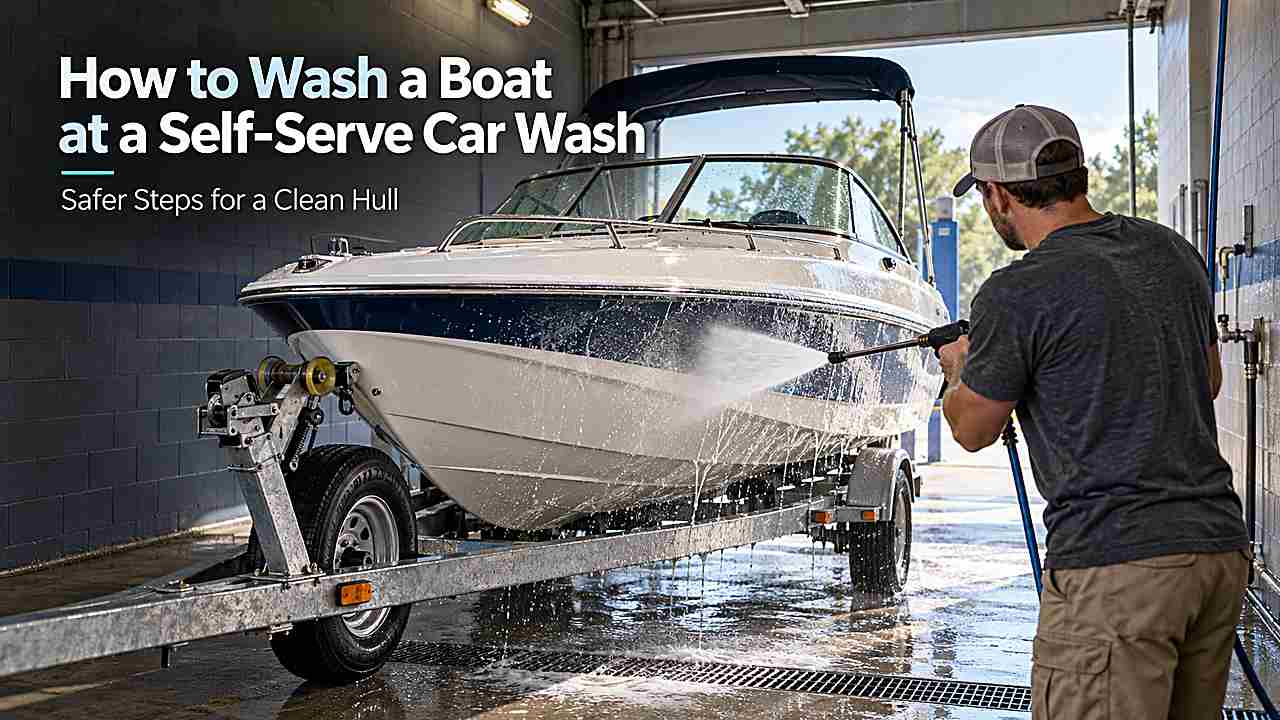
A self-service car wash can be a convenient place to rinse road grime, salt, bugs, and dirt from a trailered boat, but a boat is not simply a tall car. Gelcoat, painted aluminum, graphics, electronics, trailer bearings, exposed fittings, canvas, and bottom coatings all respond differently to pressure and chemicals.
You also need to consider facility rules and wastewater. A designated wash area that sends runoff to an appropriate treatment system is preferable to cleaning where soap, fuel residue, or bottom-paint debris can reach storm drains or natural water.
Wash a trailered boat at a self-serve car wash only if the facility allows it and the rig fits safely. Use boat-compatible cleaner, moderate pressure, avoid forcing water into electronics, bearings, seals, canvas, and decals, keep runoff contained by the bay, and never pressure-strip antifouling bottom paint.
Confirm the bay can handle the boat and trailer
Measure the complete rig, including tower, windshield, antennas, trolling motor, bimini frame, and anything stored upright. Overhead hoses and signs that clear a truck may still be too low for a wake tower or radar arch.
Check turning room and trailer length before entering. A narrow bay can trap a long trailer at an angle or place the outboard, lower unit, guide posts, or fenders too close to walls and equipment.
Most importantly, confirm that boats and trailers are allowed. Some self-service washes restrict marine equipment, engines, or heavily contaminated hulls because their drainage and chemical systems are designed for road vehicles.
Think about runoff before choosing a wash location
BoatUS advises using designated wash-down areas and minimizing cleaner runoff to waterways. Soap that seems harmless can still affect aquatic life, and products described as biodegradable generally still need appropriate wastewater handling.
A self-service bay can be a better place than a ramp or shoreline when its drainage goes to treatment, but do not assume every bay does. Follow posted restrictions and local rules about marine growth, bottom paint, fuel residue, and wastewater.
Never use detergent to disperse an oil or fuel spill. Petroleum contamination requires containment and proper cleanup, not soap.
Know the boat surfaces you are cleaning
Fiberglass gelcoat can tolerate normal washing but can oxidize and scratch. Painted aluminum needs chemistry compatible with the coating, while bare aluminum can stain or react with acidic or strongly alkaline cleaners. Vinyl graphics and pinstripes can lift if high pressure is aimed at their edges.
Canvas, clear vinyl enclosures, acrylic windshields, teak, non-skid decking, and upholstery also have their own care requirements. The strongest bay presoak is unlikely to be the best choice for all of them.
When in doubt, bring a marine wash approved for the hull material and use the bay primarily for water and drainage if outside soap is permitted.
A safe wash sequence for a trailered boat
1. Secure the boat and close openings
Make sure drain plugs, hatches, compartments, electronics covers, canvas, and removable gear are handled according to the boat maker’s guidance. Chock or park the trailer securely before working around it.
2. Rinse the trailer and lower hull
Remove road salt and grime from the trailer frame, fenders, wheels, and accessible lower hull. Avoid driving high-pressure water directly into wheel-bearing seals or electrical connectors.
3. Pre-rinse the hull and deck
Use a broad fan and moderate distance. Flush loose salt, dust, insects, and road film before any contact cleaning.
4. Apply compatible marine soap
Work in sections so cleaner does not dry. Use a soft boat brush or mitt that will not scratch gelcoat, paint, or graphics.
5. Rinse from high areas down
Flush rail bases, rub rails, cleats, windshield edges, transom hardware, and other crevices while avoiding direct pressure into seals and electrical fittings.
6. Dry sensitive surfaces
Dry glass, clear vinyl, polished metal, electronics screens, and dark gelcoat to reduce spotting. Let drainage occur only where the facility directs it.
Be conservative around decals, seals, and hardware
High-pressure water can force its way behind graphics, into poorly sealed screw holes, or around aged fittings. Keep the wand moving and stay farther away around decal edges, caulk lines, inspection ports, hatches, transducers, cameras, and lights.
Do not use pressure to test a questionable seal. If a fitting leaks during normal rain or spray, repair it before subjecting the area to a wash-bay jet.
Polished stainless steel and anodized aluminum can also show chemical spotting. Rinse unfamiliar cleaner quickly and do not let concentrate dry on metal hardware.
Special caution for bottom paint and marine growth
Antifouling bottom coatings are intentionally formulated to control marine growth and can release material when scrubbed or pressure-washed. BoatUS specifically warns that high-pressure washing can remove bottom paint and recommends doing that work only in a designated wash-down area.
A general self-service car wash is not the place to strip bottom paint, blast barnacles, or remove heavy marine fouling unless the facility is specifically equipped and authorized for that work.
If the boat has significant growth or needs bottom preparation, use a boatyard or marina wash facility that can capture and manage the residue properly.
Clean the trailer without damaging bearings and brakes
Road salt and launch water make trailer rinsing worthwhile, but wheel hubs and electrical connectors do not benefit from a high-pressure stream aimed directly at their seals. Use lower pressure and more distance around bearings, brake components, wiring plugs, and lamps.
Rinse the frame, bunks, rollers, winch post, and coupler, then inspect for corrosion, damaged wiring, loose hardware, or overheated hubs during normal trailer maintenance.
The wash should remove contamination, not substitute for bearing service, brake flushing procedures, or manufacturer-required corrosion protection.
Freshwater rinse after saltwater use
A freshwater rinse after saltwater exposure is valuable because salt deposits remain on hardware, trailers, and exterior surfaces after the boat dries. Rinse as soon as practical, giving attention to metal fittings, the trailer, and areas where saltwater collects.
Engine flushing is a separate maintenance procedure. Follow the engine manufacturer’s instructions for flushing ports, running conditions, and cooling-water requirements rather than assuming the pressure wand can replace the specified method.
If you transport the boat before washing, road dirt can combine with salt on the surface. Pre-rinse thoroughly before using a brush or mitt.
When a self-serve car wash is not the right place
Choose another facility if the rig does not fit comfortably, the boat has leaking fuel or oil, heavy marine growth must be removed, bottom paint needs pressure washing, or local rules prohibit boat washing at the site.
Also avoid using unfamiliar aggressive automotive chemicals on delicate gelcoat, graphics, canvas, clear vinyl, or bare aluminum. The convenience of a wash bay does not justify material damage.
A marina or boatyard wash area is often better for significant marine contamination because it is designed around boats and may capture the runoff.
How to adapt the method when conditions are not ideal
Real wash bays rarely give you perfect conditions, so washing a boat at a self serve car wash sometimes requires changing the plan rather than forcing the normal sequence. Hot panels, weak water pressure, a crowded facility, unknown chemicals, wind, or unusually heavy contamination all affect what is safe and efficient.
If a product begins drying before you can rinse it, stop adding more product and rinse the affected area first. If pressure feels unusually strong, increase nozzle distance and keep the fan moving. If pressure is weak, use more dwell time and repeated passes instead of moving the nozzle dangerously close to paint, seals, graphics, trim, or accessories.
When the bay is busy, do preparation before entering and move to the designated drying or vacuum area as soon as the spray work is finished. That lets you work carefully without blocking the stall for tasks that do not require the bay’s water system.
If you are unsure whether a chemical, brush, or pressure setting is compatible with a specialty surface, choose the lower-risk option and finish that detail later with a known product. Leaving one stubborn mark for another day is safer than creating permanent damage while a timer is running.
A final inspection before you leave
Walk around the vehicle or equipment in good light before packing up. Look for soap trapped below mirrors or trim, dirty runoff from seams, missed contamination on lower areas, fresh water spots, and any streak that is easier to correct while the surface is still wet.
Keep clean and dirty tools separated as you pack. Anything used on wheels, tires, floor mats, muddy lower areas, trailer parts, or the bay floor should stay away from paint-safe microfiber until it has been thoroughly washed.
Make a mental note of how that particular bay performed. Water pressure, chemical strength, timer length, spot-free quality, hose reach, and drainage vary between facilities. A consistent process gets easier when you know which settings at a reliable local wash actually work for your vehicle.
Practical details that improve the result
Before washing, distinguish cosmetic dirt from maintenance problems. Green growth, fuel residue, oxidized gelcoat, rust streaks, black streaking, and bottom fouling may each need a different product or facility. The self-serve bay is best for ordinary road grime, salt, and light contamination, not for every marine cleaning problem.
If the boat has carpeted bunks or trailer pads, avoid saturating them unnecessarily if the trailer will be stored immediately afterward. Rinse salt and dirt from exposed trailer parts, but give water time to drain before long-term storage so moisture is not trapped against metal or hull surfaces.
Electronics deserve more distance than gelcoat. Fish-finder screens, trolling-motor heads, switches, speakers, charging ports, cameras, and navigation equipment may be water resistant without being designed for concentrated pressure. Wipe or gently rinse these areas according to the equipment maker’s instructions.
On an outboard-powered boat, clean the exterior cowling with mild soap and water, but treat engine flushing as a separate procedure. Use the specified flushing port or method from the engine manufacturer and never improvise by spraying water into openings with the pressure wand.
If the hull has a vinyl wrap or printed graphics, combine marine care with wrap-care rules. Keep pressure away from edges, avoid abrasive brushes and harsh solvents, and dry the graphics carefully to reduce spotting. A boat can contain gelcoat, paint, wrap film, metal, glass, and upholstery within a few feet of each other.
After washing, inspect the bilge and storage compartments if there is any chance water entered through an open hatch or questionable seal. Finding moisture immediately is easier than discovering mildew or corrosion after the boat has been covered and stored.
Treat the trailer as part of the wash plan, not an afterthought. Freshwater rinsing of the frame, fenders, winch post, coupler, and exposed hardware is useful after saltwater use, but inspect as you go for loose wiring, corrosion, damaged bunk carpet, and overheated or leaking hubs. Cleaning can reveal maintenance problems that dirt was hiding. Address those mechanical issues separately rather than using extra pressure or cleaner as a substitute for proper trailer service.
Frequently Asked Questions
Can I pressure wash a fiberglass boat at a car wash?
You can use controlled pressure on sound gelcoat, but keep a safe distance and avoid concentrating the stream on decals, seals, hardware, electronics, or damaged surfaces.
Can I wash saltwater off my boat at a self-serve bay?
Yes, if the facility allows boats and the runoff is handled appropriately. A prompt freshwater rinse helps remove salt from exterior surfaces and the trailer.
Should I use car-wash soap on a boat?
A marine cleaner approved for your hull material is the safer choice. Automotive presoak may be unnecessarily strong or incompatible with gelcoat, aluminum, graphics, or canvas.
Can I pressure wash antifouling bottom paint?
Not at a general car wash. Pressure washing can remove bottom coating and create contaminated runoff; use a designated marine wash-down facility.
Can I spray the trailer wheel hubs?
Rinse them gently, but do not aim high-pressure water directly into bearing seals, brake components, or electrical connectors.
Conclusion
A self-service car wash can be useful for a trailered boat when the facility permits it and the job is ordinary cleaning rather than marine-fouling removal. Confirm clearance and drainage, use boat-compatible chemistry, moderate the pressure around vulnerable components, and keep bottom-paint work in a designated marine facility. The right wash protects both the boat and the water that receives the runoff.